HTTP 200 OK
Allow: GET, HEAD, OPTIONS
Content-Type: application/json
Vary: Accept
{
"count": 17752,
"next": "http://admin.kavishala.in/sootradhar/authors/?format=api&page=802",
"previous": "http://admin.kavishala.in/sootradhar/authors/?format=api&page=800",
"results": [
{
"id": 403,
"image": "https://kavishalalab.s3.ap-south-1.amazonaws.com/sootradhar_author/subamanita_mbha_bhar_subfrja_nvvbdvuibvdu.jpg",
"name": "Bharathidasan",
"bio": "<p>Kanagasabai Subburathnam (29 April 1891–21 April 1964) popularly known as Bharathidasan, was a 20th-century Tamil poet and writer rationalist whose literary works handled mostly socio-political issues. He was deeply influenced by the Tamil poet Subramania Bharati and named himself as Bharathidasan.[1] His writings served as a catalyst for the growth of the Dravidian movement in Tamil Nadu.[citation needed] In addition to poetry, his views found expression in other forms such as plays, film scripts, short stories and essays. The Government of Puducherry union territory has adopted the song of Invocation to Mother Tamil, written by Bharathidasan as the state song of Puducherry.(Tamil Thai Valthu (Puducherry))</p>\r\n\r\n<h2><span id=\"List_of_poems_made_into_film_lyrics\" class=\"mw-headline\">List of poems made into film lyrics</span></h2>\r\n<ul>\r\n<li>Thamizhukum Amudenru per</li>\r\n<li>Sanke Muzhangu</li>\r\n<li>Thunbam nergaiyil</li>\r\n<li>Thesa gnanam</li>\r\n<li>Neelavana aadaikul</li>\r\n<li>Valiyor silar</li>\r\n<li>Muzhumai Nila</li>\r\n<li>Chithirai</li>\r\n<li>Pallikudam</li>\r\n<li>Kalyanam aagatha penae</li>\r\n<li>Kaatrilellam</li>\r\n<li>Kandavudal kadal</li>\r\n<li>Vaanukku nilavu</li>\r\n<li>Paazhai pona manam </li>\r\n<li>Vaana mazhai neeye</li>\r\n<li>Avalum Naanum Amudhum Thamizhum</li>\r\n</ul>\r\n<h2><span id=\"Awards_and_recognitions\" class=\"mw-headline\">Awards and recognitions</span></h2>\r\n<ul>\r\n<li>Bharathidasan was conferred with the title of \"Puratchi Kavingyar\" (meaning the \"Revolutionary Poet\") by <a title=\"C. N. Annadurai\" href=\"https://en.wikipedia.org/wiki/C._N._Annadurai\">C. N. Annadurai</a>. He won the Golden Parrot Prize in 1946 for his play Amaithi-Oomai (Peace and Dumbness). He was given the <a class=\"mw-redirect\" title=\"Sahitya Academy Award\" href=\"https://en.wikipedia.org/wiki/Sahitya_Academy_Award\">Sahitya Academy Award</a>, posthumously in 1970 for his play Pisiranthaiyar.He died in 1964 but he got this award after he died (1970)</li>\r\n<li>On 9 October 2001, a commemorative stamp of Bharathidasan was released by the Postal Department in Chennai.</li>\r\n</ul>\r\n<h2>Legacy</h2>\r\n<p>Bharathidasan on a 2001 stamp of India<br />Tamil Nadu's state government gives the Bharathidasan Award annually to a Tamil poet.<br />The Government of Puducherry union territory has adopted Bharathidasan's song of Invocation to Mother Tamil as the state song of Puducherry.<br />A state university named Bharathidasan University was established in Tiruchirappalli.<br />Bharathidasan institute of management, one of India's top B-schools, was established in Tiruchirappalli.</p>\r\n<p> </p>",
"raw_bio": "Kanagasabai Subburathnam (29 April 1891–21 April 1964) popularly known as Bharathidasan, was a 20th-century Tamil poet and writer rationalist whose literary works handled mostly socio-political issues. He was deeply influenced by the Tamil poet Subramania Bharati and named himself as Bharathidasan.[1] His writings served as a catalyst for the growth of the Dravidian movement in Tamil Nadu.[citation needed] In addition to poetry, his views found expression in other forms such as plays, film scripts, short stories and essays. The Government of Puducherry union territory has adopted the song of Invocation to Mother Tamil, written by Bharathidasan as the state song of Puducherry.(Tamil Thai Valthu (Puducherry)) List of poems made into film lyrics Thamizhukum Amudenru per Sanke Muzhangu Thunbam nergaiyil Thesa gnanam Neelavana aadaikul Valiyor silar Muzhumai Nila Chithirai Pallikudam Kalyanam aagatha penae Kaatrilellam Kandavudal kadal Vaanukku nilavu Paazhai pona manam Vaana mazhai neeye Avalum Naanum Amudhum Thamizhum Awards and recognitions Bharathidasan was conferred with the title of \"Puratchi Kavingyar\" (meaning the \"Revolutionary Poet\") by C. N. Annadurai . He won the Golden Parrot Prize in 1946 for his play Amaithi-Oomai (Peace and Dumbness). He was given the Sahitya Academy Award , posthumously in 1970 for his play Pisiranthaiyar.He died in 1964 but he got this award after he died (1970) On 9 October 2001, a commemorative stamp of Bharathidasan was released by the Postal Department in Chennai. Legacy Bharathidasan on a 2001 stamp of India Tamil Nadu's state government gives the Bharathidasan Award annually to a Tamil poet. The Government of Puducherry union territory has adopted Bharathidasan's song of Invocation to Mother Tamil as the state song of Puducherry. A state university named Bharathidasan University was established in Tiruchirappalli. Bharathidasan institute of management, one of India's top B-schools, was established in Tiruchirappalli. ",
"slug": "bharathidasan",
"DOB": "1891-04-29",
"DateOfDemise": "1964-04-21",
"location": null,
"url": "/sootradhar/bharathidasan",
"tags": null,
"created": "2023-09-22T12:43:25.270615",
"is_has_special_post": true,
"is_special_author": false,
"language": 16
},
{
"id": 408,
"image": "https://kavishalalab.s3.ap-south-1.amazonaws.com/sootradhar_author/220px-Vaali_poet.jpg",
"name": "Vaali",
"bio": "Vaali (born T. S. Rangarajan; 29 October 1931 – 18 July 2013) was an Indian poet and lyricist whose works were in Tamil, had a five-decade long association with the Tamil film industry, wrote over 15,000 songs. He acted in a number of films, including Sathya, Hey Ram, Paarthale Paravasam and Poikkal Kudhirai. He was honoured by the Government of India with the Padma Shri, India's fourth highest civilian honour.<br>\r\n<h2><span id=\"Books\" class=\"mw-headline\"><strong>Books</strong></span></h2>\r\n<ul>\r\n<li>Amma-1976</li>\r\n<li>Avathara Purushan-1995</li>\r\n<li>Naanum Indha Nootrandum</li>\r\n<li>Pandavar Bhoomi</li>\r\n<li>Ramanuja Kaviyam</li>\r\n<li>Krishna Vijayam</li>\r\n<li>Thamizh Kadavul</li>\r\n<li>Kalaignar Kaviyam</li>\r\n<li>Krishna Bhakthan</li>\r\n<li>Vaaliba vaali</li>\r\n<li>Poikkal kuthiraikal</li>\r\n<li>Nija Govintham</li>\r\n<li>Azagiya Singers</li>\r\n<li>Pennin Perundhakka Yavula</li>\r\n<li>Bhagavad Geethai</li>\r\n</ul>\r\n\r\n<a href=\"https://en.wikipedia.org/wiki/Vaali_(poet)#Filmography\" target=\"blank\"> Filmography </a>",
"raw_bio": "Vaali (born T. S. Rangarajan; 29 October 1931 – 18 July 2013) was an Indian poet and lyricist whose works were in Tamil, had a five-decade long association with the Tamil film industry, wrote over 15,000 songs. He acted in a number of films, including Sathya, Hey Ram, Paarthale Paravasam and Poikkal Kudhirai. He was honoured by the Government of India with the Padma Shri, India's fourth highest civilian honour. Books Amma-1976 Avathara Purushan-1995 Naanum Indha Nootrandum Pandavar Bhoomi Ramanuja Kaviyam Krishna Vijayam Thamizh Kadavul Kalaignar Kaviyam Krishna Bhakthan Vaaliba vaali Poikkal kuthiraikal Nija Govintham Azagiya Singers Pennin Perundhakka Yavula Bhagavad Geethai Filmography ",
"slug": "vaali",
"DOB": "2013-10-29",
"DateOfDemise": "2013-07-18",
"location": "Srirangam, Trichinopoly, India",
"url": "/sootradhar/vaali",
"tags": null,
"created": "2023-09-22T12:18:54.370686",
"is_has_special_post": false,
"is_special_author": false,
"language": 16
},
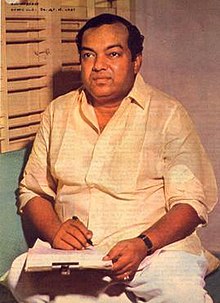
{
"id": 409,
"image": "https://kavishalalab.s3.ap-south-1.amazonaws.com/sootradhar_author/220px-Profile_picture_of_Kannadasan.jpg",
"name": "Kannadasan",
"bio": "<p>Kannadasan(24 June 1927 – 17 October 1981) was a Tamil philosopher, poet, film song lyricist, producer, actor, script-writer, editor, philanthropist, and is heralded as one of the greatest and most important lyricists in India. Frequently called Kaviarasu(Poet Laureate), Kannadasan was most familiar for his song lyrics in Tamil films and contributed around 5000 film lyrics apart from 6000 poems and 232 books, including novels, epics, plays, essays, his most popular being the 10-part religious book on Hinduism, Arthamulla Indhu matham (Meaningful Hindu Religion). He won the Sahitya Akademi Award for his novel Cheraman Kathali in the year 1980 and was the first to receive the National Film Award for Best Lyrics, given in 1969 for the film Kuzhanthaikkaga.</p>\r\n\r\n<p>His contribution to Tamil literature<br />Kannadasan was a prolific writer and his writing covered a variety of forms- poems, novels, lyrics for Tamil films and books on spirituality. His series titled Arthamulla Indhu Matham (Meaningful Hindu Religion) is known for its simplicity in explaining the principles of Hinduism. He wrote a number of spiritual works in the later part of his life including Yesu Kaviyam the story of Jesus told in the poetic form. Many of Kannadasan's poems have been translated into French.[7] He wrote and published several volumes of poetry. He was an admirer of Kambar, and wrote a number of poems praising Kambar's artistry, contrary to the satire (\"Kambarasam\") on the same by C.N.Annadurai. He also spoke at several of the Kambar festivals. He sang the beauty of Seethai's gait and the shoulders of Rama; he spoke of beauty intoxicating and dropped me in a vessel of amrut (nectar)\" This is one of Kannadasan's tribute to the poet Kambar. He wrote a book about the life of Jesus Christ \"Yesu Kaaviyam\" rendered in a pristine poetical Tamil. It was published at Tiruchirapalli in the year 1981. The function was presided over by the then chief minister of Tamil Nadu Mr. M.G. Ramachandran. Yesu Kaaviyam was the last literary work of Kannadasan.</p>\r\n<p> </p>\r\n\r\n<p>Legacy<br />The Government of Tamil Nadu erected a memorial hall as \"Kaviarasar Kannadasan Manimandapam\" at Karaikudi. The road adjoining Natesan Park in T.Nagar, Chennai was previously called as Hensman Road is where Kannadasan resided from 1958 and it was renamed \"Kannadasan street\" in his honour after his demise.<br />It was in this house where 7 Chief Ministers from Sri Mr. Bakthavachalam to Sri Ms.Jayalalitha had visited Kannadasan. Kannadhasan once owned 14 cars which were parked on either side of the road in front of house and the last remaining one which was given by Sri Kamarajar is still at display in this very house.</p>",
"raw_bio": "Kannadasan(24 June 1927 – 17 October 1981) was a Tamil philosopher, poet, film song lyricist, producer, actor, script-writer, editor, philanthropist, and is heralded as one of the greatest and most important lyricists in India. Frequently called Kaviarasu(Poet Laureate), Kannadasan was most familiar for his song lyrics in Tamil films and contributed around 5000 film lyrics apart from 6000 poems and 232 books, including novels, epics, plays, essays, his most popular being the 10-part religious book on Hinduism, Arthamulla Indhu matham (Meaningful Hindu Religion). He won the Sahitya Akademi Award for his novel Cheraman Kathali in the year 1980 and was the first to receive the National Film Award for Best Lyrics, given in 1969 for the film Kuzhanthaikkaga. His contribution to Tamil literature Kannadasan was a prolific writer and his writing covered a variety of forms- poems, novels, lyrics for Tamil films and books on spirituality. His series titled Arthamulla Indhu Matham (Meaningful Hindu Religion) is known for its simplicity in explaining the principles of Hinduism. He wrote a number of spiritual works in the later part of his life including Yesu Kaviyam the story of Jesus told in the poetic form. Many of Kannadasan's poems have been translated into French.[7] He wrote and published several volumes of poetry. He was an admirer of Kambar, and wrote a number of poems praising Kambar's artistry, contrary to the satire (\"Kambarasam\") on the same by C.N.Annadurai. He also spoke at several of the Kambar festivals. He sang the beauty of Seethai's gait and the shoulders of Rama; he spoke of beauty intoxicating and dropped me in a vessel of amrut (nectar)\" This is one of Kannadasan's tribute to the poet Kambar. He wrote a book about the life of Jesus Christ \"Yesu Kaaviyam\" rendered in a pristine poetical Tamil. It was published at Tiruchirapalli in the year 1981. The function was presided over by the then chief minister of Tamil Nadu Mr. M.G. Ramachandran. Yesu Kaaviyam was the last literary work of Kannadasan. Legacy The Government of Tamil Nadu erected a memorial hall as \"Kaviarasar Kannadasan Manimandapam\" at Karaikudi. The road adjoining Natesan Park in T.Nagar, Chennai was previously called as Hensman Road is where Kannadasan resided from 1958 and it was renamed \"Kannadasan street\" in his honour after his demise. It was in this house where 7 Chief Ministers from Sri Mr. Bakthavachalam to Sri Ms.Jayalalitha had visited Kannadasan. Kannadhasan once owned 14 cars which were parked on either side of the road in front of house and the last remaining one which was given by Sri Kamarajar is still at display in this very house.",
"slug": "kannadasan",
"DOB": "1927-06-24",
"DateOfDemise": "1981-10-17",
"location": null,
"url": "/sootradhar/kannadasan",
"tags": null,
"created": "2023-09-22T12:43:41.178569",
"is_has_special_post": true,
"is_special_author": false,
"language": 16
},
{
"id": 410,
"image": "https://kavishalalab.s3.ap-south-1.amazonaws.com/sootradhar_author/Kavimani_Desigavinayagam_Pillai.jpg",
"name": "Kavimani Desigavinayagam Pillai",
"bio": "Kavimani Desigavinayagam Pillai (Tamil: கவிமணி தேசிகவிநாயகம் பிள்ளை; 27 July 1876 – 26 September 1954) was an eminent Tamil poet. He was born in the southern district of Tamil Nadu in Kanniyakumari district in a village called Theroor. since the place was part of Travancore, he learnt Malayalam at School. He learnt Tamil in later years. The reference of his name is used in the name plate of the village. Asiya Jothi, Nanjil Nattu Marumakkal Vazhi Manmiyam, and the translation of the work of Omar Khayyam are his masterpieces. He is known for his poetry. In 1940 the Tamil Sangam at its 7th annual conference held at Madras (now Chennai) honoured Desigavinayagam Pillai with the title \"Kavimani\". On 21 October 2005, he was commemorated on an Indian postage stamp.",
"raw_bio": "Kavimani Desigavinayagam Pillai (Tamil: கவிமணி தேசிகவிநாயகம் பிள்ளை; 27 July 1876 – 26 September 1954) was an eminent Tamil poet. He was born in the southern district of Tamil Nadu in Kanniyakumari district in a village called Theroor. since the place was part of Travancore, he learnt Malayalam at School. He learnt Tamil in later years. The reference of his name is used in the name plate of the village. Asiya Jothi, Nanjil Nattu Marumakkal Vazhi Manmiyam, and the translation of the work of Omar Khayyam are his masterpieces. He is known for his poetry. In 1940 the Tamil Sangam at its 7th annual conference held at Madras (now Chennai) honoured Desigavinayagam Pillai with the title \"Kavimani\". On 21 October 2005, he was commemorated on an Indian postage stamp.",
"slug": "kavimani-desigavinayagam-pillai",
"DOB": "1876-07-27",
"DateOfDemise": "1954-09-26",
"location": null,
"url": "/sootradhar/kavimani-desigavinayagam-pillai",
"tags": null,
"created": "2023-09-22T12:18:54.423120",
"is_has_special_post": false,
"is_special_author": false,
"language": 16
},
{
"id": 411,
"image": "https://kavishalalab.s3.ap-south-1.amazonaws.com/sootradhar_author/Sundara_Ramaswamy.jpg",
"name": "Sundara Ramaswamy",
"bio": "Sundara Ramaswamy (30 May 1931 – 15 October 2005) was an Indian novelist and exponent of Tamil modern literature from Thazhuviya Mahadevarkoil, Kanyakumari district,Tamil Nadu. Ramaswamy began his literary career translating Thakazhi Sivasankara Pillai's Malayalam novel, Thottiyude Makan into Tamil and writing his first short story, \"Muthalum Mudivum\", which he published in Pudimaipithan Ninaivu Malar.\r\n\r\nCareer\r\nAt 20, he began his literary career, translating Thakazhi Sivasankara Pillai's Malayalam novel, Thottiyude Makan into Tamil and writing his first short story, 'Muthalum Mudivum', which he published in Pudimaipithan Ninaivu Malar. He was influenced by the works of contemporary thinkers such as Gandhi, Periyar, Sri Aurobindo, Ramakrishna Paramahamsa, Ram Manohar Lohia, J. C. Kumarappa and J.Krishnamurty. In 1952, he began to be influenced by marxist theory after meeting the Communist T. M. C. Raghunathan, editor of the magazine Shanti. He joined the editorial-board of Saraswathi, edited by Vijayabhaskaran, who was also a Communist. He met the editor M.Govindan in 1957 and they became friends.\r\n\r\n<p>Short stories and Novels<br />The majority of his early short stories were published in the magazines Sarawathi and Santhi, although he also wrote several collections, among them Akkaraic chimaiyil (On the Shores Beyond, 1959) and Pitatchatam (Offerings,1964) Oru Puliamarathin Kathai (The Story of a Tamarind Tree, 1966) was his first novel. It received critical acclaim, and is now regarded as a groundbreaking classic of Tamil literature. He edited and published a literary magazine called Kalachuvadu Ramaswamy suspended active writing for nearly six years; and when he resumed in 1973, his style had evolved. It was in this phase that he wrote the short stories in Pallikutt takhihal (The Palanquin Bearers), the book of novellas Tiraikal ayiram (Thousand curtains,1975) and later the novel J.J. Silakuripukal (J.J. Some Notes) in 1988. He published his last novel, Kuzhanthaigal, Pengal, Aangal (Children, Women, Men) in 1995.</p>",
"raw_bio": "Sundara Ramaswamy (30 May 1931 – 15 October 2005) was an Indian novelist and exponent of Tamil modern literature from Thazhuviya Mahadevarkoil, Kanyakumari district,Tamil Nadu. Ramaswamy began his literary career translating Thakazhi Sivasankara Pillai's Malayalam novel, Thottiyude Makan into Tamil and writing his first short story, \"Muthalum Mudivum\", which he published in Pudimaipithan Ninaivu Malar.\r \r Career\r At 20, he began his literary career, translating Thakazhi Sivasankara Pillai's Malayalam novel, Thottiyude Makan into Tamil and writing his first short story, 'Muthalum Mudivum', which he published in Pudimaipithan Ninaivu Malar. He was influenced by the works of contemporary thinkers such as Gandhi, Periyar, Sri Aurobindo, Ramakrishna Paramahamsa, Ram Manohar Lohia, J. C. Kumarappa and J.Krishnamurty. In 1952, he began to be influenced by marxist theory after meeting the Communist T. M. C. Raghunathan, editor of the magazine Shanti. He joined the editorial-board of Saraswathi, edited by Vijayabhaskaran, who was also a Communist. He met the editor M.Govindan in 1957 and they became friends.\r \r Short stories and Novels The majority of his early short stories were published in the magazines Sarawathi and Santhi, although he also wrote several collections, among them Akkaraic chimaiyil (On the Shores Beyond, 1959) and Pitatchatam (Offerings,1964) Oru Puliamarathin Kathai (The Story of a Tamarind Tree, 1966) was his first novel. It received critical acclaim, and is now regarded as a groundbreaking classic of Tamil literature. He edited and published a literary magazine called Kalachuvadu Ramaswamy suspended active writing for nearly six years; and when he resumed in 1973, his style had evolved. It was in this phase that he wrote the short stories in Pallikutt takhihal (The Palanquin Bearers), the book of novellas Tiraikal ayiram (Thousand curtains,1975) and later the novel J.J. Silakuripukal (J.J. Some Notes) in 1988. He published his last novel, Kuzhanthaigal, Pengal, Aangal (Children, Women, Men) in 1995.",
"slug": "sundara-ramaswamy",
"DOB": "1931-05-30",
"DateOfDemise": "2005-10-15",
"location": null,
"url": "/sootradhar/sundara-ramaswamy",
"tags": null,
"created": "2023-09-22T12:18:54.431719",
"is_has_special_post": false,
"is_special_author": false,
"language": 16
},
{
"id": 412,
"image": "https://kavishalalab.s3.ap-south-1.amazonaws.com/sootradhar_author/S._Abdul_Rahman.jpeg",
"name": "S. Abdul Rahman",
"bio": "Syed Abdul Rahman (Tamil: அப்துல் ரகுமான்; 9 November 1937 – 2 June 2017)[was a Tamil poet from Tamil Nadu, India. He was known by the title KAVIKKO (lit. Emperor among poets). He was ex-chairman of Waqf board of Tamil Nadu.\r\n\r\n<p>Biography<br />Syed Abdul Rahman was born in Madurai in 1937 and died on 2 June 2017. He was a professor of Tamil for 29 years at Islamiah College, Vaniyambadi. He belonged to the Vanambadi literary movement. He won the Sahitya Akademi award in 1999 under Tamil language category for his Poetry Aalaapanai. In 2009, he was made the chairman of the Waqf board of Tamil Nadu. He was also a member of the Tamil Language Promotion Board of the Central Institute of Classical Tamil.</p>\r\n\r\n<p>Books<br />Avalukku nila endru peyar / அவளுக்கு நிலா என்று பெயர்<br />Aalapanai / ஆலாபனை<br />Ithu siragugalin neram / இது சிறகுகளின் நேரம்<br />Ilayilum irukiran / இல்லையிலும் இருக்கிறான்<br />Urangum Alagi / உறங்கும் அழகி<br />Emoliyum semmolzhi / எம்மொழி செம்மொழி<br />Kadavulin mugavari / கடவுளின் முகவரி<br />Kaneer thuligalukku mugavari illai / கண்ணீர்த் துளிகளுக்கு முகவரி இல்லை<br />Kambanin arasiyal kotpadu / கம்பனின் அரசியல் கோட்பாடு<br />Karaigalae Nathiyavathuillai / கரைகளே நதியாவதில்லை <br />Kavaikko kavithaigal / கவிக்கோ கவிதைகள்<br />kavaithai or arathanai / கவிதை ஓர் ஆராதனை<br />kakai soru / காக்கைச் சோறு<br />Katru en manaivi / காற்று என் மனைவி<br />Silanthiyin veedu / சிலந்தியின் வீடு<br />Suttu Viral / சுட்டு விரல்<br />Sontha siraikal / சொந்தச் சிறைகள்<br />Sothimigu navakavithai / சோதிமிகு நவகவிதை<br />Thattathe thiranthirukirathu / தட்டாதே திறந்திருக்கிறது<br />Tagorin chitra / தாகூரின் சித்ரா<br />Devaganam / தேவகானம்<br />Tholaipesi kaneer / தொலைபேசிக் கண்ணீர்<br />Nilavilirunthu vanthavan / நிலவிலிருந்து வந்தவன்<br />Nerupai anaikkum nerupu / நெருப்பை அணைக்கும் நெருப்பு<br />Neyar viruppam / நேயர் விருப்பம்<br />Pasi entha sathi / பசி எந்தச் சாதி<br />Paravaiyin pathai / பறவையின் பாதை<br />Palveethi / பால்வீதி<br />Pitthan / பித்தன்<br />Pookaalam / பூக்காலம்<br />Poopadaintha saptham / பூப்படைந்த சப்தம்<br />Magarantha siragu / மகரந்தச் சிறகு<br />Maram muttru pulli alla / மரணம் முற்றுப்புள்ளி அல்ல<br />muttaivasigal / முட்டைவாசிகள்<br />Muthangal oivathillai / முத்தங்கள் ஓய்வதில்லை<br />Muthamilin mugavari / முத்தமிழின் முகவரி<br />Vithaipol vilundhavan / விதைபோல் விழுந்தவன்<br />Vilangugal illatha kavithai / விலங்குகள் இல்லாத கவிதை</p>",
"raw_bio": "Syed Abdul Rahman (Tamil: அப்துல் ரகுமான்; 9 November 1937 – 2 June 2017)[was a Tamil poet from Tamil Nadu, India. He was known by the title KAVIKKO (lit. Emperor among poets). He was ex-chairman of Waqf board of Tamil Nadu.\r \r Biography Syed Abdul Rahman was born in Madurai in 1937 and died on 2 June 2017. He was a professor of Tamil for 29 years at Islamiah College, Vaniyambadi. He belonged to the Vanambadi literary movement. He won the Sahitya Akademi award in 1999 under Tamil language category for his Poetry Aalaapanai. In 2009, he was made the chairman of the Waqf board of Tamil Nadu. He was also a member of the Tamil Language Promotion Board of the Central Institute of Classical Tamil. Books Avalukku nila endru peyar / அவளுக்கு நிலா என்று பெயர் Aalapanai / ஆலாபனை Ithu siragugalin neram / இது சிறகுகளின் நேரம் Ilayilum irukiran / இல்லையிலும் இருக்கிறான் Urangum Alagi / உறங்கும் அழகி Emoliyum semmolzhi / எம்மொழி செம்மொழி Kadavulin mugavari / கடவுளின் முகவரி Kaneer thuligalukku mugavari illai / கண்ணீர்த் துளிகளுக்கு முகவரி இல்லை Kambanin arasiyal kotpadu / கம்பனின் அரசியல் கோட்பாடு Karaigalae Nathiyavathuillai / கரைகளே நதியாவதில்லை Kavaikko kavithaigal / கவிக்கோ கவிதைகள் kavaithai or arathanai / கவிதை ஓர் ஆராதனை kakai soru / காக்கைச் சோறு Katru en manaivi / காற்று என் மனைவி Silanthiyin veedu / சிலந்தியின் வீடு Suttu Viral / சுட்டு விரல் Sontha siraikal / சொந்தச் சிறைகள் Sothimigu navakavithai / சோதிமிகு நவகவிதை Thattathe thiranthirukirathu / தட்டாதே திறந்திருக்கிறது Tagorin chitra / தாகூரின் சித்ரா Devaganam / தேவகானம் Tholaipesi kaneer / தொலைபேசிக் கண்ணீர் Nilavilirunthu vanthavan / நிலவிலிருந்து வந்தவன் Nerupai anaikkum nerupu / நெருப்பை அணைக்கும் நெருப்பு Neyar viruppam / நேயர் விருப்பம் Pasi entha sathi / பசி எந்தச் சாதி Paravaiyin pathai / பறவையின் பாதை Palveethi / பால்வீதி Pitthan / பித்தன் Pookaalam / பூக்காலம் Poopadaintha saptham / பூப்படைந்த சப்தம் Magarantha siragu / மகரந்தச் சிறகு Maram muttru pulli alla / மரணம் முற்றுப்புள்ளி அல்ல muttaivasigal / முட்டைவாசிகள் Muthangal oivathillai / முத்தங்கள் ஓய்வதில்லை Muthamilin mugavari / முத்தமிழின் முகவரி Vithaipol vilundhavan / விதைபோல் விழுந்தவன் Vilangugal illatha kavithai / விலங்குகள் இல்லாத கவிதை",
"slug": "s-abdul-rahman",
"DOB": "1937-11-09",
"DateOfDemise": "2017-06-02",
"location": null,
"url": "/sootradhar/s-abdul-rahman",
"tags": null,
"created": "2023-09-22T12:43:47.908217",
"is_has_special_post": true,
"is_special_author": false,
"language": 16
},
{
"id": 413,
"image": "https://kavishalalab.s3.ap-south-1.amazonaws.com/sootradhar_author/Thiru._V._Kalyanasundaram.jpg",
"name": "Thiru. V. Kalyanasundaram",
"bio": "<p>Thiruvarur Viruttachala Kalyanasundaram (Thiruvarur Virudhachala Kalyanasundaram : 26 August 1883 – 17 September 1953), better known by his Tamil initials Thiru. Vi. Ka, was a Tamil scholar, essayist and activist. He is esteemed for the strong humanism of his essays, the analytical depth of his commentaries on classical Tamil literature and philosophy, and the clear, fluid style of his prose. His works, along with those of V. O. Chidambaram Pillai, Maraimalai Adigal, and Arumuga Navalar, are considered to have defined the style of modern Tamil prose.</p>\r\n\r\n<h2>Contribution to literature</h2><p>In 1920, Thiru. Vi. Ka. started a new Tamil weekly magazine, titled Navasakthi. Navasakthi would be the vehicle for his thoughts for much of the rest of his life. Thiru Vi. Ka. sought to make his magazine a beacon to the Tamil people. His writings reflected his political and philosophical views. He published one of the first Tamil interpretations of the thought of Mahatma Gandhi, which is still regarded as an important milestone in Gandhian studies. He wrote a number of works on the religious and spiritual thought of Ramalinga Swamigal, an influential Tamil Saivite philosopher-saint of the 19th century. He wrote commentaries on a number of works of classical Tamil literature, which appeared as serials in Navasakthi.</p>\r\n<p>Over the course of his writing career, Thiru Vi. Ka. published over fifty books. These include Manitha Vazhkkaiyum Gandhiyadigalum, a study of the implications of Gandhi's thought for human conduct. His Pennin perumai allatu valkait tunai nalam was one of the most read books of that period. Also very influential, albeit at a more critical level, is his study of the concept of Beauty in Hinduism, published as Murugan alladhu azaku(Lord Murugan or Beauty). His writings reflect the internationalism characteristic of Indian intellectuals of that period, a strong pride in Indian and Tamil culture, coupled with a strong belief in the unity and universal kinship of all human thought.</p>\r\n<p>In his writings, Thiru Vi. Ka. developed a prose style which built on the inner rhythms of the Tamil language and produced a rhythmic, flowing text. The field of Tamil prose was still relatively new, and the style he developed was extremely influential. His works are today seen as having given a new energy to the Tamil language and regarded as part of the foundations on which the modern Tamil prose style has been built.</p>\r\n<h2>Recognition </h2><p>On 21 October 2005, the Indian government commemorated his life by releasing a stamp in his honour.<br />Thiru.Vi.Ka industrial estate, Guindy<br />Thiru.Vi.Ka nagar, Chennai – Assembly constinuency.<br />Thiru.Vi.Ka park, Shenoy Nagar, Chennai.<br />Thiru.Vi.Ka Salai,Royapeta(GP Road), Chennai.<br />Thiru Vi.Ka government school, Shenoy Nagar, Chennai.<br />Thiru.Vi.Ka bridge, Adyar, Chennai<br />Thiru.Vi.Ka Nagar, Virudachalam.<br />Thiru.Vi.Ka Government Arts College,Thiruvarur.<br />Thiru.Vi.Ka Corporation Higher Secondary School, Thathaneri, Madurai-625018.<br />Thiru.Vi.Ka Government Higher Secondary School, Savarirayalu Street, Pondicherry – 605001.<br />Thiru.Vi.Ka Government Higher Secondary School, Shenoy Nagar, Chennai - 600 030</p>",
"raw_bio": "Thiruvarur Viruttachala Kalyanasundaram (Thiruvarur Virudhachala Kalyanasundaram : 26 August 1883 – 17 September 1953), better known by his Tamil initials Thiru. Vi. Ka, was a Tamil scholar, essayist and activist. He is esteemed for the strong humanism of his essays, the analytical depth of his commentaries on classical Tamil literature and philosophy, and the clear, fluid style of his prose. His works, along with those of V. O. Chidambaram Pillai, Maraimalai Adigal, and Arumuga Navalar, are considered to have defined the style of modern Tamil prose. Contribution to literature In 1920, Thiru. Vi. Ka. started a new Tamil weekly magazine, titled Navasakthi. Navasakthi would be the vehicle for his thoughts for much of the rest of his life. Thiru Vi. Ka. sought to make his magazine a beacon to the Tamil people. His writings reflected his political and philosophical views. He published one of the first Tamil interpretations of the thought of Mahatma Gandhi, which is still regarded as an important milestone in Gandhian studies. He wrote a number of works on the religious and spiritual thought of Ramalinga Swamigal, an influential Tamil Saivite philosopher-saint of the 19th century. He wrote commentaries on a number of works of classical Tamil literature, which appeared as serials in Navasakthi. Over the course of his writing career, Thiru Vi. Ka. published over fifty books. These include Manitha Vazhkkaiyum Gandhiyadigalum, a study of the implications of Gandhi's thought for human conduct. His Pennin perumai allatu valkait tunai nalam was one of the most read books of that period. Also very influential, albeit at a more critical level, is his study of the concept of Beauty in Hinduism, published as Murugan alladhu azaku(Lord Murugan or Beauty). His writings reflect the internationalism characteristic of Indian intellectuals of that period, a strong pride in Indian and Tamil culture, coupled with a strong belief in the unity and universal kinship of all human thought. In his writings, Thiru Vi. Ka. developed a prose style which built on the inner rhythms of the Tamil language and produced a rhythmic, flowing text. The field of Tamil prose was still relatively new, and the style he developed was extremely influential. His works are today seen as having given a new energy to the Tamil language and regarded as part of the foundations on which the modern Tamil prose style has been built. Recognition On 21 October 2005, the Indian government commemorated his life by releasing a stamp in his honour. Thiru.Vi.Ka industrial estate, Guindy Thiru.Vi.Ka nagar, Chennai – Assembly constinuency. Thiru.Vi.Ka park, Shenoy Nagar, Chennai. Thiru.Vi.Ka Salai,Royapeta(GP Road), Chennai. Thiru Vi.Ka government school, Shenoy Nagar, Chennai. Thiru.Vi.Ka bridge, Adyar, Chennai Thiru.Vi.Ka Nagar, Virudachalam. Thiru.Vi.Ka Government Arts College,Thiruvarur. Thiru.Vi.Ka Corporation Higher Secondary School, Thathaneri, Madurai-625018. Thiru.Vi.Ka Government Higher Secondary School, Savarirayalu Street, Pondicherry – 605001. Thiru.Vi.Ka Government Higher Secondary School, Shenoy Nagar, Chennai - 600 030",
"slug": "thiru-v-kalyanasundaram",
"DOB": "1883-08-26",
"DateOfDemise": "1953-09-17",
"location": null,
"url": "/sootradhar/thiru-v-kalyanasundaram",
"tags": null,
"created": "2023-09-22T12:18:54.455095",
"is_has_special_post": false,
"is_special_author": false,
"language": 16
},
{
"id": 414,
"image": "https://kavishalalab.s3.ap-south-1.amazonaws.com/sootradhar_author/Karmegha_Konar.png",
"name": "Karmegha Konar",
"bio": "Karmegha Konar (Tamil: கார்மேக கோனார்) (27 December 1889 – 22 October 1957) was a popular Tamil poet and educator. He is colloquially known as Chennaa Pulavar, a title given to him by his peer and close friend Bharathidasan.He was the Chairman of the Tamil department at The American College in Madurai.\r\n\r\n<p>Career<br />In 1914 he joined Madurai American college to head the Department of Indian languages. He worked in the Department of Tamil for 37 years. Notable students who studied under him include: Shankaraiah (freedom fighter and Marxist Communist Tamil Nadu state secretary), V. Thillainayagam (Director of Tamil Nadu Public Library department), Krishnammal Jeganathan (land reformation fighter) and K. Lakshmikanthan Bharathi (government secretary).</p>\r\n<p>In 1916 he started \"Parimelazhaghar Kazhagam\" for research in Thirukkural.<br />In 1924 he released his first book Nallisai pulavargal, which is included in Chennai, Annamalai, Trivancore and Mysore universities.</p>\r\n<p>In 1946 he became a member in the Chennai government employment corporation<br />He headed the Chennai University curriculum group.</p>",
"raw_bio": "Karmegha Konar (Tamil: கார்மேக கோனார்) (27 December 1889 – 22 October 1957) was a popular Tamil poet and educator. He is colloquially known as Chennaa Pulavar, a title given to him by his peer and close friend Bharathidasan.He was the Chairman of the Tamil department at The American College in Madurai.\r \r Career In 1914 he joined Madurai American college to head the Department of Indian languages. He worked in the Department of Tamil for 37 years. Notable students who studied under him include: Shankaraiah (freedom fighter and Marxist Communist Tamil Nadu state secretary), V. Thillainayagam (Director of Tamil Nadu Public Library department), Krishnammal Jeganathan (land reformation fighter) and K. Lakshmikanthan Bharathi (government secretary). In 1916 he started \"Parimelazhaghar Kazhagam\" for research in Thirukkural. In 1924 he released his first book Nallisai pulavargal, which is included in Chennai, Annamalai, Trivancore and Mysore universities. In 1946 he became a member in the Chennai government employment corporation He headed the Chennai University curriculum group.",
"slug": "karmegha-konar",
"DOB": "1889-12-27",
"DateOfDemise": "1957-10-22",
"location": null,
"url": "/sootradhar/karmegha-konar",
"tags": null,
"created": "2023-09-22T12:18:54.468323",
"is_has_special_post": false,
"is_special_author": false,
"language": 16
},
{
"id": 415,
"image": "https://kavishalalab.s3.ap-south-1.amazonaws.com/sootradhar_author/Thamizhachi_Thangapandian.jpg",
"name": "Thamizhachi Thangapandian",
"bio": "<p>Thamizhachi Thangapandian also known as Sumathy \t(April 25, 1962 ) is an Indian Poet, Lyricist, Orator, Politician and a Writer. She was elected to the Lok Sabha, lower house of the Parliament of India from Chennai South in the 2019 Indian general election as a member of the Dravida Munnetra Kazhagam .She was a lecturer in English in the Queen Mary's College before resigning to join politics.</p>\r\n\r\n<p>Literature<br />Tamil<br />Manvasam<br />Enjottu Penn<br />Uravukal<br />Vanapechi<br />Pecharavam Ketilaiyo<br />Manjanathi<br />Naveenathuvathai Kamban<br />Katru Konarntha Kadithangal, Kalamum Kavithaiyum, Soll Thodum Thoram, Pampadam<br />Aruhan<br />Mayileragu Manasu<br />Avalukku Veyil Endru Peyar<br />Poonaigal Sorgathirku Selvathillai<br />Chottangal (Dec 2015)<br />Muttu Veedu (Jan 2015)<br />English<br />Island to Island (The Voice of Sri Lankan Australian Playwright-Ernest Thalayasingham Macintyre) (Jan 2013)<br />Internal Colloquies, translated by C.T.Indra of selected poems from Vanapechi by Dr.Thamizhachi Thangapandian (Feb 2019)</p>",
"raw_bio": "Thamizhachi Thangapandian also known as Sumathy \t(April 25, 1962 ) is an Indian Poet, Lyricist, Orator, Politician and a Writer. She was elected to the Lok Sabha, lower house of the Parliament of India from Chennai South in the 2019 Indian general election as a member of the Dravida Munnetra Kazhagam .She was a lecturer in English in the Queen Mary's College before resigning to join politics. Literature Tamil Manvasam Enjottu Penn Uravukal Vanapechi Pecharavam Ketilaiyo Manjanathi Naveenathuvathai Kamban Katru Konarntha Kadithangal, Kalamum Kavithaiyum, Soll Thodum Thoram, Pampadam Aruhan Mayileragu Manasu Avalukku Veyil Endru Peyar Poonaigal Sorgathirku Selvathillai Chottangal (Dec 2015) Muttu Veedu (Jan 2015) English Island to Island (The Voice of Sri Lankan Australian Playwright-Ernest Thalayasingham Macintyre) (Jan 2013) Internal Colloquies, translated by C.T.Indra of selected poems from Vanapechi by Dr.Thamizhachi Thangapandian (Feb 2019)",
"slug": "thamizhachi-thangapandian",
"DOB": "1962-04-25",
"DateOfDemise": null,
"location": null,
"url": "/sootradhar/thamizhachi-thangapandian",
"tags": null,
"created": "2023-09-22T12:18:54.480561",
"is_has_special_post": false,
"is_special_author": false,
"language": 16
},
{
"id": 426,
"image": "https://kavishalalab.s3.ap-south-1.amazonaws.com/sootradhar_author/akambar_kas.jpg",
"name": "Kambar",
"bio": "<p>Kambar (Kamban in casual address) (1180–1250 CE) (Tiruvaluntur, Thanjavur district, India) was a medieval Tamil Hindu poet and the author of the Ramavataram, popularly known as Kambaramayanam, Tamil version of the epic Ramayana. Kambar also authored other literary works in Tamil, such as Thirukkai Vazhakkam, Erezhupathu, Silaiyezhupathu, Kangai Puranam, Sadagopar Anthathi and Saraswati Anthathi.</p>",
"raw_bio": "Kambar (Kamban in casual address) (1180–1250 CE) (Tiruvaluntur, Thanjavur district, India) was a medieval Tamil Hindu poet and the author of the Ramavataram, popularly known as Kambaramayanam, Tamil version of the epic Ramayana. Kambar also authored other literary works in Tamil, such as Thirukkai Vazhakkam, Erezhupathu, Silaiyezhupathu, Kangai Puranam, Sadagopar Anthathi and Saraswati Anthathi.",
"slug": "kambar",
"DOB": "1180-01-01",
"DateOfDemise": "1250-01-01",
"location": null,
"url": "/sootradhar/kambar",
"tags": "",
"created": "2023-09-22T12:44:29.017045",
"is_has_special_post": true,
"is_special_author": false,
"language": 16
},
{
"id": 494,
"image": "https://kavishala.blob.core.windows.net/kavishalalabs/kavishala_logo.png",
"name": "Ra. Ki. Rangarajan",
"bio": "Ra. Ki. Rangarajan (1927 – 18 August 2012), popularly known as Ra Ki (Tamil: ரா.கி.), was a Tamil journalist and prolific author of novels, short stories, essays, translations and other works. Rangarajan wrote under 10 pen names including: Mohini for historical novels, T. Duraisami for family dramas, Surya for youthful romance, Krishnakumar for mysteries, K. Malathi for postal-related stories, Mulri, Vinodh, Hamsa and Avittam for another genres.<br>\r\nRangarajan was born in Kumbakonam to Sanskrit scholar R.V. Krishnamacharya. Rangarajan began writing at the age of 16 for Sakthi, a literary magazine run by V. Govindan. Later, he worked for another journal Kalachakkaram. He then became associated with the popular Tamil weekly Kumudam for over four decades (~1950-1990) during which time he became a household name among Tamil readers. He wrote more than 1,500 short stories and over 50 novels that included several translated works from English such as Papillon and some Sidney Sheldon and Jeffrey Archer novels. He was the first person to write a Tamil historical novel (Naan, Krishna Devarayan) in first-person narrative, inspired by the English novel I Claudius. Rangarajan said he wrote the novel \"because not much has been written about Krishna Deva Raya or the Vijayanagar Empire. He was one of the greatest kings with many dimensions.\" The novel involved extensive research, including visits to libraries, as well as discussions with historians and artists. Rangarajan stated that he was \"an admirer of Kalki Krishnamurthy\" and that he \"tried to emulate his style.\"[3] Rangarajan said his inspirations were Charles Dickens, Alexander Dumas and Jeffrey Archer in English; Kalki Krishnamurthy in Tamil.",
"raw_bio": "Ra. Ki. Rangarajan (1927 – 18 August 2012), popularly known as Ra Ki (Tamil: ரா.கி.), was a Tamil journalist and prolific author of novels, short stories, essays, translations and other works. Rangarajan wrote under 10 pen names including: Mohini for historical novels, T. Duraisami for family dramas, Surya for youthful romance, Krishnakumar for mysteries, K. Malathi for postal-related stories, Mulri, Vinodh, Hamsa and Avittam for another genres. \r Rangarajan was born in Kumbakonam to Sanskrit scholar R.V. Krishnamacharya. Rangarajan began writing at the age of 16 for Sakthi, a literary magazine run by V. Govindan. Later, he worked for another journal Kalachakkaram. He then became associated with the popular Tamil weekly Kumudam for over four decades (~1950-1990) during which time he became a household name among Tamil readers. He wrote more than 1,500 short stories and over 50 novels that included several translated works from English such as Papillon and some Sidney Sheldon and Jeffrey Archer novels. He was the first person to write a Tamil historical novel (Naan, Krishna Devarayan) in first-person narrative, inspired by the English novel I Claudius. Rangarajan said he wrote the novel \"because not much has been written about Krishna Deva Raya or the Vijayanagar Empire. He was one of the greatest kings with many dimensions.\" The novel involved extensive research, including visits to libraries, as well as discussions with historians and artists. Rangarajan stated that he was \"an admirer of Kalki Krishnamurthy\" and that he \"tried to emulate his style.\"[3] Rangarajan said his inspirations were Charles Dickens, Alexander Dumas and Jeffrey Archer in English; Kalki Krishnamurthy in Tamil.",
"slug": "ra-ki-rangarajan",
"DOB": "1927-01-01",
"DateOfDemise": "2012-08-18",
"location": null,
"url": "/sootradhar/ra-ki-rangarajan",
"tags": "",
"created": "2023-09-22T12:18:54.513096",
"is_has_special_post": false,
"is_special_author": false,
"language": 16
},
{
"id": 520,
"image": "https://kavishalalab.s3.ap-south-1.amazonaws.com/sootradhar_author/Venkatarama_Ramalingam_Pillai.png",
"name": "Venkatarama Ramalingam Pillai",
"bio": "Venkatarama Ramalingam, or V. Ramalingam Pillai (19 October 1888 – 24 August 1972), was a Tamil poet from Tamil Nadu, India and independence fighter. He is well known for his poems about independence.\r\n<br>\r\nThe poem \"கத்தியின்றி ரத்தமின்றி யுத்தமொன்று வருகுது சத்தியத்தின் நித்தியத்தை நம்பும்யாரும் சேருவீர்...\" was very famous poem among freedom fighters.<br>\r\nHe wrote hundreds of poems with patriotic fervor. He also participated in the Salt Satyagraha against British government in 1930 and went to jail for one year.",
"raw_bio": "Venkatarama Ramalingam, or V. Ramalingam Pillai (19 October 1888 – 24 August 1972), was a Tamil poet from Tamil Nadu, India and independence fighter. He is well known for his poems about independence.\r \r The poem \"கத்தியின்றி ரத்தமின்றி யுத்தமொன்று வருகுது சத்தியத்தின் நித்தியத்தை நம்பும்யாரும் சேருவீர்...\" was very famous poem among freedom fighters. \r He wrote hundreds of poems with patriotic fervor. He also participated in the Salt Satyagraha against British government in 1930 and went to jail for one year.",
"slug": "venkatarama-ramalingam-pillai",
"DOB": "1888-10-19",
"DateOfDemise": "1972-08-24",
"location": "Namakkal, Madras Presidency British India",
"url": "/sootradhar/venkatarama-ramalingam-pillai",
"tags": "",
"created": "2023-09-22T12:18:54.524833",
"is_has_special_post": false,
"is_special_author": false,
"language": 16
}
],
"description": "<p style=\"text-align: center; font-size: 24px;\"> The Great Poets and Writers in Indian and World History! </p>",
"image": "https://kavishalalab.s3.ap-south-1.amazonaws.com/sootradhar_description/black.jpg"
}