HTTP 200 OK
Allow: GET, HEAD, OPTIONS
Content-Type: application/json
Vary: Accept

{
    "count": 17752,
    "next": "http://admin.kavishala.in/sootradhar/authors/?format=api&page=730",
    "previous": "http://admin.kavishala.in/sootradhar/authors/?format=api&page=728",
    "results": [
        {
            "id": 27673,
            "image": "https://kavishalalab.s3.ap-south-1.amazonaws.com/sootradhar_author/kavishala_logo.png",
            "name": "Reba Ray",
            "bio": "Reba Ray (1876 – 1957) was an Indian Odia poet educationist and administrator. Best known as one of the earliest Odia women writers, she was also founder of Model Girls' School, Cuttack. Her short story Sanyasi is considered earliest modern Odia short story by a woman writer. She was niece of renowned Odia poet Madhusudan Rao.<br>She was born on 1857. Many of her early life details are not known. She was married to well known writer Sadhu Charan Ray.[]<br>She was one of the pioneers for women's education. She established Model Girls' School at Cuttack in 1906. It had provision for teaching  music and sewing. She founded a woman's magazine Asha in 1892. She also founded Odisha's first children's magazine Prabhat. Her stories were published in Utkal Sahitya magazine as well. She set up another school at Guhali, Jajpur.",
            "raw_bio": "Reba Ray (1876 – 1957) was an Indian Odia poet educationist and administrator. Best known as one of the earliest Odia women writers, she was also founder of Model Girls' School, Cuttack. Her short story Sanyasi is considered earliest modern Odia short story by a woman writer. She was niece of renowned Odia poet Madhusudan Rao. She was born on 1857. Many of her early life details are not known. She was married to well known writer Sadhu Charan Ray.[] She was one of the pioneers for women's education. She established Model Girls' School at Cuttack in 1906. It had provision for teaching  music and sewing. She founded a woman's magazine Asha in 1892. She also founded Odisha's first children's magazine Prabhat. Her stories were published in Utkal Sahitya magazine as well. She set up another school at Guhali, Jajpur.",
            "slug": "reba-ray",
            "DOB": null,
            "DateOfDemise": null,
            "location": "",
            "url": "/sootradhar/reba-ray",
            "tags": null,
            "created": "2023-12-27T19:00:23.516453",
            "is_has_special_post": false,
            "is_special_author": false,
            "language": 13
        },
        {
            "id": 27674,
            "image": "https://kavishalalab.s3.ap-south-1.amazonaws.com/sootradhar_author/kavishala_logo.png",
            "name": "Reba Roy",
            "bio": "Reba Roy (1876-1957) was an Indian writer of poetry in Odia language, and founder of a high school for girls in Cuttack, Odisha, India.<br><br>This Indian biographical article is a stub. You can help Kavishala by expanding it.",
            "raw_bio": "Reba Roy (1876-1957) was an Indian writer of poetry in Odia language, and founder of a high school for girls in Cuttack, Odisha, India. This Indian biographical article is a stub. You can help Kavishala by expanding it.",
            "slug": "reba-roy",
            "DOB": null,
            "DateOfDemise": null,
            "location": "",
            "url": "/sootradhar/reba-roy",
            "tags": null,
            "created": "2023-12-27T19:00:26.005168",
            "is_has_special_post": false,
            "is_special_author": false,
            "language": 13
        },
        {
            "id": 27675,
            "image": "https://kavishalalab.s3.ap-south-1.amazonaws.com/sootradhar_author/kavishala_logo.png",
            "name": "Laxminarayan Sahu",
            "bio": "<br>Dr. Laxminarayan Sahu (3 October 1890 – 18 January 1963) was an eminent and noted writer, poet, journalist, social worker, reformer, historian, politician from Odisha, India.<br>He was born in a village named Manikhamba near Balasore and was the only son of his father, Khetramohan Sahu and got degrees of M.A. and L.L.B. after graduation from school. He was a teacher of repute. He was noted for his writings and books recording the tribal myths of Odisha. His stories were connected with creation, heaven, and hell, life and death, which the tribal people of Odisha have been taken down from the lips to lips from generations.  He was also deeply involved in promotion and preservation of folk dance and music of Odisha and Odia culture, language and literature. Apart from Odia he was also for his writings in Hindi, Bengali, English and Sanskrit. His other famous stories are \"Veena\", \"Sulata\", \"Control Room\", poems \" Pashara \" and social story of \"Springs of the Soul \" etc. He was also editor of the Odia newspaper Sahakaara and English dailies - Vatarini and Star of Utkal As a reformer, he fought against untouchability and social evils against women.<br>He was elected to Odisha Assembly in 1947 and was a member of Constituent Assembly of India. He was noted for his fiery and to the fact debates while drafting of constitution of India and even Dr. B. R. Ambedkar had to admit in context of arguments put forth by Laxminarayan Sahu that the Constitution was carrying contradictions, harmful enough to shatter India, unless removed by the people's representatives in the earliest opportunity. At the debate in Constituent Assembly of India, he is said to have thundered:- Mr. Kamath has quietly introduced in it the God too. Some people hold that there is no God. The people of India do not want God.<br>He was awarded Padma Shri in year 1955 for his contributions in field of Literature & Education. He was also given title of Ithihasaratna for his works and writings on history of Odisha. He was a member of Asiatic Society, President of Odisha Sahitya Academy and also a member of Servants of India Society.<br>A school in Cuttack has been named after him as Lakshmi Narayan Sahu Mahavidyalaya.",
            "raw_bio": "Dr. Laxminarayan Sahu (3 October 1890 – 18 January 1963) was an eminent and noted writer, poet, journalist, social worker, reformer, historian, politician from Odisha, India. He was born in a village named Manikhamba near Balasore and was the only son of his father, Khetramohan Sahu and got degrees of M.A. and L.L.B. after graduation from school. He was a teacher of repute. He was noted for his writings and books recording the tribal myths of Odisha. His stories were connected with creation, heaven, and hell, life and death, which the tribal people of Odisha have been taken down from the lips to lips from generations.  He was also deeply involved in promotion and preservation of folk dance and music of Odisha and Odia culture, language and literature. Apart from Odia he was also for his writings in Hindi, Bengali, English and Sanskrit. His other famous stories are \"Veena\", \"Sulata\", \"Control Room\", poems \" Pashara \" and social story of \"Springs of the Soul \" etc. He was also editor of the Odia newspaper Sahakaara and English dailies - Vatarini and Star of Utkal As a reformer, he fought against untouchability and social evils against women. He was elected to Odisha Assembly in 1947 and was a member of Constituent Assembly of India. He was noted for his fiery and to the fact debates while drafting of constitution of India and even Dr. B. R. Ambedkar had to admit in context of arguments put forth by Laxminarayan Sahu that the Constitution was carrying contradictions, harmful enough to shatter India, unless removed by the people's representatives in the earliest opportunity. At the debate in Constituent Assembly of India, he is said to have thundered:- Mr. Kamath has quietly introduced in it the God too. Some people hold that there is no God. The people of India do not want God. He was awarded Padma Shri in year 1955 for his contributions in field of Literature & Education. He was also given title of Ithihasaratna for his works and writings on history of Odisha. He was a member of Asiatic Society, President of Odisha Sahitya Academy and also a member of Servants of India Society. A school in Cuttack has been named after him as Lakshmi Narayan Sahu Mahavidyalaya.",
            "slug": "laxminarayan-sahu",
            "DOB": null,
            "DateOfDemise": null,
            "location": "",
            "url": "/sootradhar/laxminarayan-sahu",
            "tags": null,
            "created": "2023-12-27T19:00:29.371455",
            "is_has_special_post": false,
            "is_special_author": false,
            "language": 13
        },
        {
            "id": 27676,
            "image": "https://kavishalalab.s3.ap-south-1.amazonaws.com/sootradhar_author/kavishala_logo.png",
            "name": "Natabara Samantaray",
            "bio": "<br>Natabara Samantaray was an Odia writer and literary critic. Some of his known literary historical works are Odia Sahityara Itihasa (1803-1920), Adhunika Odia Sahityara Bhittibhumi and Vyasakabi Fakirmohan. His critical review included works of many noted Odia authors like Fakir Mohan Senapati and Radhanath Ray. His historical research includes all of the major Odia writings published during 1803 until 1920 which accentuate the British Raj and its impact in coastal Odisha, and a critical analysis of the modern Odia literature.",
            "raw_bio": "Natabara Samantaray was an Odia writer and literary critic. Some of his known literary historical works are Odia Sahityara Itihasa (1803-1920), Adhunika Odia Sahityara Bhittibhumi and Vyasakabi Fakirmohan. His critical review included works of many noted Odia authors like Fakir Mohan Senapati and Radhanath Ray. His historical research includes all of the major Odia writings published during 1803 until 1920 which accentuate the British Raj and its impact in coastal Odisha, and a critical analysis of the modern Odia literature.",
            "slug": "natabara-samantaray",
            "DOB": null,
            "DateOfDemise": null,
            "location": "",
            "url": "/sootradhar/natabara-samantaray",
            "tags": null,
            "created": "2023-12-27T19:00:32.051141",
            "is_has_special_post": false,
            "is_special_author": false,
            "language": 13
        },
        {
            "id": 27677,
            "image": "https://kavishalalab.s3.ap-south-1.amazonaws.com/sootradhar_author/kavishala_logo.png",
            "name": "Amos Sutton",
            "bio": "Amos Sutton (1802 in Sevenoaks in Kent – 17 August 1854 in Cuttack, Odisha) was an English General Baptist missionary to Odisha, India, and hymn writer. He published the first English grammar of the Odia language (1831), a History (1839), and Geography (1840), then the first dictionary of Odia (1841–43), as well as a translation of the Bible (1842–45). He also composed a hymn to the tune of \"Auld Lang Syne\": \"Hail, sweetest, dearest tie, that binds\" and wrote a History of the mission to Orissa: the site of the temple of Juggernaut (1835).<br>At the age of 21, he was recruited by General Baptist Foreign Missionary Society for missionary service. He was trained for the ministry under J.G. Pike, founder of the Connexion's Missionary Society in Derby. After a brief period in home ministry, he was sent as a missionary to India in 1824 by Baptist Missionary Society, two years after William Bampton and James Peggs, the first two Baptist missionaries, had entered Odisha. Sutton along with his wife, Charlotte Sutton née Collins, sailed to Calcutta (now Kolkata) and joined the missionary work at station Cuttack in modern-day Odisha on 11 March 1825. Soon after their arrival to his mission station, his first wife Charlotte died in Puri due to sickness. He later married Elizabeth Coleman, an American Baptist missionary widow.<br>The missionary began the evangelism and recorded the first Odia conversion in 1828. By 1841, Sutton had trained three Odia evangelists at Cuttack. By 1846, when the students increased to eight, he formalised the class as the Cuttack Mission Academy. By 1805, the Baptist missionary society and later Amos Sutton under the auspices of Serampore Trio — William Carey, Joshua Marshman, and William Ward—attempted to preach to Telugu-speaking people in the northernmost parts of present Andhra Pradesh — adjoining areas of Odisha such as Chicacole (present Srikakulam) and Vizagapatnam (present Vizag or Visakhapatnam). Baptist missionary attempts and Amos Sutton's objective to evangelize Telugus failed and the missionaries didn't venture to the Telugu regions again, confining themselves to Odia-speaking districts.<br>As the Baptist Missionary Society was not able to support the Odisha missionary work, through his second wife he was able to get contact details of the American Free Will Baptists. Sutton contacted the Free Will Baptists Mission mentioning the great needs of Odisha and adjoining Telugu-speaking areas; accordingly, he received an invitation from the convention to visit America.<br>Sutton and his wife visited England and the United States and spent two years between 1833 and 1835 sharing their mission fields. During their visit to United States, he spoke at the seventh General conference of the Free Will Baptists in October 1833 before an audience of 3,000 people inspiring them to devote their life to the missionary service. At this conference, Jeremiah Phillips and Eli Noyes came forward to offer their service to Odia-speaking people.<br>While visiting his relatives in the United States in 1835, he urged the Baptist convention in Virginia to take over the abandoned work among the Telugus; accordingly, Samuel S. Day, a Canadian-born American Baptist missionary, and E. L. Abbot, including their wives were sent by American Baptist Foreign Mission Board to the Telugu-speaking provinces along with Sutton.<br>On 22 September 1835, Amos Sutton, Jeremiah Phillips, Eli Noyes, Samuel S. Day, including their wives and several other missionaries sailed to India. After 136 days of sailing, they arrived Calcutta. From Calcutta, they travelled by land and joined their respective mission stations – E. L. Abbot departed to Burma, while the Day family proceeded to the Telugu-speaking provinces and arrived at Vizagapatnam – Amos Sutton, Eli Noyes, and Jeremiah Phillips proceeded to the Odia-speaking provinces and arrived at Cuttack where the British Baptist Missionaries were already working – Jeremiah Phillips and Eli Noyes dedicated their missionary service to Santals. Amos Sutton soon became the corresponding secretary of the new Free Will Baptist Missionary.<br>Sutton devoted himself to learning the local Odia language, as soon as he arrived the mission station. Sutton being a gifted translator, soon compiled an Odia grammar, and dictionary in three volumes, as well as translating a number of English books such as Pilgrim's Progress by John Bunyan – in Odia named Swaga Jatrira Britanta – and also a complete translation of the Bible. Amos Sutton's Introductory Grammar of Oriya language published in 1831, happens to be the oldest publication available in the Oriya Language Collection to date.<br>He published the first volume of his Odia dictionary in 1841, and the next two volumes by 1843. It was printed in the Odisha mission press at Cuttack. The Odia dictionary gives Odia meaning of Odia words with English synonyms. Sutton also prepared a dictionary named Sadhu Bhasharthabhidhan, a vocabulary of current Sanskrit terms with Odia definitions which was also printed in Odisha mission press in 1844.<br>He published Dharmapustakara Adibhaya between 1842 and 1843. He also published the History of the Mission To Orissa: The Site of the Temple of Juggernaut in 1835. In addition to Odia tracts, he published A Narrative of the Mission to Orissa in 1844, Orissa and its Evangelization in 1850, an autobiography, the Happy Transformation in 1844, and compiled Padarthavidyasara to be taught as textbook in the schools of Odisha.<br>As a hymn writer, he prepared the first Odia hymn book—179 of the hymns being of his own composition. He composed hymns, especially for divine worship, public, private, and social occasions. Amos Sutton's hymns appear to have been the first Protestant hymnal printed in India. On his visit to England in 1833, he composed a farewell hymn to the tune of Auld Lang Syne – \"Hail sweetest, dearest tie, that binds\". This soon became very popular and is still in common use.<br>15. Unnavimsa Satabdiku Missionary Dr. Amos Suttonnka Dana by Dr. Smaran Kumar Nayak (The Contribution of Missionary Dr. Amos Sutton to Nineteenth Century Orissa, Published by Jagannath Ratha, Cuttack.\r\n16. History of the Oriya Missionary Literature by Dr. Smaran Kumar Nayak.\r\n17. The History of Orissa Mission Press by Dr. Smaran Kumar Nayak.",
            "raw_bio": "Amos Sutton (1802 in Sevenoaks in Kent – 17 August 1854 in Cuttack, Odisha) was an English General Baptist missionary to Odisha, India, and hymn writer. He published the first English grammar of the Odia language (1831), a History (1839), and Geography (1840), then the first dictionary of Odia (1841–43), as well as a translation of the Bible (1842–45). He also composed a hymn to the tune of \"Auld Lang Syne\": \"Hail, sweetest, dearest tie, that binds\" and wrote a History of the mission to Orissa: the site of the temple of Juggernaut (1835). At the age of 21, he was recruited by General Baptist Foreign Missionary Society for missionary service. He was trained for the ministry under J.G. Pike, founder of the Connexion's Missionary Society in Derby. After a brief period in home ministry, he was sent as a missionary to India in 1824 by Baptist Missionary Society, two years after William Bampton and James Peggs, the first two Baptist missionaries, had entered Odisha. Sutton along with his wife, Charlotte Sutton née Collins, sailed to Calcutta (now Kolkata) and joined the missionary work at station Cuttack in modern-day Odisha on 11 March 1825. Soon after their arrival to his mission station, his first wife Charlotte died in Puri due to sickness. He later married Elizabeth Coleman, an American Baptist missionary widow. The missionary began the evangelism and recorded the first Odia conversion in 1828. By 1841, Sutton had trained three Odia evangelists at Cuttack. By 1846, when the students increased to eight, he formalised the class as the Cuttack Mission Academy. By 1805, the Baptist missionary society and later Amos Sutton under the auspices of Serampore Trio — William Carey, Joshua Marshman, and William Ward—attempted to preach to Telugu-speaking people in the northernmost parts of present Andhra Pradesh — adjoining areas of Odisha such as Chicacole (present Srikakulam) and Vizagapatnam (present Vizag or Visakhapatnam). Baptist missionary attempts and Amos Sutton's objective to evangelize Telugus failed and the missionaries didn't venture to the Telugu regions again, confining themselves to Odia-speaking districts. As the Baptist Missionary Society was not able to support the Odisha missionary work, through his second wife he was able to get contact details of the American Free Will Baptists. Sutton contacted the Free Will Baptists Mission mentioning the great needs of Odisha and adjoining Telugu-speaking areas; accordingly, he received an invitation from the convention to visit America. Sutton and his wife visited England and the United States and spent two years between 1833 and 1835 sharing their mission fields. During their visit to United States, he spoke at the seventh General conference of the Free Will Baptists in October 1833 before an audience of 3,000 people inspiring them to devote their life to the missionary service. At this conference, Jeremiah Phillips and Eli Noyes came forward to offer their service to Odia-speaking people. While visiting his relatives in the United States in 1835, he urged the Baptist convention in Virginia to take over the abandoned work among the Telugus; accordingly, Samuel S. Day, a Canadian-born American Baptist missionary, and E. L. Abbot, including their wives were sent by American Baptist Foreign Mission Board to the Telugu-speaking provinces along with Sutton. On 22 September 1835, Amos Sutton, Jeremiah Phillips, Eli Noyes, Samuel S. Day, including their wives and several other missionaries sailed to India. After 136 days of sailing, they arrived Calcutta. From Calcutta, they travelled by land and joined their respective mission stations – E. L. Abbot departed to Burma, while the Day family proceeded to the Telugu-speaking provinces and arrived at Vizagapatnam – Amos Sutton, Eli Noyes, and Jeremiah Phillips proceeded to the Odia-speaking provinces and arrived at Cuttack where the British Baptist Missionaries were already working – Jeremiah Phillips and Eli Noyes dedicated their missionary service to Santals. Amos Sutton soon became the corresponding secretary of the new Free Will Baptist Missionary. Sutton devoted himself to learning the local Odia language, as soon as he arrived the mission station. Sutton being a gifted translator, soon compiled an Odia grammar, and dictionary in three volumes, as well as translating a number of English books such as Pilgrim's Progress by John Bunyan – in Odia named Swaga Jatrira Britanta – and also a complete translation of the Bible. Amos Sutton's Introductory Grammar of Oriya language published in 1831, happens to be the oldest publication available in the Oriya Language Collection to date. He published the first volume of his Odia dictionary in 1841, and the next two volumes by 1843. It was printed in the Odisha mission press at Cuttack. The Odia dictionary gives Odia meaning of Odia words with English synonyms. Sutton also prepared a dictionary named Sadhu Bhasharthabhidhan, a vocabulary of current Sanskrit terms with Odia definitions which was also printed in Odisha mission press in 1844. He published Dharmapustakara Adibhaya between 1842 and 1843. He also published the History of the Mission To Orissa: The Site of the Temple of Juggernaut in 1835. In addition to Odia tracts, he published A Narrative of the Mission to Orissa in 1844, Orissa and its Evangelization in 1850, an autobiography, the Happy Transformation in 1844, and compiled Padarthavidyasara to be taught as textbook in the schools of Odisha. As a hymn writer, he prepared the first Odia hymn book—179 of the hymns being of his own composition. He composed hymns, especially for divine worship, public, private, and social occasions. Amos Sutton's hymns appear to have been the first Protestant hymnal printed in India. On his visit to England in 1833, he composed a farewell hymn to the tune of Auld Lang Syne – \"Hail sweetest, dearest tie, that binds\". This soon became very popular and is still in common use. 15. Unnavimsa Satabdiku Missionary Dr. Amos Suttonnka Dana by Dr. Smaran Kumar Nayak (The Contribution of Missionary Dr. Amos Sutton to Nineteenth Century Orissa, Published by Jagannath Ratha, Cuttack.\r 16. History of the Oriya Missionary Literature by Dr. Smaran Kumar Nayak.\r 17. The History of Orissa Mission Press by Dr. Smaran Kumar Nayak.",
            "slug": "amos-sutton",
            "DOB": null,
            "DateOfDemise": null,
            "location": "",
            "url": "/sootradhar/amos-sutton",
            "tags": null,
            "created": "2023-12-27T19:00:35.870252",
            "is_has_special_post": false,
            "is_special_author": false,
            "language": 13
        },
        {
            "id": 27678,
            "image": "https://kavishalalab.s3.ap-south-1.amazonaws.com/sootradhar_author/Vikram_Deo_Verma.jpg",
            "name": "Vikram Deo Verma",
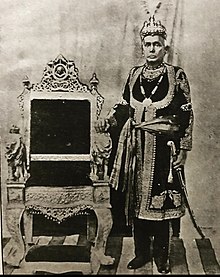
            "bio": "Maharajah Vikram Dev IV or Vikram Deo Varma (28 June 1869 – 14 April 1951) was the 25th king of the Suryavansh dynasty that ruled over Kalinga and later Jeypore Samasthanam under the British. A patron of the arts and literature, he was also a writer and a proficient playwright. He was also an administrator, a magistrate for Visakhapatnam by the Madras government in 1914 and involved in the delineation of the state of Odisha.<br>Vikram Dev was born in Sri Mukhalingam Parvatalapeta of Srikakulam Taluk to Rekha Devi and Maharajkumar Krishna Chandra Dev, the junior prince of Jeypore and the younger brother of Maharaja Ram Chandra Dev III. Evidently, due to a family quarrel Krishna Chandra stayed away from Jeypore in the village of Sri Kurmam in Srimukhalingam, Andhra Pradesh. Vikram’s mother died when he was nine and his father died six years later. He was adopted by the Queen of the Matsya Dynasty of Madugula and was known as 'Raja of Vaddadi-Madugula' although this adoption was challenged in court in 1881, the judges retained its validity. He learned English from J.S. Bard at Vizag and became an expert in Telugu, Odia and Sanskrit. He became a writer in all these languages and was awarded an honorary doctor of literature and made a Sahitya Samrat by the  Andhra  Bharati  Tirtha  Research University on 6 May 1933. He married the daughter of Sulochana of Nawrangpur who belonged to the royalty of Patna. A philanthropist, he donated to the cause of Andhra University and helped establish various cultural and educational institutions.<br>Long before he was crowned as the king of Jeypore, Vikram Dev was a renowned scholar who gained expertise in five languages - Sanskrit-Hindi, Odia, Telugu, Bengali and English. He acquired enough fame through his contribution to the combined literature of all these languages. He was awarded the doctorate degree of ‘Kala-Prapūrna’ and the honorary title of 'Sahitya Samrat' by the Andhra Bharati Tirtha Research University in 1933.<br>He wrote Telugu dramas like ‘Shree Nivas Kalyan Natak’, ‘Krushnarjuna Charitam’ and ‘Manavati Charitam’ that were staged in the iconic 'Jagannmitra Hall' established by the king which was seen as a noble attempt to flourish art and culture among the populace of the city. He annually invited and honored 100 learned scholars from all over India and donated one lac every year to the Andhra University.<br>He donated two million rupees to fund the Andhra University which was ordered to be shifted to Guntur.  He was one of the main writers of newspapers and Journals such as Nav-Bharat, Sahakar, Navin, Shishir, etc. He also contributed to the religious writings by authoring ‘Bhagawad Gita Mahatmya’ his first writing in Odia, ‘Sarasa Gitavali’ in his youth and wrote many strotras Kavacham and Chautisha etc. He served as the pro-chancellor of Utkal University and Andhra University.<br>Vikram Dev was a keen admirer of education and contributed whole heartedly for this cause. He did not only save Andhra University by donating millions but also made sure that it is well established and efficient for his subjects. Therefore, he donated one lac rupees annually to the Andhra University. He donated one lac thirty thousand rupees to the S.C.B. Medical college at Cuttack and few thousand rupees to the post-graduate scholarship to Utkal University.<br>A major portion of his donations also contributed in laying the foundation of the first theatre hall of Visakhapattnam called 'Jagannmitra Hall' and Jeypore College of Technology and Science. He was the founder of the Vikram Dev College in Jeypore, named in respect of his first cousin and predecessor, Sir Vikram Dev III, now a government college. He bore all the cost of publications for some renowned writers that he met in his time serving as the pro-chancellor of Andhra University.",
            "raw_bio": "Maharajah Vikram Dev IV or Vikram Deo Varma (28 June 1869 – 14 April 1951) was the 25th king of the Suryavansh dynasty that ruled over Kalinga and later Jeypore Samasthanam under the British. A patron of the arts and literature, he was also a writer and a proficient playwright. He was also an administrator, a magistrate for Visakhapatnam by the Madras government in 1914 and involved in the delineation of the state of Odisha. Vikram Dev was born in Sri Mukhalingam Parvatalapeta of Srikakulam Taluk to Rekha Devi and Maharajkumar Krishna Chandra Dev, the junior prince of Jeypore and the younger brother of Maharaja Ram Chandra Dev III. Evidently, due to a family quarrel Krishna Chandra stayed away from Jeypore in the village of Sri Kurmam in Srimukhalingam, Andhra Pradesh. Vikram’s mother died when he was nine and his father died six years later. He was adopted by the Queen of the Matsya Dynasty of Madugula and was known as 'Raja of Vaddadi-Madugula' although this adoption was challenged in court in 1881, the judges retained its validity. He learned English from J.S. Bard at Vizag and became an expert in Telugu, Odia and Sanskrit. He became a writer in all these languages and was awarded an honorary doctor of literature and made a Sahitya Samrat by the  Andhra  Bharati  Tirtha  Research University on 6 May 1933. He married the daughter of Sulochana of Nawrangpur who belonged to the royalty of Patna. A philanthropist, he donated to the cause of Andhra University and helped establish various cultural and educational institutions. Long before he was crowned as the king of Jeypore, Vikram Dev was a renowned scholar who gained expertise in five languages - Sanskrit-Hindi, Odia, Telugu, Bengali and English. He acquired enough fame through his contribution to the combined literature of all these languages. He was awarded the doctorate degree of ‘Kala-Prapūrna’ and the honorary title of 'Sahitya Samrat' by the Andhra Bharati Tirtha Research University in 1933. He wrote Telugu dramas like ‘Shree Nivas Kalyan Natak’, ‘Krushnarjuna Charitam’ and ‘Manavati Charitam’ that were staged in the iconic 'Jagannmitra Hall' established by the king which was seen as a noble attempt to flourish art and culture among the populace of the city. He annually invited and honored 100 learned scholars from all over India and donated one lac every year to the Andhra University. He donated two million rupees to fund the Andhra University which was ordered to be shifted to Guntur.  He was one of the main writers of newspapers and Journals such as Nav-Bharat, Sahakar, Navin, Shishir, etc. He also contributed to the religious writings by authoring ‘Bhagawad Gita Mahatmya’ his first writing in Odia, ‘Sarasa Gitavali’ in his youth and wrote many strotras Kavacham and Chautisha etc. He served as the pro-chancellor of Utkal University and Andhra University. Vikram Dev was a keen admirer of education and contributed whole heartedly for this cause. He did not only save Andhra University by donating millions but also made sure that it is well established and efficient for his subjects. Therefore, he donated one lac rupees annually to the Andhra University. He donated one lac thirty thousand rupees to the S.C.B. Medical college at Cuttack and few thousand rupees to the post-graduate scholarship to Utkal University. A major portion of his donations also contributed in laying the foundation of the first theatre hall of Visakhapattnam called 'Jagannmitra Hall' and Jeypore College of Technology and Science. He was the founder of the Vikram Dev College in Jeypore, named in respect of his first cousin and predecessor, Sir Vikram Dev III, now a government college. He bore all the cost of publications for some renowned writers that he met in his time serving as the pro-chancellor of Andhra University.",
            "slug": "vikram-deo-verma",
            "DOB": null,
            "DateOfDemise": null,
            "location": "",
            "url": "/sootradhar/vikram-deo-verma",
            "tags": null,
            "created": "2023-12-27T19:00:39.405362",
            "is_has_special_post": false,
            "is_special_author": false,
            "language": 13
        },
        {
            "id": 175,
            "image": "https://kavishalalab.s3.ap-south-1.amazonaws.com/sootradhar_author/Bulleh_Shah.jpg",
            "name": "Bulleh Shah",
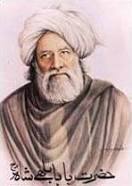
            "bio": "Syed Abdullah Shah Qadri; 1680–1757 popularly known as Bulleh Shah, was a Mughal-era Punjabi Islamic philosopher and Sufi poet. His first spiritual teacher was Shah Inayat Qadiri, a Sufi murshid of Lahore. He was a Sayyid/Syed, a descendant of the Prophet Muhammad.",
            "raw_bio": "Syed Abdullah Shah Qadri; 1680–1757 popularly known as Bulleh Shah, was a Mughal-era Punjabi Islamic philosopher and Sufi poet. His first spiritual teacher was Shah Inayat Qadiri, a Sufi murshid of Lahore. He was a Sayyid/Syed, a descendant of the Prophet Muhammad.",
            "slug": "bulleh-shah",
            "DOB": "1680-01-01",
            "DateOfDemise": null,
            "location": null,
            "url": "/sootradhar/bulleh-shah",
            "tags": null,
            "created": "2023-09-22T12:35:13.948243",
            "is_has_special_post": true,
            "is_special_author": false,
            "language": 14
        },
        {
            "id": 176,
            "image": "https://kavishalalab.s3.ap-south-1.amazonaws.com/sootradhar_author/Waris_Shah.jpg",
            "name": "Waris Shah",
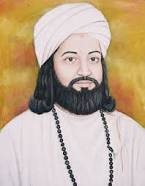
            "bio": "Waris Shah was a Punjabi Sufi poet of the Chishti order, known for his contribution to Punjabi literature.",
            "raw_bio": "Waris Shah was a Punjabi Sufi poet of the Chishti order, known for his contribution to Punjabi literature.",
            "slug": "waris-shah",
            "DOB": "1722-01-23",
            "DateOfDemise": null,
            "location": null,
            "url": "/sootradhar/waris-shah",
            "tags": null,
            "created": "2023-09-22T12:35:15.545038",
            "is_has_special_post": true,
            "is_special_author": false,
            "language": 14
        },
        {
            "id": 177,
            "image": "https://kavishalalab.s3.ap-south-1.amazonaws.com/sootradhar_author/Mian_Muhammad_Bakhsh.jpg",
            "name": "Mian Muhammad Bakhsh",
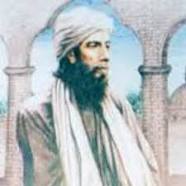
            "bio": "Mian Muhammad Bakhsh was a Sufi saint and a Western Punjabi Hindko and Panjistani poet regarded as the Rumi of Hind Indian subcontinent. He belonged to the Qadri tariqah. He is especially renowned as the author of a book of poetry called Sayful Mulūk as well as the romance tragedy Mirza Sahiban",
            "raw_bio": "Mian Muhammad Bakhsh was a Sufi saint and a Western Punjabi Hindko and Panjistani poet regarded as the Rumi of Hind Indian subcontinent. He belonged to the Qadri tariqah. He is especially renowned as the author of a book of poetry called Sayful Mulūk as well as the romance tragedy Mirza Sahiban",
            "slug": "mian-muhammad-bakhsh",
            "DOB": "1830-01-01",
            "DateOfDemise": null,
            "location": null,
            "url": "/sootradhar/mian-muhammad-bakhsh",
            "tags": null,
            "created": "2023-09-22T12:35:16.441332",
            "is_has_special_post": true,
            "is_special_author": false,
            "language": 14
        },
        {
            "id": 178,
            "image": "https://kavishalalab.s3.ap-south-1.amazonaws.com/sootradhar_author/Hadrat_Sultan_Bahu.jpg",
            "name": "Hazrat Sultan Bahu",
            "bio": "Hazrat Sultan Bahu was a Sufi mystic, poet, and scholar active during the Mughal empire mostly in the Punjab region. He belonged to Qadiri Sufi order, and founded the mystic tradition known as Sarwari Qadiri.",
            "raw_bio": "Hazrat Sultan Bahu was a Sufi mystic, poet, and scholar active during the Mughal empire mostly in the Punjab region. He belonged to Qadiri Sufi order, and founded the mystic tradition known as Sarwari Qadiri.",
            "slug": "hazrat-sultan-bahu",
            "DOB": "1630-01-17",
            "DateOfDemise": null,
            "location": null,
            "url": "/sootradhar/hazrat-sultan-bahu",
            "tags": null,
            "created": "2023-09-22T12:35:16.829111",
            "is_has_special_post": true,
            "is_special_author": false,
            "language": 14
        },
        {
            "id": 179,
            "image": "https://kavishalalab.s3.ap-south-1.amazonaws.com/sootradhar_author/Shah_Hussain.jpg",
            "name": "Shah Hussain",
            "bio": "Shah Hussain was a 16th-century Punjabi Sufi poet who is regarded as a pioneer of the Kafi form of Punjabi poetry. Hussain's love for a Hindu boy named \"Madho\" has resulted in them being referred to as a single person with the composite name of \"Madho Lal Hussain",
            "raw_bio": "Shah Hussain was a 16th-century Punjabi Sufi poet who is regarded as a pioneer of the Kafi form of Punjabi poetry. Hussain's love for a Hindu boy named \"Madho\" has resulted in them being referred to as a single person with the composite name of \"Madho Lal Hussain",
            "slug": "shah-hussain",
            "DOB": "1538-01-01",
            "DateOfDemise": null,
            "location": null,
            "url": "/sootradhar/shah-hussain",
            "tags": null,
            "created": "2023-09-22T12:35:17.981125",
            "is_has_special_post": true,
            "is_special_author": false,
            "language": 14
        },
        {
            "id": 180,
            "image": "https://kavishalalab.s3.ap-south-1.amazonaws.com/sootradhar_author/Dhani_Ram_Chatrik.jpg",
            "name": "Dhani Ram Chatrik",
            "bio": "Dhani Ram Chatrik was an Indian poet and typographer. He is considered one of the pioneers of modern Punjabi poetry. He promoted Punjabi culture, language and publications through his life. In 1926, he became the President of Punjabi Sahit Sabha, a Punjabi Literary Society.",
            "raw_bio": "Dhani Ram Chatrik was an Indian poet and typographer. He is considered one of the pioneers of modern Punjabi poetry. He promoted Punjabi culture, language and publications through his life. In 1926, he became the President of Punjabi Sahit Sabha, a Punjabi Literary Society.",
            "slug": "dhani-ram-chatrik",
            "DOB": "1876-10-04",
            "DateOfDemise": null,
            "location": "Amritsar",
            "url": "/sootradhar/dhani-ram-chatrik",
            "tags": null,
            "created": "2023-09-22T12:35:20.330432",
            "is_has_special_post": true,
            "is_special_author": false,
            "language": 14
        }
    ],
    "description": "<p style=\"text-align: center; font-size: 24px;\"> The Great Poets and Writers in Indian and World History! </p>",
    "image": "https://kavishalalab.s3.ap-south-1.amazonaws.com/sootradhar_description/black.jpg"
}