HTTP 200 OK
Allow: GET, HEAD, OPTIONS
Content-Type: application/json
Vary: Accept

{
    "count": 17752,
    "next": "http://admin.kavishala.in/sootradhar/authors/?format=api&page=726",
    "previous": "http://admin.kavishala.in/sootradhar/authors/?format=api&page=724",
    "results": [
        {
            "id": 27625,
            "image": "https://kavishalalab.s3.ap-south-1.amazonaws.com/sootradhar_author/Gopala_Chandra_Praharaj.jpg",
            "name": "Gopala Chandra Praharaj",
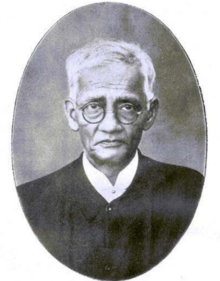
            "bio": "<br>Gopala Chandra Praharaj (27 September 1874 – 16 May 1945) was a writer in the Odia language, well known as the compiler of the Purnachandra Odia Bhashakosha. He also contributed significantly to Odia literature by his works in prose. A lawyer by profession, Praharaj wrote several satirical and analytical essays, in magazines such as Utkal Sahitya, Rasachakra, Nababharata, and Satya Samachar, on the social, political and cultural issues of contemporary Odisha (Odisha) during early 20th century.<br>Praharaj was born on 27 September 1874 to an aristocratic Zamindar Brahmin family of Siddheswarpur in Cuttack district. He completed his matriculation from Ravenshaw Collegiate School and studied FA from Ravenshaw college of Cuttack. He studied law at Calcutta University and became a lawyer in 1902.<br>He started writing essays in the Magazine Utkal Sahitya in 1901 by the caption \"Bhagabata Tungire Sandhya\", which is the first published work by the author. It was followed by Bai Mohanty Panji and many other writings on socio-cultural and political issues. He followed the footsteps of Fakir Mohan Senapati and made a remarkable development in Odia satirical literature. Praharaj used the colloquial speech of Odisha along with Hindustani, Parsi, English, Sanskrit and folk language in his prose works. He wrote several critical essays with different pen names in many magazines up to his old age. However, he dedicated around three decades of his life to the compilation of Purnachandra Odia Bhashakosha.<br>Purnachandra Odia Bhashakosha is the most comprehensive lexicon in Odia language. It presents the meaning of words in four languages—Odia, English, Hindi and Bengali, and explains the origin, development and use of the words. It consists of around 9,500 pages and 185 thousand words in 7 volumes. Praharaj not only did the work of compiling the lexicon, but also raised funds for its publication and supervised its printing and sale. Praharaj included in this lexicon not only the words which were used in literature, but also the words of common speech. The publication of the lexicon was patronised by the kings/princes of several princely states of present Orissa (Odisha). It is still recognised as the biggest dictionary in Oriya (Odia) language, although few copies of the original printed version survive. An electronic version has been published by Srujanika.<br>Praharaj while compiling the Purnachandra Odia Bhashakosha, also introduced a new letter- ୱ to the Odia script inventory to represent the phonetic sound of (Wa) in order to distinguish it from ବ (Ba), with which it shared the same consonant ligature form/conjunct form(୍ୱ).<br>Praharaj was one of the satirists of early 20th century. His writings were published in many magazines of that period; Utkal Sahitya, Rasachakra, Nababharata, Satya Samachar and many others. Dealing with social issues, political condition of Orissa and India, and socio-cultural mentality of contemporary people these essays were written in humorous style and critical manner. Some of his essays were published in shape of books during his life. His notable works are Bhagabata Tungire Sandhya, Bai Mohanty Panji, Dunia ra Halchal, Nananka Bastani. Some of his writings are now difficult to obtain.\r\n<br>Praharaj published a book Utkalara Kahani dealing with the folk stories of Odisha. Among the remarkable works of Praharaj is \"Dhaga Dhamali Rachana\" containing the idioms of Odia language. His other works include his autobiography, many poems and stories written for children, a book namely Bhasakosha Safar.\r\n",
            "raw_bio": "Gopala Chandra Praharaj (27 September 1874 – 16 May 1945) was a writer in the Odia language, well known as the compiler of the Purnachandra Odia Bhashakosha. He also contributed significantly to Odia literature by his works in prose. A lawyer by profession, Praharaj wrote several satirical and analytical essays, in magazines such as Utkal Sahitya, Rasachakra, Nababharata, and Satya Samachar, on the social, political and cultural issues of contemporary Odisha (Odisha) during early 20th century. Praharaj was born on 27 September 1874 to an aristocratic Zamindar Brahmin family of Siddheswarpur in Cuttack district. He completed his matriculation from Ravenshaw Collegiate School and studied FA from Ravenshaw college of Cuttack. He studied law at Calcutta University and became a lawyer in 1902. He started writing essays in the Magazine Utkal Sahitya in 1901 by the caption \"Bhagabata Tungire Sandhya\", which is the first published work by the author. It was followed by Bai Mohanty Panji and many other writings on socio-cultural and political issues. He followed the footsteps of Fakir Mohan Senapati and made a remarkable development in Odia satirical literature. Praharaj used the colloquial speech of Odisha along with Hindustani, Parsi, English, Sanskrit and folk language in his prose works. He wrote several critical essays with different pen names in many magazines up to his old age. However, he dedicated around three decades of his life to the compilation of Purnachandra Odia Bhashakosha. Purnachandra Odia Bhashakosha is the most comprehensive lexicon in Odia language. It presents the meaning of words in four languages—Odia, English, Hindi and Bengali, and explains the origin, development and use of the words. It consists of around 9,500 pages and 185 thousand words in 7 volumes. Praharaj not only did the work of compiling the lexicon, but also raised funds for its publication and supervised its printing and sale. Praharaj included in this lexicon not only the words which were used in literature, but also the words of common speech. The publication of the lexicon was patronised by the kings/princes of several princely states of present Orissa (Odisha). It is still recognised as the biggest dictionary in Oriya (Odia) language, although few copies of the original printed version survive. An electronic version has been published by Srujanika. Praharaj while compiling the Purnachandra Odia Bhashakosha, also introduced a new letter- ୱ to the Odia script inventory to represent the phonetic sound of (Wa) in order to distinguish it from ବ (Ba), with which it shared the same consonant ligature form/conjunct form(୍ୱ). Praharaj was one of the satirists of early 20th century. His writings were published in many magazines of that period; Utkal Sahitya, Rasachakra, Nababharata, Satya Samachar and many others. Dealing with social issues, political condition of Orissa and India, and socio-cultural mentality of contemporary people these essays were written in humorous style and critical manner. Some of his essays were published in shape of books during his life. His notable works are Bhagabata Tungire Sandhya, Bai Mohanty Panji, Dunia ra Halchal, Nananka Bastani. Some of his writings are now difficult to obtain.\r  Praharaj published a book Utkalara Kahani dealing with the folk stories of Odisha. Among the remarkable works of Praharaj is \"Dhaga Dhamali Rachana\" containing the idioms of Odia language. His other works include his autobiography, many poems and stories written for children, a book namely Bhasakosha Safar.\r ",
            "slug": "gopala-chandra-praharaj",
            "DOB": "1874-09-27",
            "DateOfDemise": null,
            "location": "",
            "url": "/sootradhar/gopala-chandra-praharaj",
            "tags": null,
            "created": "2023-12-27T18:48:37.903635",
            "is_has_special_post": false,
            "is_special_author": false,
            "language": 13
        },
        {
            "id": 27626,
            "image": "https://kavishalalab.s3.ap-south-1.amazonaws.com/sootradhar_author/kavishala_logo.png",
            "name": "Ramachandra Behera",
            "bio": "<br>Ramachandra Behera (born 1945) is an Odia story writer, novelist, dramatist and lecturer. He received the state sahitya academy award for his novel \"Abhinayara Paridhi\" in 1993.<br>Behera was born on 2 November 1945 at Bahartipura village near Ghatagaon, Kendujhar district, Odisha. He graduated from Ravenshaw College, Cuttack , M.A from Banaras Hindu University and Ph.D. (in English) from Utkal University. He joined as a lecturer in 1969 at Kendrapara college and retired as principal in 2005 and later he has been chaired the president of Odisha Sahitya Academy from 2010 to 2013.<br>Behera has written stories, novels  and also some plays for All india Radio, Cuttack. His first collection of stoties titled \" Dwitiya Smasana\" marked his arrival. After that his some other collection followed like, Omkar Dhwani, Asthai Thikana, Gopapura etc.",
            "raw_bio": "Ramachandra Behera (born 1945) is an Odia story writer, novelist, dramatist and lecturer. He received the state sahitya academy award for his novel \"Abhinayara Paridhi\" in 1993. Behera was born on 2 November 1945 at Bahartipura village near Ghatagaon, Kendujhar district, Odisha. He graduated from Ravenshaw College, Cuttack , M.A from Banaras Hindu University and Ph.D. (in English) from Utkal University. He joined as a lecturer in 1969 at Kendrapara college and retired as principal in 2005 and later he has been chaired the president of Odisha Sahitya Academy from 2010 to 2013. Behera has written stories, novels  and also some plays for All india Radio, Cuttack. His first collection of stoties titled \" Dwitiya Smasana\" marked his arrival. After that his some other collection followed like, Omkar Dhwani, Asthai Thikana, Gopapura etc.",
            "slug": "ramachandra-behera",
            "DOB": "1945-11-02",
            "DateOfDemise": null,
            "location": "",
            "url": "/sootradhar/ramachandra-behera",
            "tags": null,
            "created": "2023-12-27T18:49:00.846920",
            "is_has_special_post": false,
            "is_special_author": false,
            "language": 13
        },
        {
            "id": 27627,
            "image": "https://kavishalalab.s3.ap-south-1.amazonaws.com/sootradhar_author/Madhusudan_Rao.jpg",
            "name": "Madhusudan Rao",
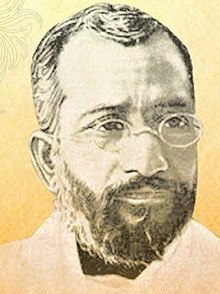
            "bio": "<br>Madhusudan Rao (19 January 1853 – 28 December 1912) was an Odia poet and writer from India. He was known as Bhaktakabi. His most well known work is the Chhabila Madhu Barnabodha.<br>He was born on 19 January 1853 in the district of Puri. He was a prominent Odia poet and essayist widely considered as the Father Of Modern Odia Poetry, by adding foreign (western) lyrical elements and experimentation. He died on 28 December 1912.<br>He is known as Bhaktakavi of Odia and is considered the father of modern (using western lyrical forms) Odia poetry.[]",
            "raw_bio": "Madhusudan Rao (19 January 1853 – 28 December 1912) was an Odia poet and writer from India. He was known as Bhaktakabi. His most well known work is the Chhabila Madhu Barnabodha. He was born on 19 January 1853 in the district of Puri. He was a prominent Odia poet and essayist widely considered as the Father Of Modern Odia Poetry, by adding foreign (western) lyrical elements and experimentation. He died on 28 December 1912. He is known as Bhaktakavi of Odia and is considered the father of modern (using western lyrical forms) Odia poetry.[]",
            "slug": "madhusudan-rao",
            "DOB": "1853-01-19",
            "DateOfDemise": null,
            "location": "",
            "url": "/sootradhar/madhusudan-rao",
            "tags": null,
            "created": "2023-12-27T18:49:03.782817",
            "is_has_special_post": false,
            "is_special_author": false,
            "language": 13
        },
        {
            "id": 27628,
            "image": "https://kavishalalab.s3.ap-south-1.amazonaws.com/sootradhar_author/Gopal_Rath.jpg",
            "name": "Gopal Rath",
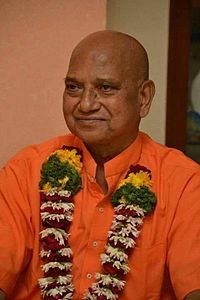
            "bio": "<br>Gopal Krushna Rath (1945 – 2016) was an Indian Odia poet. He won Sahitya Akademi award for Odia literature in 2014 for his poetry collection Bipula Diganta.<br>Rath was born in Sambalpur, on 3 August 1945. He grew up in Sambalpur town and studied to become a law professional. He started his career as a judge; however he changed his career to academics.\r\nHe retired as a Professor in Law from Sambalpur University. He was a former Chairman of the PG Council of Sambalpur University.  He was also member of Sahitya Akademi advisory board <br>He was married to Dr Kiranbala Rath, an academician, author and an orator. They had four children but lost three of them.<br>Rath renounced material world and became a sanyasi in 2014. He was also known as Srimat Swami Gururupananda Saraswati Maharaj. Along with Gopal Krushna, his wife also took to Sanyas and is known as Maa Kalyanmayee Saraswati.[]<br>Rath died in Pune on 30 December 2016.<br>Rath started writing poems when he was in high school. He published poems in most Odia magazines.  Rath won Sahitya Akademi award for his poetry collection \"Bipula Diganta\". He authored six anthologies of poems:",
            "raw_bio": "Gopal Krushna Rath (1945 – 2016) was an Indian Odia poet. He won Sahitya Akademi award for Odia literature in 2014 for his poetry collection Bipula Diganta. Rath was born in Sambalpur, on 3 August 1945. He grew up in Sambalpur town and studied to become a law professional. He started his career as a judge; however he changed his career to academics.\r He retired as a Professor in Law from Sambalpur University. He was a former Chairman of the PG Council of Sambalpur University.  He was also member of Sahitya Akademi advisory board  He was married to Dr Kiranbala Rath, an academician, author and an orator. They had four children but lost three of them. Rath renounced material world and became a sanyasi in 2014. He was also known as Srimat Swami Gururupananda Saraswati Maharaj. Along with Gopal Krushna, his wife also took to Sanyas and is known as Maa Kalyanmayee Saraswati.[] Rath died in Pune on 30 December 2016. Rath started writing poems when he was in high school. He published poems in most Odia magazines.  Rath won Sahitya Akademi award for his poetry collection \"Bipula Diganta\". He authored six anthologies of poems:",
            "slug": "gopal-rath",
            "DOB": "1945-08-03",
            "DateOfDemise": null,
            "location": "",
            "url": "/sootradhar/gopal-rath",
            "tags": null,
            "created": "2023-12-27T18:49:11.083160",
            "is_has_special_post": false,
            "is_special_author": false,
            "language": 13
        },
        {
            "id": 27629,
            "image": "https://kavishalalab.s3.ap-south-1.amazonaws.com/sootradhar_author/Radhanath_Rath.jpg",
            "name": "Radhanath Rath",
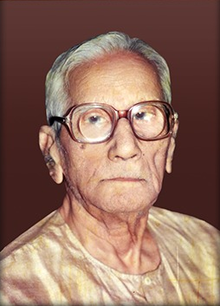
            "bio": "<br>Dr. Radhanath Rath (6 December 1896 – 11 February 1998) was a newspaper editor, freedom fighter, social worker and politician from Odisha. He was the editor of The Samaja, one of the leading newspapers of Odisha.<br>He  was born on 6 December 1896, in a village named \"Radhanathpur Shashan\" of Aathgarh. He started his education in the Jubilee School of Balasore where his uncle Lokanath Mohapatra was the Sanskrit teacher. He was matriculated in 1916 from Ravenshaw Collegiate School of Cuttack.<br>He joined the forest department of Singhbhum district as a Clerk. He left the job in 1919 and joined the 'Satyabadi press' of Gopabandhu Das. He started his career in Journalism as Manager and Assistant Editor of the Oriya weekly \"The Samaja\" which was started under the editorial of Gopabandhu Das. After the death of Gopabandhu Das in the year 1928, Pandit Lingaraj Mishra worked as the editor of the \"Samaj\". In the year 1930, the daily publication of Samaj was initiated. During 1946–1952 Lingaraj Mishra worked as the education minister of Odisha. So Radhanath Rath became the Editor of the \"Samaj\".<br>He joined the Quit India Movement in 1942 and was imprisoned for two years.<br>He was elected 5 times to the Odisha Legislative Assembly. In 1946, he was first elected to the state assembly from Athagarh.  He appointed cabinet Minister in charge of Finance, Education, Forestry and Agriculture from 1952 to 1961. Radhanath Rath became the Finance and Education Minister in the Nabakrushna Choudhury Cabinet for the period 1952 to 1959. In the year 1959 he held the post of minister of development & forest department under the Harekrushna Mahatab's Cabinet.Except for between 1961 and 1967, he remained a member of the house from 1946 to 1977.<br>He was a lifetime member and President of the Odisha branch of the 'Servants of the People Society' set up by Lala Lajpat Rai of Punjab. He was president of the Society for over a decade from May 1981. He was the head of the All Indian Scout and Guides Association, Odisha. He was also related to many other organisations like the Hind leprosy eradication group, the Gopabandhu Daridra Narayan Seva Sangha. He was also the Deputy Din of the Orissa University of Agriculture and Technology. He has written many poems, stories and biographies. \"Mo Jel Smruti Lipi\" is one of his famous works. He died on 11 February 1998 at Cuttack. \r\nHis body was laid to rest with full state honours at Satyabadi near Puri.",
            "raw_bio": "Dr. Radhanath Rath (6 December 1896 – 11 February 1998) was a newspaper editor, freedom fighter, social worker and politician from Odisha. He was the editor of The Samaja, one of the leading newspapers of Odisha. He  was born on 6 December 1896, in a village named \"Radhanathpur Shashan\" of Aathgarh. He started his education in the Jubilee School of Balasore where his uncle Lokanath Mohapatra was the Sanskrit teacher. He was matriculated in 1916 from Ravenshaw Collegiate School of Cuttack. He joined the forest department of Singhbhum district as a Clerk. He left the job in 1919 and joined the 'Satyabadi press' of Gopabandhu Das. He started his career in Journalism as Manager and Assistant Editor of the Oriya weekly \"The Samaja\" which was started under the editorial of Gopabandhu Das. After the death of Gopabandhu Das in the year 1928, Pandit Lingaraj Mishra worked as the editor of the \"Samaj\". In the year 1930, the daily publication of Samaj was initiated. During 1946–1952 Lingaraj Mishra worked as the education minister of Odisha. So Radhanath Rath became the Editor of the \"Samaj\". He joined the Quit India Movement in 1942 and was imprisoned for two years. He was elected 5 times to the Odisha Legislative Assembly. In 1946, he was first elected to the state assembly from Athagarh.  He appointed cabinet Minister in charge of Finance, Education, Forestry and Agriculture from 1952 to 1961. Radhanath Rath became the Finance and Education Minister in the Nabakrushna Choudhury Cabinet for the period 1952 to 1959. In the year 1959 he held the post of minister of development & forest department under the Harekrushna Mahatab's Cabinet.Except for between 1961 and 1967, he remained a member of the house from 1946 to 1977. He was a lifetime member and President of the Odisha branch of the 'Servants of the People Society' set up by Lala Lajpat Rai of Punjab. He was president of the Society for over a decade from May 1981. He was the head of the All Indian Scout and Guides Association, Odisha. He was also related to many other organisations like the Hind leprosy eradication group, the Gopabandhu Daridra Narayan Seva Sangha. He was also the Deputy Din of the Orissa University of Agriculture and Technology. He has written many poems, stories and biographies. \"Mo Jel Smruti Lipi\" is one of his famous works. He died on 11 February 1998 at Cuttack. \r His body was laid to rest with full state honours at Satyabadi near Puri.",
            "slug": "radhanath-rath",
            "DOB": "1896-12-06",
            "DateOfDemise": null,
            "location": "",
            "url": "/sootradhar/radhanath-rath",
            "tags": null,
            "created": "2023-12-27T18:49:15.168661",
            "is_has_special_post": false,
            "is_special_author": false,
            "language": 13
        },
        {
            "id": 27630,
            "image": "https://kavishalalab.s3.ap-south-1.amazonaws.com/sootradhar_author/Brajanath_Ratha.jpg",
            "name": "Brajanath Ratha",
            "bio": "<br>Brajanath Ratha (12 January 1936 – 31 May 2014) was an Indian poet who wrote in Odia. Brajanath Ratha is internationally recognised and is the recipient of many prestigious awards like the Odisha Sahitya Academy Award, Vishuba Award, Gokarnika Award, First Shudramuni Sahitya Award and Honoured by South Korea's Ambassador, from Global Cooperation Society International, Seol, Republic of Korea for Contribution in World welfare, Cooperation and Services.<br>Ratha was awarded with Tagore Literature Awards in 2010 for Samanya Asamanya, a poetry collection containing three types of poems: progressive, satirical and philosophical. This unique collection carries the message of hope to mankind. His first poem was written to welcome India's independence in 1947. He has been conferred with the highest honours from the Odisha Sahitya Academy Award for Manara Manachitra (Map of the Mind) to the Silver Jubilee Award for poetry by Prajatantra Prachar Samiti, Cuttack.",
            "raw_bio": "Brajanath Ratha (12 January 1936 – 31 May 2014) was an Indian poet who wrote in Odia. Brajanath Ratha is internationally recognised and is the recipient of many prestigious awards like the Odisha Sahitya Academy Award, Vishuba Award, Gokarnika Award, First Shudramuni Sahitya Award and Honoured by South Korea's Ambassador, from Global Cooperation Society International, Seol, Republic of Korea for Contribution in World welfare, Cooperation and Services. Ratha was awarded with Tagore Literature Awards in 2010 for Samanya Asamanya, a poetry collection containing three types of poems: progressive, satirical and philosophical. This unique collection carries the message of hope to mankind. His first poem was written to welcome India's independence in 1947. He has been conferred with the highest honours from the Odisha Sahitya Academy Award for Manara Manachitra (Map of the Mind) to the Silver Jubilee Award for poetry by Prajatantra Prachar Samiti, Cuttack.",
            "slug": "brajanath-ratha",
            "DOB": "1936-01-12",
            "DateOfDemise": null,
            "location": "",
            "url": "/sootradhar/brajanath-ratha",
            "tags": null,
            "created": "2023-12-27T18:49:19.503076",
            "is_has_special_post": false,
            "is_special_author": false,
            "language": 13
        },
        {
            "id": 27631,
            "image": "https://kavishalalab.s3.ap-south-1.amazonaws.com/sootradhar_author/Pratibha_Ray.jpg",
            "name": "Pratibha Ray",
            "bio": "<br>Pratibha Ray (born 21 January 1944) is an Indian academic and writer of Odia-language novels and stories. For her contribution to the Indian literature, Ray received the Jnanpith Award in 2011. She was awarded the Padma Bhushan in 2022.<br>She was born on 21 January 1944, at Alabol, a remote village in the Balikuda area of Jagatsinghpur district formerly part of Cuttack district of Odisha state.\r\nShe was the first woman to win the Moortidevi Award in 1991.\r\nHer first novel Barsha Basanta Baishakha (1974) was a best seller.<br>Her search for a \"social order based on equality, love, peace and integration\", continues, since she first penned at the age of nine. When she wrote for a social order, based on equality without class, caste, religion or sex discriminations, some of her critics branded her as a communist, and some as feminist. But she says: \"I am a humanist. Men and women have been created differently for the healthy functioning of society. The specialities women have been endowed with should be nurtured further. As a human being, however, woman is equal to man.\"<br>She continued her writing career even after her marriage and raising a family of three children and husband Akshay Ray who is an engineer. Her post-doctoral research was on Tribalism and Criminology of Bondo Highlander, tribes of Odisha, India.<br>She started her professional career as a school teacher, and later she taught in various government colleges in Odisha for thirty years. She has guided doctoral research and has published many research articles. She took voluntary retirement as a Professor of Education from State Government Service and joined as Member, Public Service Commission of Odisha.<br>She has active interest in social reform and has fought against social injustice on many occasions. One important incident in her life is protesting against colour (caste/religion) discrimination by the high priests of Jagannath Temple at Puri. She is currently fighting a defamation case lodged by the priests against her for her newspaper article in which she wrote against the undesirable behaviour of the priests, titled \"The Colour of Religion is Black\" (Dharmara Ranga Kala). She works in the cyclone-affected areas after the Odisha's Super Cyclone of October 1999 and she is working for rehabilitation of the orphans and widows of Cyclone affected areas.<br>Ray has travelled extensively inside India to participate in various national literary and educational conferences. She visited five republics of the erstwhile USSR in 1986 in a cultural exchange programme sponsored by ISCUS. She represented India as an Indian writer in the India Fair in Australia, \"India Today 94\". sponsored by Indian Council for Cultural Relations, New Delhi, in 1994. She gave readings and talks on Indian literature and languages in several universities of Australia. She has also visited the US, UK and France on speaking tours, represented India as an Indian writer in the India Festival in Bangladesh in 1996, and attended the 7th International Interdisciplinary Congress on Women in the University of Tromsø, Norway, in June 1999 as an Indian delegate. She visited Norway, Sweden, Finland and Denmark on a speaking tour in 1999. Visited Zurich, Switzerland, in 2000 to present a paper in the Third European Conference on Gender Equality in Higher Education.<br>She is a member of a number of learned societies. She is connected with the Indian Council for Cultural Relations, Central Board of Film Certification, Indian Red Cross Society, India International Centre, National Book Trust of India, Central Academy of Letters etc. She has travelled extensively in India and abroad to participate in various literary and educational conferences. She has won a number of national and state awards for her creative writing.<br>Novels",
            "raw_bio": "Pratibha Ray (born 21 January 1944) is an Indian academic and writer of Odia-language novels and stories. For her contribution to the Indian literature, Ray received the Jnanpith Award in 2011. She was awarded the Padma Bhushan in 2022. She was born on 21 January 1944, at Alabol, a remote village in the Balikuda area of Jagatsinghpur district formerly part of Cuttack district of Odisha state.\r She was the first woman to win the Moortidevi Award in 1991.\r Her first novel Barsha Basanta Baishakha (1974) was a best seller. Her search for a \"social order based on equality, love, peace and integration\", continues, since she first penned at the age of nine. When she wrote for a social order, based on equality without class, caste, religion or sex discriminations, some of her critics branded her as a communist, and some as feminist. But she says: \"I am a humanist. Men and women have been created differently for the healthy functioning of society. The specialities women have been endowed with should be nurtured further. As a human being, however, woman is equal to man.\" She continued her writing career even after her marriage and raising a family of three children and husband Akshay Ray who is an engineer. Her post-doctoral research was on Tribalism and Criminology of Bondo Highlander, tribes of Odisha, India. She started her professional career as a school teacher, and later she taught in various government colleges in Odisha for thirty years. She has guided doctoral research and has published many research articles. She took voluntary retirement as a Professor of Education from State Government Service and joined as Member, Public Service Commission of Odisha. She has active interest in social reform and has fought against social injustice on many occasions. One important incident in her life is protesting against colour (caste/religion) discrimination by the high priests of Jagannath Temple at Puri. She is currently fighting a defamation case lodged by the priests against her for her newspaper article in which she wrote against the undesirable behaviour of the priests, titled \"The Colour of Religion is Black\" (Dharmara Ranga Kala). She works in the cyclone-affected areas after the Odisha's Super Cyclone of October 1999 and she is working for rehabilitation of the orphans and widows of Cyclone affected areas. Ray has travelled extensively inside India to participate in various national literary and educational conferences. She visited five republics of the erstwhile USSR in 1986 in a cultural exchange programme sponsored by ISCUS. She represented India as an Indian writer in the India Fair in Australia, \"India Today 94\". sponsored by Indian Council for Cultural Relations, New Delhi, in 1994. She gave readings and talks on Indian literature and languages in several universities of Australia. She has also visited the US, UK and France on speaking tours, represented India as an Indian writer in the India Festival in Bangladesh in 1996, and attended the 7th International Interdisciplinary Congress on Women in the University of Tromsø, Norway, in June 1999 as an Indian delegate. She visited Norway, Sweden, Finland and Denmark on a speaking tour in 1999. Visited Zurich, Switzerland, in 2000 to present a paper in the Third European Conference on Gender Equality in Higher Education. She is a member of a number of learned societies. She is connected with the Indian Council for Cultural Relations, Central Board of Film Certification, Indian Red Cross Society, India International Centre, National Book Trust of India, Central Academy of Letters etc. She has travelled extensively in India and abroad to participate in various literary and educational conferences. She has won a number of national and state awards for her creative writing. Novels",
            "slug": "pratibha-ray",
            "DOB": "1944-01-21",
            "DateOfDemise": null,
            "location": "",
            "url": "/sootradhar/pratibha-ray",
            "tags": null,
            "created": "2023-12-27T18:49:23.433725",
            "is_has_special_post": false,
            "is_special_author": false,
            "language": 13
        },
        {
            "id": 27632,
            "image": "https://kavishalalab.s3.ap-south-1.amazonaws.com/sootradhar_author/Nilamani_Routray.jpg",
            "name": "Nilamani Routray",
            "bio": "<br>Nilamani Routray(Odia: )(24 May 1920 – 4 October 2004) was an Indian politician and the Chief Minister of Odisha from 1977 to 1980. He served as the Health and Family Welfare Minister and then Forest and Environment Minister in the Union Government led by V.P. Singh. He died on 4 October 2004.<br>Nilamani Routray was a founder of the Odisha unit of All India Students Federation. He was the president of the Odisha state unit of the Indian National Congress from 1967 to 1970. Later he joined the Utkal Congress and became its president. Subsequently, he switched over to the Bharatiya Lok Dal and became the president of its state unit. He was elected to the Lok Sabha in 1989.<br>His autobiography Smruti O Anubhuti (1986) won the Odisha Sahitya Akademi Award in 1988.",
            "raw_bio": "Nilamani Routray(Odia: )(24 May 1920 – 4 October 2004) was an Indian politician and the Chief Minister of Odisha from 1977 to 1980. He served as the Health and Family Welfare Minister and then Forest and Environment Minister in the Union Government led by V.P. Singh. He died on 4 October 2004. Nilamani Routray was a founder of the Odisha unit of All India Students Federation. He was the president of the Odisha state unit of the Indian National Congress from 1967 to 1970. Later he joined the Utkal Congress and became its president. Subsequently, he switched over to the Bharatiya Lok Dal and became the president of its state unit. He was elected to the Lok Sabha in 1989. His autobiography Smruti O Anubhuti (1986) won the Odisha Sahitya Akademi Award in 1988.",
            "slug": "nilamani-routray",
            "DOB": "1920-05-24",
            "DateOfDemise": null,
            "location": "",
            "url": "/sootradhar/nilamani-routray",
            "tags": null,
            "created": "2023-12-27T18:49:34.260184",
            "is_has_special_post": false,
            "is_special_author": false,
            "language": 13
        },
        {
            "id": 27633,
            "image": "https://kavishalalab.s3.ap-south-1.amazonaws.com/sootradhar_author/Sarojini_Sahoo.jpg",
            "name": "Sarojini Sahoo",
            "bio": "<br>Sarojini Sahoo (born 4 January 1956) is an Indian feminist writer, a columnist in The New Indian Express and an associate editor of Chennai-based English magazine Indian AGE. She has been enlisted among  25 Exceptional Women of India by Kindle Magazine of Kolkata. and is an Odisha Sahitya Academy Award winner.<br>Born in the small town of Dhenkanal in Odisha (India), Sahoo earned her MA and PhD degrees in Odia Literature and a Bachelor of Law from Utkal University. She now teaches at a degree college in Belpahar, Jharsuguda, Odisha.<br>She is the second daughter of Ishwar Chandra Sahoo and the late Nalini Devi and is married to Jagadish Mohanty, a veteran writer of Odisha. She has a son and a daughter.<br>Her novel Gambhiri Ghara  proved to be a bestseller in Odia literature. Her novels have gained a reputation for their feminist outlook and sexual frankness and have been translated into English and published from India under the title The Dark Abode (2008) (ISBN 978-81-906956-2-6) and published from Bangladesh in Bengali as Mithya Gerosthali ( 2007 ) (ISBN 984 404 287-9). Prameela K.P has translated this novel into Malayalam and has been published as \"Irunda Koodaram\" by Chintha Publishers, Thiruvananthapuram.  Martina Fuchs for German and Dinesh Kumar Mali for Hindi. Another novel Pakhibas has been translated into Bengali and published from Bangladesh under the same title in 2009. This novel has been translated into Hindi by Dinesh Kumar Mali and has been published with same title by Yash Publication, Delhi (ISBN 81-89537-45-8) in 2010. Also, Dinesh Kumar Mali translated two more novel in Hindi titled बंद कमरा and विशादेश्वरी published from Rajpal and Sons, New Delhi and Yash publication, New Delhi. The same translator had translated  सरोजिनी साहू की दलित कहानियाँ and रेप तथा अन्य कहानियां published from Yash publication, New Delhi as well as Rajpal and Sons, New Delhi.<br>She has published a collection of essays titled 'Sensible Sensuality (2010), where redefining femininity with Eastern perspective, the book explores why sexuality plays a major role in our understanding of Eastern feminism. The author thinks feminism should not act in opposition to men as individuals. To her, feminism is against oppressive and outdated social structures which forces both men and women into positions which are false and antagonistic. Thus, everyone has an important role to play in the feminist movement. It seems ironic that feminism has been characterized as anti-male, when in fact, it seeks to liberate men from the macho stereotypic roles men often have to endure such as the need to suppress feelings, act aggressively, and be deprived of contact with children. Sahoo thinks people should emphasize their femininity rather to impose the so-called stereotyped feministic attitude of the second wave.<br>As an Indian feminist, many of Sarojini Sahoo's writings deal candidly with female sexuality, the emotional lives of women, and the intricate fabric of human relationships, depicting extensively about the interior experiences of women and how their burgeoning sexuality is seen as a threat to traditional patriarchal societies; this book is rare of its kind and has covered the topics that never be discussed so far in any Indian discourse. Her debatable concept on feminism, her denial of Simone De Beauvoir's 'the other theory', make her a prominent feminist personality of South Asia and for which KINDLE Magazine of India has placed her among 25 exceptional mindset women of India.<br>Sarojini Sahoo is a key figure and trendsetter of feminism in contemporary Indian literature. For her, feminism is not a \"gender problem\" or confrontational attack on male hegemony and, as such, differs from the feminist views of Virginia Woolf or Judith Butler. Sahoo accepts feminism as an integral part of femaleness separate from the masculine world. Writing with a heightened awareness of women's bodies, she has developed an appropriate style that exploits openness, fragmentation, and nonlinearity. Sahoo, however contends that whilst the woman identity is certainly constitutionally different from that of man, men and women still share a basic human equality. Thus the harmful asymmetric sex /gender \"Othering\" arises accidentally and 'passively'from natural, unavoidable intersubjectivity.<br>Treating female sexuality from puberty to menopause, her fiction always projects a feminine sensibility. Feminine feelings such as restrictions during adolescence or pregnancy, fear factors such as rape or being condemned by society, the concept of the \"bad girl,\" and so on, are treated thematically and in-depth throughout her novels and short stories.<br>Her feminism is constantly linked to the sexual politics of a woman. She denies patriarchal limits of sexual expression for a woman and she identifies women's sexual liberation as the real motive behind the women's movement. In South Asian Outlook, an e-magazine published from Canada, Menka Walia writes: \"Sahoo typically evolves her stories around Indian women and sexuality, which is something not commonly written about, but is rather discouraged in a traditionalist society. As a feminist, she advocates women's rights and usually gives light to the injustices Eastern women face. In her interviews, she usually talks about the fact that women are second-class citizens in India, backing up these facts with examples of how love marriages are forbidden, the rejection of divorces, the unfairness of dowries, and the rejection of female politicians.\"\r\nFor her, orgasm is the body's natural call to feminist politics: if being a woman is this good, women must be worth something. Her novels like Upanibesh, Pratibandi and Gambhiri Ghara  cover a myriad of areas from sexuality to philosophy; from the politics of the home to politics of the world. According to American journalist Linda Lowen, Sarojini Sahoo has written extensively as an Indian feminist about the interior lives of women and how their burgeoning sexuality is seen as a threat to traditional patriarchal societies. Sarojini's novels and short stories treat women as sexual beings and probe culturally sensitive topics such as rape, abortion and menopause – from a female perspective.<br>Sexuality is something that can be related to many other aspects of culture, tightly-linked with an individual life, or into the evolution of a culture.  Anyone's class or ethnic or geographic identity could be closely associated to his/her sexuality, or anyone's sense of art or literature.  Sexuality is not just an entity in itself.<br>Still, either in West or in East, there is a reluctant outlook towards sexuality. Society has always tried to hide it from any open forum. But neither society, nor the legislature, or even the judiciary stand by the side of sexuality to support it.<br>In the West, James Joyce's Ulysses or even Radclyffe Hall's Loneliness in the Well or Virginia Woolf's  Orlando are some examples which have to suffer a lot for describing sexuality in literature. Sexuality in literature grew with feminism.<br>Simone De Beauvoir, in her book The Second Sex, first elaborately described the gender role and problem away from biological differences. In Odia literature, Sarojini is considered a key figure to discuss sexuality in her fiction with a sincere effort to express her feminist ideas.<br>Her novel Upanibesh was the first attempt in Odia literature to focus on sexuality as a part of social revolt by any woman. Medha, the protagonist of her novel, was a bohemian .  In her pre-marital stage, she was thinking that it was boring to live with a man lifelong.  Perhaps she wanted a chain free life, where there would be only love, only sex and would not be any monotony.  But she had to marry Bhaskar.  Can Indian society imagine a lady with bohemianism?<br>In her novel Pratibandi, Sarojini has also described the thematic development of sexuality in a woman.  Priyanka, the protagonist of the novel has to encounter the loneliness in the exile of Saragpali, a remote village of India.  This loneliness develops into a sexual urge and soon, Priyanka finds herself sexually attached with a former Member of Parliament.  Though there is an age gap between them, his intelligence impresses her and she discovers a hidden archaeologist in him.<br>In her novel Gambhiri Ghara, she describes an unusual relationship between two people: a Hindu housewife of India and a Muslim artist of Pakistan. It is a net-oriented novel.  A woman meets a very sexually experienced man.  One day he asks if she had any such experience.  The woman, Kuki, scolds him and insults him by calling him a caterpillar.  She said without love, lust is like hunger of a caterpillar.  Gradually they become involved with love, lust, and spiritually.  That man considers her as his daughter, lover, mother, and above all these, as a Goddess.  They both madly love each other, through the Internet and on the phone.  They use obscene language and they kiss each other online.  Kuki does not lead a happy conjugal life though she has a love marriage with Aniket.  But the novel is not limited to only a love story.<br>It has a greater aspect. It deals with the relationship between State and individual. Safique is not a Muslim by temperament, but as a historian, thinks the Pakistan of today has separated itself from its roots and looks towards Arabian legends for his history.  He protests that the syllabus of history for the school would start from seventh century A.D., not from the Mahenjodaro and Harappa.  Safique was once arrested after the bomb blast of London for allegation of being associated with the terrorist, but is it a fact?  Later Kuki learned that Safiques is trapped by a military junta.  The ex-lover of Safique's wife had retaliated against Safique by arresting him with an allegation of terrorism.<br>Here, the author deals with the question of terrorism. There is often discussion about terrorism caused by an individual or by a group.  Society rarely discusses terrorism caused by a state.<br>What is a state?  Is it a group of people that resides within political and geographical boundaries?  Are a state's identity, mood and wishes separate from its ruler?  Is the wish of George W. Bush not considered as the wish of America?  Has it reflected the mood and wish of the people of America?  So, every time, the state's arranged anarchism or terrorism is merely a reflection of a terrorism caused by an individual. The great truth lies beneath Safique, as a terrorist, develops from the mind of a military man.<br>The author has successfully painted the difference of sensibility towards sexuality between male and female and has her own credibility for the frankness to deal with sensitive matters, be they matters of politics or matters of sexuality. She has gained a reputation and has her own place in the history of Odia fiction.<br>She has published ten anthologies of short stories.<br>Her English anthologies of short stories are:<br>Her some of short stories have been anthologised in Hindi:<br>Some of her short stories have also been anthologized into Bengali:<br>Her other Odia anthologies of short stories are:",
            "raw_bio": "Sarojini Sahoo (born 4 January 1956) is an Indian feminist writer, a columnist in The New Indian Express and an associate editor of Chennai-based English magazine Indian AGE. She has been enlisted among  25 Exceptional Women of India by Kindle Magazine of Kolkata. and is an Odisha Sahitya Academy Award winner. Born in the small town of Dhenkanal in Odisha (India), Sahoo earned her MA and PhD degrees in Odia Literature and a Bachelor of Law from Utkal University. She now teaches at a degree college in Belpahar, Jharsuguda, Odisha. She is the second daughter of Ishwar Chandra Sahoo and the late Nalini Devi and is married to Jagadish Mohanty, a veteran writer of Odisha. She has a son and a daughter. Her novel Gambhiri Ghara  proved to be a bestseller in Odia literature. Her novels have gained a reputation for their feminist outlook and sexual frankness and have been translated into English and published from India under the title The Dark Abode (2008) (ISBN 978-81-906956-2-6) and published from Bangladesh in Bengali as Mithya Gerosthali ( 2007 ) (ISBN 984 404 287-9). Prameela K.P has translated this novel into Malayalam and has been published as \"Irunda Koodaram\" by Chintha Publishers, Thiruvananthapuram.  Martina Fuchs for German and Dinesh Kumar Mali for Hindi. Another novel Pakhibas has been translated into Bengali and published from Bangladesh under the same title in 2009. This novel has been translated into Hindi by Dinesh Kumar Mali and has been published with same title by Yash Publication, Delhi (ISBN 81-89537-45-8) in 2010. Also, Dinesh Kumar Mali translated two more novel in Hindi titled बंद कमरा and विशादेश्वरी published from Rajpal and Sons, New Delhi and Yash publication, New Delhi. The same translator had translated  सरोजिनी साहू की दलित कहानियाँ and रेप तथा अन्य कहानियां published from Yash publication, New Delhi as well as Rajpal and Sons, New Delhi. She has published a collection of essays titled 'Sensible Sensuality (2010), where redefining femininity with Eastern perspective, the book explores why sexuality plays a major role in our understanding of Eastern feminism. The author thinks feminism should not act in opposition to men as individuals. To her, feminism is against oppressive and outdated social structures which forces both men and women into positions which are false and antagonistic. Thus, everyone has an important role to play in the feminist movement. It seems ironic that feminism has been characterized as anti-male, when in fact, it seeks to liberate men from the macho stereotypic roles men often have to endure such as the need to suppress feelings, act aggressively, and be deprived of contact with children. Sahoo thinks people should emphasize their femininity rather to impose the so-called stereotyped feministic attitude of the second wave. As an Indian feminist, many of Sarojini Sahoo's writings deal candidly with female sexuality, the emotional lives of women, and the intricate fabric of human relationships, depicting extensively about the interior experiences of women and how their burgeoning sexuality is seen as a threat to traditional patriarchal societies; this book is rare of its kind and has covered the topics that never be discussed so far in any Indian discourse. Her debatable concept on feminism, her denial of Simone De Beauvoir's 'the other theory', make her a prominent feminist personality of South Asia and for which KINDLE Magazine of India has placed her among 25 exceptional mindset women of India. Sarojini Sahoo is a key figure and trendsetter of feminism in contemporary Indian literature. For her, feminism is not a \"gender problem\" or confrontational attack on male hegemony and, as such, differs from the feminist views of Virginia Woolf or Judith Butler. Sahoo accepts feminism as an integral part of femaleness separate from the masculine world. Writing with a heightened awareness of women's bodies, she has developed an appropriate style that exploits openness, fragmentation, and nonlinearity. Sahoo, however contends that whilst the woman identity is certainly constitutionally different from that of man, men and women still share a basic human equality. Thus the harmful asymmetric sex /gender \"Othering\" arises accidentally and 'passively'from natural, unavoidable intersubjectivity. Treating female sexuality from puberty to menopause, her fiction always projects a feminine sensibility. Feminine feelings such as restrictions during adolescence or pregnancy, fear factors such as rape or being condemned by society, the concept of the \"bad girl,\" and so on, are treated thematically and in-depth throughout her novels and short stories. Her feminism is constantly linked to the sexual politics of a woman. She denies patriarchal limits of sexual expression for a woman and she identifies women's sexual liberation as the real motive behind the women's movement. In South Asian Outlook, an e-magazine published from Canada, Menka Walia writes: \"Sahoo typically evolves her stories around Indian women and sexuality, which is something not commonly written about, but is rather discouraged in a traditionalist society. As a feminist, she advocates women's rights and usually gives light to the injustices Eastern women face. In her interviews, she usually talks about the fact that women are second-class citizens in India, backing up these facts with examples of how love marriages are forbidden, the rejection of divorces, the unfairness of dowries, and the rejection of female politicians.\"\r For her, orgasm is the body's natural call to feminist politics: if being a woman is this good, women must be worth something. Her novels like Upanibesh, Pratibandi and Gambhiri Ghara  cover a myriad of areas from sexuality to philosophy; from the politics of the home to politics of the world. According to American journalist Linda Lowen, Sarojini Sahoo has written extensively as an Indian feminist about the interior lives of women and how their burgeoning sexuality is seen as a threat to traditional patriarchal societies. Sarojini's novels and short stories treat women as sexual beings and probe culturally sensitive topics such as rape, abortion and menopause – from a female perspective. Sexuality is something that can be related to many other aspects of culture, tightly-linked with an individual life, or into the evolution of a culture.  Anyone's class or ethnic or geographic identity could be closely associated to his/her sexuality, or anyone's sense of art or literature.  Sexuality is not just an entity in itself. Still, either in West or in East, there is a reluctant outlook towards sexuality. Society has always tried to hide it from any open forum. But neither society, nor the legislature, or even the judiciary stand by the side of sexuality to support it. In the West, James Joyce's Ulysses or even Radclyffe Hall's Loneliness in the Well or Virginia Woolf's  Orlando are some examples which have to suffer a lot for describing sexuality in literature. Sexuality in literature grew with feminism. Simone De Beauvoir, in her book The Second Sex, first elaborately described the gender role and problem away from biological differences. In Odia literature, Sarojini is considered a key figure to discuss sexuality in her fiction with a sincere effort to express her feminist ideas. Her novel Upanibesh was the first attempt in Odia literature to focus on sexuality as a part of social revolt by any woman. Medha, the protagonist of her novel, was a bohemian .  In her pre-marital stage, she was thinking that it was boring to live with a man lifelong.  Perhaps she wanted a chain free life, where there would be only love, only sex and would not be any monotony.  But she had to marry Bhaskar.  Can Indian society imagine a lady with bohemianism? In her novel Pratibandi, Sarojini has also described the thematic development of sexuality in a woman.  Priyanka, the protagonist of the novel has to encounter the loneliness in the exile of Saragpali, a remote village of India.  This loneliness develops into a sexual urge and soon, Priyanka finds herself sexually attached with a former Member of Parliament.  Though there is an age gap between them, his intelligence impresses her and she discovers a hidden archaeologist in him. In her novel Gambhiri Ghara, she describes an unusual relationship between two people: a Hindu housewife of India and a Muslim artist of Pakistan. It is a net-oriented novel.  A woman meets a very sexually experienced man.  One day he asks if she had any such experience.  The woman, Kuki, scolds him and insults him by calling him a caterpillar.  She said without love, lust is like hunger of a caterpillar.  Gradually they become involved with love, lust, and spiritually.  That man considers her as his daughter, lover, mother, and above all these, as a Goddess.  They both madly love each other, through the Internet and on the phone.  They use obscene language and they kiss each other online.  Kuki does not lead a happy conjugal life though she has a love marriage with Aniket.  But the novel is not limited to only a love story. It has a greater aspect. It deals with the relationship between State and individual. Safique is not a Muslim by temperament, but as a historian, thinks the Pakistan of today has separated itself from its roots and looks towards Arabian legends for his history.  He protests that the syllabus of history for the school would start from seventh century A.D., not from the Mahenjodaro and Harappa.  Safique was once arrested after the bomb blast of London for allegation of being associated with the terrorist, but is it a fact?  Later Kuki learned that Safiques is trapped by a military junta.  The ex-lover of Safique's wife had retaliated against Safique by arresting him with an allegation of terrorism. Here, the author deals with the question of terrorism. There is often discussion about terrorism caused by an individual or by a group.  Society rarely discusses terrorism caused by a state. What is a state?  Is it a group of people that resides within political and geographical boundaries?  Are a state's identity, mood and wishes separate from its ruler?  Is the wish of George W. Bush not considered as the wish of America?  Has it reflected the mood and wish of the people of America?  So, every time, the state's arranged anarchism or terrorism is merely a reflection of a terrorism caused by an individual. The great truth lies beneath Safique, as a terrorist, develops from the mind of a military man. The author has successfully painted the difference of sensibility towards sexuality between male and female and has her own credibility for the frankness to deal with sensitive matters, be they matters of politics or matters of sexuality. She has gained a reputation and has her own place in the history of Odia fiction. She has published ten anthologies of short stories. Her English anthologies of short stories are: Her some of short stories have been anthologised in Hindi: Some of her short stories have also been anthologized into Bengali: Her other Odia anthologies of short stories are:",
            "slug": "sarojini-sahoo",
            "DOB": "1956-01-04",
            "DateOfDemise": null,
            "location": "",
            "url": "/sootradhar/sarojini-sahoo",
            "tags": null,
            "created": "2023-12-27T18:49:38.613765",
            "is_has_special_post": false,
            "is_special_author": false,
            "language": 13
        },
        {
            "id": 27634,
            "image": "https://kavishalalab.s3.ap-south-1.amazonaws.com/sootradhar_author/kavishala_logo.png",
            "name": "Gayatri Saraf",
            "bio": "<br>Gayatri Saraf (born 17 August 1952) is an Indian writer.<br>This article about a person involved in the study of India is a stub. You can help Kavishala by expanding it.",
            "raw_bio": "Gayatri Saraf (born 17 August 1952) is an Indian writer. This article about a person involved in the study of India is a stub. You can help Kavishala by expanding it.",
            "slug": "gayatri-saraf",
            "DOB": "1952-08-17",
            "DateOfDemise": null,
            "location": "",
            "url": "/sootradhar/gayatri-saraf",
            "tags": null,
            "created": "2023-12-27T18:49:47.336276",
            "is_has_special_post": false,
            "is_special_author": false,
            "language": 13
        },
        {
            "id": 27635,
            "image": "https://kavishalalab.s3.ap-south-1.amazonaws.com/sootradhar_author/Nandini_Satpathy.jpg",
            "name": "Nandini Satpathy",
            "bio": "<br>Nandini Satpathy (9 June 1931 – 4 August 2006) was an Indian politician and author. She was the Chief Minister of Odisha from June 1972 to December 1976.<br>Nandini Satpathy nee Panigrahi was born on 9 June 1931 to Kalindi Charan Panigrahi and Ratnamani Panigrahi in a Brahmin Family of Coastal Puri but grew up in Pithapur, Cuttack, India. Satpathy's uncle Bhagavati Charan Panigrahi founded the Odisha branch of the Communist Party of India. He was a close associate of Netaji SC Bose.<br>In 1939, at the age of eight, she was mercilessly beaten up by British Police for pulling down the Union Jack and for pasting hand written anti-British Raj posters on the walls of Cuttack. The same was widely discussed at that time and it had worked as pouring fuel on fire for the struggle of Freedom of India from British Raj.<br>While at Ravenshaw College pursuing her Master of Arts in Odia, she got involved with the Communist Party's student wing, the Student Federation. In 1951, a student protest movement began in Odisha against rising college education costs, it later turned into a national youth movement. Nandini was a leader of this movement. The police force attacked the protestors and Nandini Satpathy was severely injured in the same. She was jailed, along with many others. In the jail she met Devendra Satpathy, another Student Federation member and the man who she later married.<br>In 1962, the Congress party was dominant in Orissa; the Orissa State Legislative Assembly of 140 members had over 80 from the Congress party. At a national level, there was a movement to have more women representatives in the Indian Parliament. The Assembly elected Nandini Satpathy (then president of the Women's Forum) to the upper house of India's Parliament, where she served two terms. After Indira Gandhi became Prime Minister of India in 1966, Satpathy became a Minister attached to the Prime Minister,[] with her specific portfolio being the Ministry of Information and Broadcasting.<br>Satpathy returned to Odisha in 1972, due to vacancies caused by Biju Patnaik and others departing from the Congress party, and became the Chief Minister of Odisha. During the Emergency of 25 June 1975 – 21 March 1977, she imprisoned a number of notable individuals, including Nabakrusna Choudhuri and Rama Devi; however, Odisha had the fewest prominent individuals jailed during the Emergency, and Satpathy otherwise attempted to resist Indira Gandhi's policies during the Emergency.\r\nSatpathy left office in December 1976. During the general election in 1977, she was part of a group of protesters led by Jagjivan Ram, which became the Congress for Democracy (CFD) party. CFD merged with Janata Party in May 1977. Nandini Satpathy was elected to Orissa Vidhan Sabha from Dhenkanal in June 1977. In 1980, she won that seat as Congress (Urs) candidate, and in 1985 as an independent. In 1990, her son Tathagata Satpathy won Dhenkanal assembly seat as Janata Dal candidate.<br>Nandini Satpathy returned to the Congress party in 1989, on the request of Rajiv Gandhi. The Congress party was unpopular in Odisha as a whole, due to its two term miss rule (primarily under Janaki Ballabh Patnaik as Chief Minister). She was elected as a member of the State Legislative Assembly from Gondia, Dhenkanal and remained in the Assembly until 2000, when she decided to retire from politics; she did not contest the 2000 elections. She was not influential in and was critical of the Odisha branch of the Congress party.<br>In 1977, Satpathy was accused of corruption and a police investigation started into possible violations of the Prevention of Corruption Act in force at that time. During the investigation, she was interrogated on a number of questions in written form. She refused to answer any questions; her attorney argued that Article 20 (3) of the Indian Constitution protected her against forced self-incrimination. The court agreed, strengthening the rights of the accused with a recognition of the right to a lawyer and the right against self-incrimination; it moreover held that women have the right to be questioned at their homes in the presence of male relatives, have the right to be brought to the police station only after a formal arrest, and have the right to be searched only by other women. Over the next 18 years, Satpathy won all of the cases against her.<br>Satpathy was a writer in the Odia language; her work has been translated and published into a number of other languages. She received the 1998 Sahitya Bharati Samman Award for her contributions to Oriya literature. Her last major literary work was translating Taslima Nasreen's Lajja into Oriya.<br>She died on 4 August 2006 at her home in Bhubaneswar.<br>In 2006 a social cause organisation, the Srimati Nandini Satpathy Memorial Trust (SNSMT), was established in her memory. It is one of the leading social cause organisations of Odisha albeit India. Shri. Suparno Satpathy heads SNSMT as Chairman.<br>Her younger out of the two sons Tathagata Satpathy was a 4 time Member of Parliament from Biju Janata Dal and the editor of daily newspapers — Dharitri and OrissaPOST.<br>Her eldest grandson Suparno Satpathy is a noted socio-political leader, Chairman SNSMT and Cidevant Convenor PMSA-Odisha, Govt. of India.<br>9 June, the birthday of late Smt. Nandini Satpathy, has been declared as National Daughters' Day – Nandini Diwas. Nandini and Diwas are two Sanskrit words which means daughter and day, respectively.<br>1st National Daughters day (Nandini Diwas) was celebrated in 2007 and Governor of Odisha was the chief guest in the event.<br>7th National Daughters day (Nandini Diwas) was celebrated in 2013 and Governor of Rajasthan was the Chief guest in the event.",
            "raw_bio": "Nandini Satpathy (9 June 1931 – 4 August 2006) was an Indian politician and author. She was the Chief Minister of Odisha from June 1972 to December 1976. Nandini Satpathy nee Panigrahi was born on 9 June 1931 to Kalindi Charan Panigrahi and Ratnamani Panigrahi in a Brahmin Family of Coastal Puri but grew up in Pithapur, Cuttack, India. Satpathy's uncle Bhagavati Charan Panigrahi founded the Odisha branch of the Communist Party of India. He was a close associate of Netaji SC Bose. In 1939, at the age of eight, she was mercilessly beaten up by British Police for pulling down the Union Jack and for pasting hand written anti-British Raj posters on the walls of Cuttack. The same was widely discussed at that time and it had worked as pouring fuel on fire for the struggle of Freedom of India from British Raj. While at Ravenshaw College pursuing her Master of Arts in Odia, she got involved with the Communist Party's student wing, the Student Federation. In 1951, a student protest movement began in Odisha against rising college education costs, it later turned into a national youth movement. Nandini was a leader of this movement. The police force attacked the protestors and Nandini Satpathy was severely injured in the same. She was jailed, along with many others. In the jail she met Devendra Satpathy, another Student Federation member and the man who she later married. In 1962, the Congress party was dominant in Orissa; the Orissa State Legislative Assembly of 140 members had over 80 from the Congress party. At a national level, there was a movement to have more women representatives in the Indian Parliament. The Assembly elected Nandini Satpathy (then president of the Women's Forum) to the upper house of India's Parliament, where she served two terms. After Indira Gandhi became Prime Minister of India in 1966, Satpathy became a Minister attached to the Prime Minister,[] with her specific portfolio being the Ministry of Information and Broadcasting. Satpathy returned to Odisha in 1972, due to vacancies caused by Biju Patnaik and others departing from the Congress party, and became the Chief Minister of Odisha. During the Emergency of 25 June 1975 – 21 March 1977, she imprisoned a number of notable individuals, including Nabakrusna Choudhuri and Rama Devi; however, Odisha had the fewest prominent individuals jailed during the Emergency, and Satpathy otherwise attempted to resist Indira Gandhi's policies during the Emergency.\r Satpathy left office in December 1976. During the general election in 1977, she was part of a group of protesters led by Jagjivan Ram, which became the Congress for Democracy (CFD) party. CFD merged with Janata Party in May 1977. Nandini Satpathy was elected to Orissa Vidhan Sabha from Dhenkanal in June 1977. In 1980, she won that seat as Congress (Urs) candidate, and in 1985 as an independent. In 1990, her son Tathagata Satpathy won Dhenkanal assembly seat as Janata Dal candidate. Nandini Satpathy returned to the Congress party in 1989, on the request of Rajiv Gandhi. The Congress party was unpopular in Odisha as a whole, due to its two term miss rule (primarily under Janaki Ballabh Patnaik as Chief Minister). She was elected as a member of the State Legislative Assembly from Gondia, Dhenkanal and remained in the Assembly until 2000, when she decided to retire from politics; she did not contest the 2000 elections. She was not influential in and was critical of the Odisha branch of the Congress party. In 1977, Satpathy was accused of corruption and a police investigation started into possible violations of the Prevention of Corruption Act in force at that time. During the investigation, she was interrogated on a number of questions in written form. She refused to answer any questions; her attorney argued that Article 20 (3) of the Indian Constitution protected her against forced self-incrimination. The court agreed, strengthening the rights of the accused with a recognition of the right to a lawyer and the right against self-incrimination; it moreover held that women have the right to be questioned at their homes in the presence of male relatives, have the right to be brought to the police station only after a formal arrest, and have the right to be searched only by other women. Over the next 18 years, Satpathy won all of the cases against her. Satpathy was a writer in the Odia language; her work has been translated and published into a number of other languages. She received the 1998 Sahitya Bharati Samman Award for her contributions to Oriya literature. Her last major literary work was translating Taslima Nasreen's Lajja into Oriya. She died on 4 August 2006 at her home in Bhubaneswar. In 2006 a social cause organisation, the Srimati Nandini Satpathy Memorial Trust (SNSMT), was established in her memory. It is one of the leading social cause organisations of Odisha albeit India. Shri. Suparno Satpathy heads SNSMT as Chairman. Her younger out of the two sons Tathagata Satpathy was a 4 time Member of Parliament from Biju Janata Dal and the editor of daily newspapers — Dharitri and OrissaPOST. Her eldest grandson Suparno Satpathy is a noted socio-political leader, Chairman SNSMT and Cidevant Convenor PMSA-Odisha, Govt. of India. 9 June, the birthday of late Smt. Nandini Satpathy, has been declared as National Daughters' Day – Nandini Diwas. Nandini and Diwas are two Sanskrit words which means daughter and day, respectively. 1st National Daughters day (Nandini Diwas) was celebrated in 2007 and Governor of Odisha was the chief guest in the event. 7th National Daughters day (Nandini Diwas) was celebrated in 2013 and Governor of Rajasthan was the Chief guest in the event.",
            "slug": "nandini-satpathy",
            "DOB": "1931-06-09",
            "DateOfDemise": null,
            "location": "",
            "url": "/sootradhar/nandini-satpathy",
            "tags": null,
            "created": "2023-12-27T18:49:50.882805",
            "is_has_special_post": false,
            "is_special_author": false,
            "language": 13
        },
        {
            "id": 27636,
            "image": "https://kavishalalab.s3.ap-south-1.amazonaws.com/sootradhar_author/Paramita_Satpathy.jpg",
            "name": "Paramita Satpathy",
            "bio": "<br>Paramita Satpathy (born 30 August 1965) is an Indian writer. Paramita is the daughter of Sahitya Akademi Award winner poet Pratibha Satpathy and Nityananda Satpathy.<br>Her first short-story was published in 1985 in 'Jhankar' magazine. Paramita, who has authored seven short-story collections, has been selected for the Sahitya Akademi Award 2016 for Odia. She has won the award for ‘Prapti’, a short-story collection she wrote in 2012.\r\nPrapti was released in a compact disc (CD) in August 2015.\r\nMany of her novels have also been translated in Hindi, English, Bengali, Telugu and Marathi languages.<br>Paramita who had joined Indian Revenue Service in 1989, is posted as the commissioner of the Income Tax department.<br>Paramita, has seven short-story collections and a novel to her credit like-",
            "raw_bio": "Paramita Satpathy (born 30 August 1965) is an Indian writer. Paramita is the daughter of Sahitya Akademi Award winner poet Pratibha Satpathy and Nityananda Satpathy. Her first short-story was published in 1985 in 'Jhankar' magazine. Paramita, who has authored seven short-story collections, has been selected for the Sahitya Akademi Award 2016 for Odia. She has won the award for ‘Prapti’, a short-story collection she wrote in 2012.\r Prapti was released in a compact disc (CD) in August 2015.\r Many of her novels have also been translated in Hindi, English, Bengali, Telugu and Marathi languages. Paramita who had joined Indian Revenue Service in 1989, is posted as the commissioner of the Income Tax department. Paramita, has seven short-story collections and a novel to her credit like-",
            "slug": "paramita-satpathy",
            "DOB": "1965-08-30",
            "DateOfDemise": null,
            "location": "",
            "url": "/sootradhar/paramita-satpathy",
            "tags": null,
            "created": "2023-12-27T18:49:54.876877",
            "is_has_special_post": false,
            "is_special_author": false,
            "language": 13
        }
    ],
    "description": "<p style=\"text-align: center; font-size: 24px;\"> The Great Poets and Writers in Indian and World History! </p>",
    "image": "https://kavishalalab.s3.ap-south-1.amazonaws.com/sootradhar_description/black.jpg"
}