HTTP 200 OK
Allow: GET, HEAD, OPTIONS
Content-Type: application/json
Vary: Accept

{
    "count": 17752,
    "next": "http://admin.kavishala.in/sootradhar/authors/?format=api&page=724",
    "previous": "http://admin.kavishala.in/sootradhar/authors/?format=api&page=722",
    "results": [
        {
            "id": 27601,
            "image": "https://kavishalalab.s3.ap-south-1.amazonaws.com/sootradhar_author/Harekrushna_Mahatab.jpg",
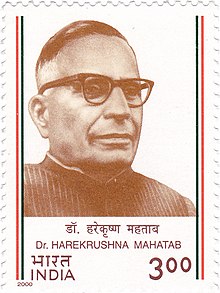
            "name": "Harekrushna Mahatab",
            "bio": "<br>Harekrushna Mahatab (born Harekrushna Das, 21 November 1899 – 2 January 1987) was the leader of the Indian National Congress, a notable figure in the Indian independence movement and the Chief Minister of Odisha from 1946 to 1950 and again from 1956 to 1961. He was popularly known by the sobriquet \"Utkal Keshari\".<br>Harekrushna Mahtab was born at Agarpada village in Bhadrak district of Odisha. He was born to Krushna Charan Das and Tohapha Debi in an aristocratic Khandayat family, and was adopted by his maternal grandfather and zamindar of Agarpada, Jaganath Mahtab. After passing his matriculation examination from Bhadrak High School, he joined Ravenshaw College, Cuttack but left his studies in 1921 to join the independence movement.<br>In 1922, Mahatab was imprisoned and charged with sedition. He was the Chairman of Balasore District Board from 1924 to 1928. He became the member of Bihar and Odisha Council in 1924. He joined the Salt Satyagraha movement and was imprisoned again in 1930. He was elected as the General Officer Commanding of Congress Sevadal for the AICC session at Puri in 1932 and he was arrested when the party was banned. He participated in the movement against untouchability in 1934 and opened his ancestral temple to all for the first time in Odisha. Later, he started Gandhi Karma Mandir at Agarpada. He was the President of Utkal Pradesh Congress Committee from 1930 to 1931 and again in 1937. He was nominated to the Congress Working Committee by Subhas Chandra Bose in 1938 and continued till 1946 and again from 1946 to 1950. He was the President of State Peoples' Enquiry Committee in 1938 and recommended cancellation of Sanada of the rulers and merger of the erstwhile princely states with Odisha Province. He participated in the Quit India Movement in 1942 and was imprisoned from 1942 to 1945.<br>Mahatab was the first Chief Minister of Odisha from 23 April 1946 to 12 May 1950. He was the Union Minister of Commerce and Industry from 1950 to 1952. He became the secretary general of the Congress Parliamentary Party in 1952. He was the Governor of Bombay from 1955 to 1956. After resigning from Governorship in 1956, he again became the Chief Minister of Odisha from 1956 to 1960. During his tenures as the Chief Minister, he played significant role in the merger and integration of former princely states, shifting of the capital from Cuttack to Bhubaneshwar and the sanction and construction of the multi-purpose Hirakud Dam Project. He was elected to the Lok Sabha in 1962 from Angul and became the vice-president of the Indian National Congress in 1966. In 1966, he resigned from the Congress and led the Orissa Jana Congress. He was elected to the Odisha Legislative Assembly in 1967, 1971 and 1974. He was imprisoned in 1976 for protesting against the Emergency.<br>He was the founder of the Prajatantra Prachar Samiti and started the weekly magazine Prajatantra in 1923 at Balasore, which later became the Daily Prajatantra. He was the chief editor of a monthly journal Jhankar since its inception. He also published the Weekly English paper The Eastern Times and was its chief editor.<br>He received the Sahitya Academy award in 1983 for the third volume of his well-known work, Gaon Majlis.<br>He was the President of Orissa Sahitya Academy and Sangit Natak Academy for a couple of terms. He received an honorary Doctorate degree from Andhra University, an honorary D.Litt. from Utkal University and an honorary Doctorate of Law from Sagar University.\r\nThe Odisha State Central Library, the apex library of the state public library system of Odisha is named after him as Harekrushna Mahtab State Library. It was established in 1959 with 3 acre campus at state capital, Bhubaneswar.",
            "raw_bio": "Harekrushna Mahatab (born Harekrushna Das, 21 November 1899 – 2 January 1987) was the leader of the Indian National Congress, a notable figure in the Indian independence movement and the Chief Minister of Odisha from 1946 to 1950 and again from 1956 to 1961. He was popularly known by the sobriquet \"Utkal Keshari\". Harekrushna Mahtab was born at Agarpada village in Bhadrak district of Odisha. He was born to Krushna Charan Das and Tohapha Debi in an aristocratic Khandayat family, and was adopted by his maternal grandfather and zamindar of Agarpada, Jaganath Mahtab. After passing his matriculation examination from Bhadrak High School, he joined Ravenshaw College, Cuttack but left his studies in 1921 to join the independence movement. In 1922, Mahatab was imprisoned and charged with sedition. He was the Chairman of Balasore District Board from 1924 to 1928. He became the member of Bihar and Odisha Council in 1924. He joined the Salt Satyagraha movement and was imprisoned again in 1930. He was elected as the General Officer Commanding of Congress Sevadal for the AICC session at Puri in 1932 and he was arrested when the party was banned. He participated in the movement against untouchability in 1934 and opened his ancestral temple to all for the first time in Odisha. Later, he started Gandhi Karma Mandir at Agarpada. He was the President of Utkal Pradesh Congress Committee from 1930 to 1931 and again in 1937. He was nominated to the Congress Working Committee by Subhas Chandra Bose in 1938 and continued till 1946 and again from 1946 to 1950. He was the President of State Peoples' Enquiry Committee in 1938 and recommended cancellation of Sanada of the rulers and merger of the erstwhile princely states with Odisha Province. He participated in the Quit India Movement in 1942 and was imprisoned from 1942 to 1945. Mahatab was the first Chief Minister of Odisha from 23 April 1946 to 12 May 1950. He was the Union Minister of Commerce and Industry from 1950 to 1952. He became the secretary general of the Congress Parliamentary Party in 1952. He was the Governor of Bombay from 1955 to 1956. After resigning from Governorship in 1956, he again became the Chief Minister of Odisha from 1956 to 1960. During his tenures as the Chief Minister, he played significant role in the merger and integration of former princely states, shifting of the capital from Cuttack to Bhubaneshwar and the sanction and construction of the multi-purpose Hirakud Dam Project. He was elected to the Lok Sabha in 1962 from Angul and became the vice-president of the Indian National Congress in 1966. In 1966, he resigned from the Congress and led the Orissa Jana Congress. He was elected to the Odisha Legislative Assembly in 1967, 1971 and 1974. He was imprisoned in 1976 for protesting against the Emergency. He was the founder of the Prajatantra Prachar Samiti and started the weekly magazine Prajatantra in 1923 at Balasore, which later became the Daily Prajatantra. He was the chief editor of a monthly journal Jhankar since its inception. He also published the Weekly English paper The Eastern Times and was its chief editor. He received the Sahitya Academy award in 1983 for the third volume of his well-known work, Gaon Majlis. He was the President of Orissa Sahitya Academy and Sangit Natak Academy for a couple of terms. He received an honorary Doctorate degree from Andhra University, an honorary D.Litt. from Utkal University and an honorary Doctorate of Law from Sagar University.\r The Odisha State Central Library, the apex library of the state public library system of Odisha is named after him as Harekrushna Mahtab State Library. It was established in 1959 with 3 acre campus at state capital, Bhubaneswar.",
            "slug": "harekrushna-mahatab",
            "DOB": "1899-11-21",
            "DateOfDemise": null,
            "location": "",
            "url": "/sootradhar/harekrushna-mahatab",
            "tags": null,
            "created": "2023-12-27T18:46:27.070407",
            "is_has_special_post": false,
            "is_special_author": false,
            "language": 13
        },
        {
            "id": 27602,
            "image": "https://kavishalalab.s3.ap-south-1.amazonaws.com/sootradhar_author/Mayadhar_Mansingh.jpg",
            "name": "Mayadhar Mansingh",
            "bio": "<br>Mayadhar Mansingh (13 November 1905 – 11 October 1973) was an Indian poet and writer who wrote in Odia. He received the Padma Shri, the fourth-highest civilian award in India, in 1967.<br>Mansingh was born in Nandala village, Krushnaprasad Tahasil of Puri district, Odisha, India. He was married to Hemalata and had 5 children. From oldest to youngest,  \"Lalatendu, Lalitendu, Labanyendu (deceased) and Nivedita and the youngest daughter, Sanghamitra(deceased).\"  His second son was a former diplomat, Foreign Secretary of India, a former High Commissioner of India to the UK, and a former Ambassador of India to the United States, Lalit Mansingh.<br>Mansingh's literary contributions include essays, poetic plays and long narrative poems. He also authored several research articles on the History of Odisha.He also worked as Head of the Jnankosh Project of Utkal University. His poetic style is profuse with the use of romantic and erotic metaphor, for which he has earned the appellation \"Prēmika kabi\" (Lover poet) in Odia literature. He wrote books like The Saga of the Land of Jagannatha (English) which portrays vividly the ancient history of Odisha. He also wrote books in Odia like Mahatabani, Geeta Mahatmya and Sarbajanina Geeta, which were published by J. Mohapatra & co (Now Mass Media Pvt Ltd), Cuttack. The Saga of the Land of Jagannatha is published by Mass Media Pvt Ltd. Some of his notable works include poems Krushna, Kamalayana, Kōṇārka and Ēi sahakāra taḷē.<br>Mansingh authored several research articles on the history of Odia literature, a subject in which he had abiding interest. He also authored a history of the Odia language, documenting the general use of the language, as also the development of Odia literature. The treatise, Ōḍiā Sāhitẏara Itihāsa (History of Odia language), was published in 1962.<br>Mansingh has also introduced some works of William Shakespeare into Odia literature. He has translated Shakespeare's Hamlet and Othello into Odia.<br>Saraswati Fakiramohan (Biography of Fakirmohan Senapati)\r\nSikshabitra Gatha (\"Story of an Educationist\")\r\nKabi O Kabita (\"Poet and Poetry\") https://www.amazon.com/dp/1645603717/ref=sr_1_1?crid=4204CMUKS27P&keywords=mayadhar+mansinha&qid=1697071786&sprefix=mayadhar+mansinha%2Caps%2C103&sr=8-1<br>He translated famous Shakespeare tragedy Hamlet and Othello in Odia.<br>Dr Mayadhar Mansingh Memorial High School is established in the year 1982 in Nandala Village of Krushnaprasad.",
            "raw_bio": "Mayadhar Mansingh (13 November 1905 – 11 October 1973) was an Indian poet and writer who wrote in Odia. He received the Padma Shri, the fourth-highest civilian award in India, in 1967. Mansingh was born in Nandala village, Krushnaprasad Tahasil of Puri district, Odisha, India. He was married to Hemalata and had 5 children. From oldest to youngest,  \"Lalatendu, Lalitendu, Labanyendu (deceased) and Nivedita and the youngest daughter, Sanghamitra(deceased).\"  His second son was a former diplomat, Foreign Secretary of India, a former High Commissioner of India to the UK, and a former Ambassador of India to the United States, Lalit Mansingh. Mansingh's literary contributions include essays, poetic plays and long narrative poems. He also authored several research articles on the History of Odisha.He also worked as Head of the Jnankosh Project of Utkal University. His poetic style is profuse with the use of romantic and erotic metaphor, for which he has earned the appellation \"Prēmika kabi\" (Lover poet) in Odia literature. He wrote books like The Saga of the Land of Jagannatha (English) which portrays vividly the ancient history of Odisha. He also wrote books in Odia like Mahatabani, Geeta Mahatmya and Sarbajanina Geeta, which were published by J. Mohapatra & co (Now Mass Media Pvt Ltd), Cuttack. The Saga of the Land of Jagannatha is published by Mass Media Pvt Ltd. Some of his notable works include poems Krushna, Kamalayana, Kōṇārka and Ēi sahakāra taḷē. Mansingh authored several research articles on the history of Odia literature, a subject in which he had abiding interest. He also authored a history of the Odia language, documenting the general use of the language, as also the development of Odia literature. The treatise, Ōḍiā Sāhitẏara Itihāsa (History of Odia language), was published in 1962. Mansingh has also introduced some works of William Shakespeare into Odia literature. He has translated Shakespeare's Hamlet and Othello into Odia. Saraswati Fakiramohan (Biography of Fakirmohan Senapati)\r Sikshabitra Gatha (\"Story of an Educationist\")\r Kabi O Kabita (\"Poet and Poetry\") https://www.amazon.com/dp/1645603717/ref=sr_1_1?crid=4204CMUKS27P&keywords=mayadhar+mansinha&qid=1697071786&sprefix=mayadhar+mansinha%2Caps%2C103&sr=8-1 He translated famous Shakespeare tragedy Hamlet and Othello in Odia. Dr Mayadhar Mansingh Memorial High School is established in the year 1982 in Nandala Village of Krushnaprasad.",
            "slug": "mayadhar-mansingh",
            "DOB": "1905-11-13",
            "DateOfDemise": null,
            "location": "",
            "url": "/sootradhar/mayadhar-mansingh",
            "tags": null,
            "created": "2023-12-27T18:46:31.224619",
            "is_has_special_post": false,
            "is_special_author": false,
            "language": 13
        },
        {
            "id": 27603,
            "image": "https://kavishalalab.s3.ap-south-1.amazonaws.com/sootradhar_author/kavishala_logo.png",
            "name": "Kanan Mishra",
            "bio": "<br>Kanan Mishra (1944–2015) was an Odia writer.<br>Mishra was born on 1 January 1944 at Cuttack, Odisha. She wrote five novels, four collections of poetry, one English featured novel and seven children's stories. She was married. She died on 7 March 2015 at the age of 71.<br>For her translated book Suryamukhi ra Swapna she received the Odisha Sahitya Akademi Award from the state government of Odisha.",
            "raw_bio": "Kanan Mishra (1944–2015) was an Odia writer. Mishra was born on 1 January 1944 at Cuttack, Odisha. She wrote five novels, four collections of poetry, one English featured novel and seven children's stories. She was married. She died on 7 March 2015 at the age of 71. For her translated book Suryamukhi ra Swapna she received the Odisha Sahitya Akademi Award from the state government of Odisha.",
            "slug": "kanan-mishra",
            "DOB": "1944-01-02",
            "DateOfDemise": null,
            "location": "",
            "url": "/sootradhar/kanan-mishra",
            "tags": null,
            "created": "2023-12-27T18:46:36.296656",
            "is_has_special_post": false,
            "is_special_author": false,
            "language": 13
        },
        {
            "id": 27604,
            "image": "https://kavishalalab.s3.ap-south-1.amazonaws.com/sootradhar_author/kavishala_logo.png",
            "name": "Tarun Kanti Mishra",
            "bio": "<br>Tarun Kanti Mishra (born 2 August 1950) is an Indian Odia story writer. More than 15 of his books have been published. He got Central Sahitya Akademi Award, Odisha Sahitya Academy award and Sarala Award for his contribution in literature and was an IAS in profession and retired after being head of the administration department of Odisha. Then he also worked as Chief Information Commissioner of Odisha.<br>Tarun Kanti was born in 1950, in Kendujhar district. He did his schooling in Puri Zilla School and P.M. Academy, Cuttack. He completed graduation from Buxi Jagabandhu Bidyadhar College in Economics and post graduation in Applied Economics from Utkal University. He also holds an MA degree from the University of East Anglia, UK.<br>He wished to become a teacher, but joined administrative service to meet family expectations. He joined Indian Administrative Service in 1975. After being in administrative positions in various Government of Odisha departments, he became head of the state administration in August 2009. He retired in August 2010. Government of Odisha appointed him as State Information Commissioner in November 2010. He relinquished this office in 2015.<br>Tarun Kanti Mishra's first story Hey Pruthibira Naagarika was published in the reputed literary magazine Aasantaakaali at the age of fourteen. His first anthology of short stories was published in 1968 while studying BJB College, Bhubaneswar. He has published18 anthologies and one novel. Many of his works have been translated into Hindi, Bengali, Urdu, Telugu, Malayalam, Marathi, Gujarati, and English. He authored a novel against the backdrop of Dandakaranya, a vast territory inhabited by immigrants of erstwhile East Pakistan and a large tribal population.",
            "raw_bio": "Tarun Kanti Mishra (born 2 August 1950) is an Indian Odia story writer. More than 15 of his books have been published. He got Central Sahitya Akademi Award, Odisha Sahitya Academy award and Sarala Award for his contribution in literature and was an IAS in profession and retired after being head of the administration department of Odisha. Then he also worked as Chief Information Commissioner of Odisha. Tarun Kanti was born in 1950, in Kendujhar district. He did his schooling in Puri Zilla School and P.M. Academy, Cuttack. He completed graduation from Buxi Jagabandhu Bidyadhar College in Economics and post graduation in Applied Economics from Utkal University. He also holds an MA degree from the University of East Anglia, UK. He wished to become a teacher, but joined administrative service to meet family expectations. He joined Indian Administrative Service in 1975. After being in administrative positions in various Government of Odisha departments, he became head of the state administration in August 2009. He retired in August 2010. Government of Odisha appointed him as State Information Commissioner in November 2010. He relinquished this office in 2015. Tarun Kanti Mishra's first story Hey Pruthibira Naagarika was published in the reputed literary magazine Aasantaakaali at the age of fourteen. His first anthology of short stories was published in 1968 while studying BJB College, Bhubaneswar. He has published18 anthologies and one novel. Many of his works have been translated into Hindi, Bengali, Urdu, Telugu, Malayalam, Marathi, Gujarati, and English. He authored a novel against the backdrop of Dandakaranya, a vast territory inhabited by immigrants of erstwhile East Pakistan and a large tribal population.",
            "slug": "tarun-kanti-mishra",
            "DOB": "1950-08-02",
            "DateOfDemise": null,
            "location": "",
            "url": "/sootradhar/tarun-kanti-mishra",
            "tags": null,
            "created": "2023-12-27T18:46:39.228927",
            "is_has_special_post": false,
            "is_special_author": false,
            "language": 13
        },
        {
            "id": 27605,
            "image": "https://kavishalalab.s3.ap-south-1.amazonaws.com/sootradhar_author/Baidyanath_Misra.jpg",
            "name": "Baidyanath Misra",
            "bio": "<br>Baidyanath Misra (22 November 1920 – 8 May 2019) was an Indian economist, educationist, author, and administrator from the state of Odisha. He served as the Vice-Chancellor of the Odisha University of Agriculture and Technology, Deputy-Chairman of Odisha State Planning Board, Chairman of Odisha's First State Finance Commission, Secretary of Odisha State Welfare Board, founder Secretary and President of Orissa Economics Association, and the founder Director and Chairman of Nabakrushna Choudhury Centre for Development Studies. He wrote 16 books in English and 20 in Odia. He was also a columnist in several leading Odia journals and newspapers. He organised several camps across Odisha, for helping the cause of the poor and downtrodden.[]<br>Misra received his Bachelor of Arts degree in economics from Ravenshaw University, followed by a Master of Arts degree from the University of Allahabad in 1948, and was the topper at both the institutions. He was also the first Odia topper of the Faculty of Arts and the Department of Economics of Allahabad University. He received two gold medals from Sarojini Naidu (the then ex officio Chancellor of the University of Allahabad, being the Governor of the United Provinces) during the convocation, one each from the Arts faculty and the Economics department. He completed another master's degree in economics from Wharton School of the University of Pennsylvania on a Fulbright Scholarship, where he studied under the Nobel laureate, Simon Kuznets. After returning to India, he did a PhD from Utkal University.<br>Having started his career as a lecturer in Ravenshaw College, he moved to Utkal University as a professor and the head of the department of Analytical & Applied Economics, where he instituted two academic chairs, funded by the Reserve Bank of India and the State Bank of India. He served as the Vice-Chancellor of the Odisha University of Agriculture and Technology from 1981 to 1985. During his tenure as the VC of OUAT, he established the College of Engineering and Technology, Bhubaneswar, College of Agriculture, Sambalpur, College of Home Science, Bhubaneswar, and the College of Fisheries, Ganjam. He headed the Odisha State Planning Board from 1985 to 1990. In 1987, he founded the Nabakrushna Choudhury Centre for Development Studies (NCDS), in Bhubaneswar, which is jointly funded by the Indian Council of Social Science Research (ICSSR), Government of India, and the Government of Odisha. He was also a member of the panel of economists of the Planning Commission of India and the Odisha Pay Commission.<br>He was born to Mahadev Misra and Manika Devi, in Khordha. He was married to Basanti Misra, a homemaker and a post-graduate in arts. The couple's children include a daughter, Bijayalaxmi, who is married to Ajatsatru Tripathy, an ophthalmologist; and three sons, Basant, who did his MS general surgery from Delhi University and MCh in neurosurgery from AIIMS, New Delhi, and is the Chief of Surgery and the Chairman of Neurosurgery at Hinduja Hospitals; Jayant, who did graduation in electrical engineering from IIT Roorkee and MEP from IIM Ahmedabad, and is currently Director & Chief Operating Officer of Indian Metals & Ferro Alloys; and  Sukant, who did post-graduation and doctorate in economics from Utkal University and Mississippi State University, and is currently Dean & Vice-Provost at Texas Technical University.<br>60 Research Papers, 10 Research Reports. He regularly contributed articles to Odia magazines and Odia newspapers.[]",
            "raw_bio": "Baidyanath Misra (22 November 1920 – 8 May 2019) was an Indian economist, educationist, author, and administrator from the state of Odisha. He served as the Vice-Chancellor of the Odisha University of Agriculture and Technology, Deputy-Chairman of Odisha State Planning Board, Chairman of Odisha's First State Finance Commission, Secretary of Odisha State Welfare Board, founder Secretary and President of Orissa Economics Association, and the founder Director and Chairman of Nabakrushna Choudhury Centre for Development Studies. He wrote 16 books in English and 20 in Odia. He was also a columnist in several leading Odia journals and newspapers. He organised several camps across Odisha, for helping the cause of the poor and downtrodden.[] Misra received his Bachelor of Arts degree in economics from Ravenshaw University, followed by a Master of Arts degree from the University of Allahabad in 1948, and was the topper at both the institutions. He was also the first Odia topper of the Faculty of Arts and the Department of Economics of Allahabad University. He received two gold medals from Sarojini Naidu (the then ex officio Chancellor of the University of Allahabad, being the Governor of the United Provinces) during the convocation, one each from the Arts faculty and the Economics department. He completed another master's degree in economics from Wharton School of the University of Pennsylvania on a Fulbright Scholarship, where he studied under the Nobel laureate, Simon Kuznets. After returning to India, he did a PhD from Utkal University. Having started his career as a lecturer in Ravenshaw College, he moved to Utkal University as a professor and the head of the department of Analytical & Applied Economics, where he instituted two academic chairs, funded by the Reserve Bank of India and the State Bank of India. He served as the Vice-Chancellor of the Odisha University of Agriculture and Technology from 1981 to 1985. During his tenure as the VC of OUAT, he established the College of Engineering and Technology, Bhubaneswar, College of Agriculture, Sambalpur, College of Home Science, Bhubaneswar, and the College of Fisheries, Ganjam. He headed the Odisha State Planning Board from 1985 to 1990. In 1987, he founded the Nabakrushna Choudhury Centre for Development Studies (NCDS), in Bhubaneswar, which is jointly funded by the Indian Council of Social Science Research (ICSSR), Government of India, and the Government of Odisha. He was also a member of the panel of economists of the Planning Commission of India and the Odisha Pay Commission. He was born to Mahadev Misra and Manika Devi, in Khordha. He was married to Basanti Misra, a homemaker and a post-graduate in arts. The couple's children include a daughter, Bijayalaxmi, who is married to Ajatsatru Tripathy, an ophthalmologist; and three sons, Basant, who did his MS general surgery from Delhi University and MCh in neurosurgery from AIIMS, New Delhi, and is the Chief of Surgery and the Chairman of Neurosurgery at Hinduja Hospitals; Jayant, who did graduation in electrical engineering from IIT Roorkee and MEP from IIM Ahmedabad, and is currently Director & Chief Operating Officer of Indian Metals & Ferro Alloys; and  Sukant, who did post-graduation and doctorate in economics from Utkal University and Mississippi State University, and is currently Dean & Vice-Provost at Texas Technical University. 60 Research Papers, 10 Research Reports. He regularly contributed articles to Odia magazines and Odia newspapers.[]",
            "slug": "baidyanath-misra",
            "DOB": "1920-11-22",
            "DateOfDemise": null,
            "location": "",
            "url": "/sootradhar/baidyanath-misra",
            "tags": null,
            "created": "2023-12-27T18:46:47.322284",
            "is_has_special_post": false,
            "is_special_author": false,
            "language": 13
        },
        {
            "id": 27606,
            "image": "https://kavishalalab.s3.ap-south-1.amazonaws.com/sootradhar_author/kavishala_logo.png",
            "name": "Artaballabha Mohanty",
            "bio": "<br>Artaballabha Mohanty, was a notable writer and literary critique.<br>He was born in Cuttack. He received Master of Arts in Odia literature and M.A. in Sanskrit. Then he became a professor at Ravenshaw University, Cuttack, Odisha. He was the founder of Prachi Samiti (1925-1934), a literary institution that played a key role in reshaping Odia literature. He was a good person in their lifetime.<br>Mohanty has also published the only available print record of Madala Panji.",
            "raw_bio": "Artaballabha Mohanty, was a notable writer and literary critique. He was born in Cuttack. He received Master of Arts in Odia literature and M.A. in Sanskrit. Then he became a professor at Ravenshaw University, Cuttack, Odisha. He was the founder of Prachi Samiti (1925-1934), a literary institution that played a key role in reshaping Odia literature. He was a good person in their lifetime. Mohanty has also published the only available print record of Madala Panji.",
            "slug": "artaballabha-mohanty",
            "DOB": "1887-07-30",
            "DateOfDemise": null,
            "location": "",
            "url": "/sootradhar/artaballabha-mohanty",
            "tags": null,
            "created": "2023-12-27T18:46:50.933588",
            "is_has_special_post": false,
            "is_special_author": false,
            "language": 13
        },
        {
            "id": 27607,
            "image": "https://kavishalalab.s3.ap-south-1.amazonaws.com/sootradhar_author/Akshaya_Mohanty.jpg",
            "name": "Akshaya Mohanty",
            "bio": "<br>Akshaya Mohanty, also known as Khoka Bhai, was an Indian singer, lyricist, composer, musician and writer in Odia. He has contributed Odia bhajans, Odissi songs, folk songs, film and non-film modern light songs in Odisha on contemporary themes and ballads based on popular legends in Odisha.<br>Akshaya Mohanty was born to Bichitrananda Mohanty and Subarna Manjari Mohanty at Cuttack on 12 October 1936. Mohanty had no formal training in music. At the age of 22 in 1956, he joined Government services in his home city Cuttack, but quit after seven years in 1963. He became an approved lyricist in All India Radio, Cuttack in 1956. By 1959 he became an approved composer in All India Radio.<br>He was married to Prabina Mohanty in 1967. He has two sons and two daughters. His son Chitrabhanu Mohanty is a stage singer.<br>Akshaya recorded his first song Gadiala Bhai Dharichhi Sura Re in 50s. His first song as a playback singer was Gori Gori Gori in the 1959 Odia movie Maa. He has sung songs in 129 Odia films.<br>In 1965, he composed music for the movie Malajanha, directed by Odia filmmaker, Nitai Palit. A song from the movie Rakata Talamala went on to top the charts. He composed music for 75 movies. He has experimented with themes, words and in recording and producing special sound effects. Some of his experiments include starting a new cult of ballads in Odia, based on popular legends, such as Kanchi Abhijana, Randipua Ananta, and Konaraka Gatha. He also recorded a popular drama, Patent Medicine, that went on to win the best radio drama award from All India Radio. Some of his popular songs are 'Kene Gheni Jauchha Jagannathanku', 'Saata Daria Paare', 'He Phaguna Tume', 'Raja Jhia Sange', 'Rakata Tala Mala', 'Chakori Jhara'anaa Luha'. Akshaya Mohanty also has acted in 3 movies e.<br>He composed music in 75 films.<br>Light/Romantic<br>Bhajans (Devotional)<br>Popular Ballads",
            "raw_bio": "Akshaya Mohanty, also known as Khoka Bhai, was an Indian singer, lyricist, composer, musician and writer in Odia. He has contributed Odia bhajans, Odissi songs, folk songs, film and non-film modern light songs in Odisha on contemporary themes and ballads based on popular legends in Odisha. Akshaya Mohanty was born to Bichitrananda Mohanty and Subarna Manjari Mohanty at Cuttack on 12 October 1936. Mohanty had no formal training in music. At the age of 22 in 1956, he joined Government services in his home city Cuttack, but quit after seven years in 1963. He became an approved lyricist in All India Radio, Cuttack in 1956. By 1959 he became an approved composer in All India Radio. He was married to Prabina Mohanty in 1967. He has two sons and two daughters. His son Chitrabhanu Mohanty is a stage singer. Akshaya recorded his first song Gadiala Bhai Dharichhi Sura Re in 50s. His first song as a playback singer was Gori Gori Gori in the 1959 Odia movie Maa. He has sung songs in 129 Odia films. In 1965, he composed music for the movie Malajanha, directed by Odia filmmaker, Nitai Palit. A song from the movie Rakata Talamala went on to top the charts. He composed music for 75 movies. He has experimented with themes, words and in recording and producing special sound effects. Some of his experiments include starting a new cult of ballads in Odia, based on popular legends, such as Kanchi Abhijana, Randipua Ananta, and Konaraka Gatha. He also recorded a popular drama, Patent Medicine, that went on to win the best radio drama award from All India Radio. Some of his popular songs are 'Kene Gheni Jauchha Jagannathanku', 'Saata Daria Paare', 'He Phaguna Tume', 'Raja Jhia Sange', 'Rakata Tala Mala', 'Chakori Jhara'anaa Luha'. Akshaya Mohanty also has acted in 3 movies e. He composed music in 75 films. Light/Romantic Bhajans (Devotional) Popular Ballads",
            "slug": "akshaya-mohanty",
            "DOB": "1936-10-12",
            "DateOfDemise": null,
            "location": "",
            "url": "/sootradhar/akshaya-mohanty",
            "tags": null,
            "created": "2023-12-27T18:46:55.035612",
            "is_has_special_post": false,
            "is_special_author": false,
            "language": 13
        },
        {
            "id": 27608,
            "image": "https://kavishalalab.s3.ap-south-1.amazonaws.com/sootradhar_author/Binapani_Mohanty.jpg",
            "name": "Binapani Mohanty",
            "bio": "<br>Binapani Mohanty (11 November 1936 – 24 April 2022) was an Indian Odia language writer and academician. She was well known for her works such as Patadei and Kasturi Mriga. She was a professor in economics before retiring. She had been awarded Padmashree by the Government of India and Atibadi Jagannatha Das Sammana by Odisha Sahitya Akademi. She had earlier won the Sahitya Akademi Award and Sarala Award. She had served as chairperson of Odisha Lekhika Sansad.<br>Binapani was born to Chaturbhuja Mohanty and Kumudini Mohanty. Her family was from a village near Kendrapada called Chandol (then part of the undivided Cuttack district). However her father was a government servant and was posted at Berhampore where she was born in the year 1936. She completed her matriculation in 1953 and then went on to study economics. She got her bachelor's degree in 1957 and post graduation degree in 1959 from Ravenshaw college, Cuttack. She later worked as a lecturer and was posted to various colleges. She retired from Sailabala  Women's College in 1992.<br>Binapani Mohanty has carved a niche for herself in the field of Odia fiction writing. Her literary career as a story-teller began with the publication of ‘Gotie Ratira Kahani’ in 1960. Some of her best known stories are Pata Dei, Khela Ghara, Naiku Rasta, Bastraharana, Andhakarara, Kasturi Murga O Sabuja Aranya and Michhi Michhika. It was the collection of short stories entitled 'Pata \r\nDei and other Stories', that won the 1990 Sahitya Akademi. She was awarded the Padma Shri in 2020.<br>Her short story Pata Dei was published as Lata in Femina in 1986. In 1987, its Hindi dramatisation was telecast in Doordarshan as a series called  Kashmakash.<br>Many short stories of Binapani Mohanty have been translated into different languages such as English, Hindi, Kannada, Malayalam, Marathi, Bengali, Urdu, Telugu and Russian. A film was made on her story \" Andhakarara Chhai\" and has been highly appreciated by the audience.<br>She has also penned three novels: Sitara Sonita, Manaswini and Kunti, Kuntala, Shakuntala and a one-act play entitled Kranti. She has translated Russian folk-tales from English to Odia, among other translations.<br>She has won numerous awards including Padmashree. Few of them are noted below.",
            "raw_bio": "Binapani Mohanty (11 November 1936 – 24 April 2022) was an Indian Odia language writer and academician. She was well known for her works such as Patadei and Kasturi Mriga. She was a professor in economics before retiring. She had been awarded Padmashree by the Government of India and Atibadi Jagannatha Das Sammana by Odisha Sahitya Akademi. She had earlier won the Sahitya Akademi Award and Sarala Award. She had served as chairperson of Odisha Lekhika Sansad. Binapani was born to Chaturbhuja Mohanty and Kumudini Mohanty. Her family was from a village near Kendrapada called Chandol (then part of the undivided Cuttack district). However her father was a government servant and was posted at Berhampore where she was born in the year 1936. She completed her matriculation in 1953 and then went on to study economics. She got her bachelor's degree in 1957 and post graduation degree in 1959 from Ravenshaw college, Cuttack. She later worked as a lecturer and was posted to various colleges. She retired from Sailabala  Women's College in 1992. Binapani Mohanty has carved a niche for herself in the field of Odia fiction writing. Her literary career as a story-teller began with the publication of ‘Gotie Ratira Kahani’ in 1960. Some of her best known stories are Pata Dei, Khela Ghara, Naiku Rasta, Bastraharana, Andhakarara, Kasturi Murga O Sabuja Aranya and Michhi Michhika. It was the collection of short stories entitled 'Pata \r Dei and other Stories', that won the 1990 Sahitya Akademi. She was awarded the Padma Shri in 2020. Her short story Pata Dei was published as Lata in Femina in 1986. In 1987, its Hindi dramatisation was telecast in Doordarshan as a series called  Kashmakash. Many short stories of Binapani Mohanty have been translated into different languages such as English, Hindi, Kannada, Malayalam, Marathi, Bengali, Urdu, Telugu and Russian. A film was made on her story \" Andhakarara Chhai\" and has been highly appreciated by the audience. She has also penned three novels: Sitara Sonita, Manaswini and Kunti, Kuntala, Shakuntala and a one-act play entitled Kranti. She has translated Russian folk-tales from English to Odia, among other translations. She has won numerous awards including Padmashree. Few of them are noted below.",
            "slug": "binapani-mohanty",
            "DOB": "1936-11-11",
            "DateOfDemise": null,
            "location": "",
            "url": "/sootradhar/binapani-mohanty",
            "tags": null,
            "created": "2023-12-27T18:46:59.396152",
            "is_has_special_post": false,
            "is_special_author": false,
            "language": 13
        },
        {
            "id": 27609,
            "image": "https://kavishalalab.s3.ap-south-1.amazonaws.com/sootradhar_author/Gopinath_Mohanty.jpg",
            "name": "Gopinath Mohanty",
            "bio": "<br>Gopinath Mohanty  (1914–1991), winner of the Jnanpith award, and the first winner of the National Sahitya Akademi Award in 1955 – for his novel, Amrutara Santana – was a prolific Odia writer of the mid-twentieth century. Satya Prakash Mohanty, professor of English, Cornell University says: \"In my opinion, Gopinath Mohanty is the most important Indian novelist in the second half of the twentieth century.\"<br>Mohanty joined the Odisha Administrative Service in 1938 and retired in 1969. He was invited by Professor Prabhat Nalini Das, then head of the English department at Utkal University as University Grants Commission, UGC Distinguished Visiting Professor and writer-in-residence for two years at the English department, Utkal University, in the late 1970s.<br>In 1986, he joined San Jose State University in the United States as an adjunct professor of Social Sciences. He died at San Jose, California on 20 August 1991.<br>Gopinath's first novel, Mana Gahirara Chasa, was published in 1940, which was followed by Dadi Budha (1944), Paraja (1945) and Amrutara Santana (1947). His literary output was prolific. He wrote twenty-four novels, ten collections of short stories, three plays, two biographies, two volumes of critical essays, and five books on the languages of the Kandha, Gadaba and Saora tribes of Odisha. He translated Tolstoy's War and Peace (Yuddh O Shanti), in three volumes, 1985–86), and Rabindranath Tagore's Jogajog, (1965), into Odia.<br>Dadi Budha (The Ancestor) (1944) is his first novel on the tribal community and it offers a realistic portrait of life and tradition of the tribal people of the mountainous region surrounded by thick forest. It is a seminal novel in Tribal Literature and corresponds to Chinua Achebe's classic tale of Colonial invasion of tribal culture Things fall Apart and foregrounds almost the same theme – the impact of modernity and disintegration of tribal society.<br>Paraja  (1945) is a moving narrative based on the life of a tribal community. It is the tale of one's attachment to land, the soil of one's ancestors. Sitakant Mahapatra describes the novel as \"the story of shattered dreams\". The novel also implicitly portrays the impact of colonial rule on Odishan tribals.<br>Amrutara Santana  (1949), the first novel to receive the Central Sahitya Akademi Award (1955), is centered round the life of the Kandhas, another tribe in the southern parts of Odisha.<br>In the post-Independence era Odia fiction assumed a new direction. The trend which Fakir Mohan Senapati had started developed after the 1950s. Gopinath Mohanty, Surendra Mohanty and Manoj Das are considered the three literary jewels of this period. They were pioneers of a new trend, namely, that of developing or projecting the \"individual as protagonist\" in Odia fiction. Another of Gopinath's stories, 'Pimpudi' has had great influence. It is the story of a forest officer checking rice smuggling to Madras.<br>Five of Gopinath's novels, along with a number of short stories, have been translated into English. It is extremely difficult to render in English the nuances of Gopinath Mohanty's language. However, translators have attempted to convey the richness and complexity of the original texts to readers unfamiliar with Odia.<br>Mohanty received the Visuva Milan citation in 1950. He won the first central Sahitya Akademi Award in 1955 for his novel, Amrutara Santana.[]. It was the first Sahitya Akademi Award ever given to a creative literary work in any language or any genre. The Jnanpith Award was conferred on him in 1973 for his epic Mati Matala (The Fertile Soil). He was awarded the Soviet Land Nehru Award in 1970, for his Odia Translation of Gorky's work, a D.Litt. by Sambalpur University in 1976 and a distinguished visiting professorship for creative writing by the U.G.C. at the Department of English, Utkal University in 1976. In 1981, the government of India conferred the Padma Bhushan on him in recognition of his distinguished contribution to literature. He was an Emeritus Fellow of the Government of India for creative writing.[]",
            "raw_bio": "Gopinath Mohanty  (1914–1991), winner of the Jnanpith award, and the first winner of the National Sahitya Akademi Award in 1955 – for his novel, Amrutara Santana – was a prolific Odia writer of the mid-twentieth century. Satya Prakash Mohanty, professor of English, Cornell University says: \"In my opinion, Gopinath Mohanty is the most important Indian novelist in the second half of the twentieth century.\" Mohanty joined the Odisha Administrative Service in 1938 and retired in 1969. He was invited by Professor Prabhat Nalini Das, then head of the English department at Utkal University as University Grants Commission, UGC Distinguished Visiting Professor and writer-in-residence for two years at the English department, Utkal University, in the late 1970s. In 1986, he joined San Jose State University in the United States as an adjunct professor of Social Sciences. He died at San Jose, California on 20 August 1991. Gopinath's first novel, Mana Gahirara Chasa, was published in 1940, which was followed by Dadi Budha (1944), Paraja (1945) and Amrutara Santana (1947). His literary output was prolific. He wrote twenty-four novels, ten collections of short stories, three plays, two biographies, two volumes of critical essays, and five books on the languages of the Kandha, Gadaba and Saora tribes of Odisha. He translated Tolstoy's War and Peace (Yuddh O Shanti), in three volumes, 1985–86), and Rabindranath Tagore's Jogajog, (1965), into Odia. Dadi Budha (The Ancestor) (1944) is his first novel on the tribal community and it offers a realistic portrait of life and tradition of the tribal people of the mountainous region surrounded by thick forest. It is a seminal novel in Tribal Literature and corresponds to Chinua Achebe's classic tale of Colonial invasion of tribal culture Things fall Apart and foregrounds almost the same theme – the impact of modernity and disintegration of tribal society. Paraja  (1945) is a moving narrative based on the life of a tribal community. It is the tale of one's attachment to land, the soil of one's ancestors. Sitakant Mahapatra describes the novel as \"the story of shattered dreams\". The novel also implicitly portrays the impact of colonial rule on Odishan tribals. Amrutara Santana  (1949), the first novel to receive the Central Sahitya Akademi Award (1955), is centered round the life of the Kandhas, another tribe in the southern parts of Odisha. In the post-Independence era Odia fiction assumed a new direction. The trend which Fakir Mohan Senapati had started developed after the 1950s. Gopinath Mohanty, Surendra Mohanty and Manoj Das are considered the three literary jewels of this period. They were pioneers of a new trend, namely, that of developing or projecting the \"individual as protagonist\" in Odia fiction. Another of Gopinath's stories, 'Pimpudi' has had great influence. It is the story of a forest officer checking rice smuggling to Madras. Five of Gopinath's novels, along with a number of short stories, have been translated into English. It is extremely difficult to render in English the nuances of Gopinath Mohanty's language. However, translators have attempted to convey the richness and complexity of the original texts to readers unfamiliar with Odia. Mohanty received the Visuva Milan citation in 1950. He won the first central Sahitya Akademi Award in 1955 for his novel, Amrutara Santana.[]. It was the first Sahitya Akademi Award ever given to a creative literary work in any language or any genre. The Jnanpith Award was conferred on him in 1973 for his epic Mati Matala (The Fertile Soil). He was awarded the Soviet Land Nehru Award in 1970, for his Odia Translation of Gorky's work, a D.Litt. by Sambalpur University in 1976 and a distinguished visiting professorship for creative writing by the U.G.C. at the Department of English, Utkal University in 1976. In 1981, the government of India conferred the Padma Bhushan on him in recognition of his distinguished contribution to literature. He was an Emeritus Fellow of the Government of India for creative writing.[]",
            "slug": "gopinath-mohanty",
            "DOB": "1914-04-20",
            "DateOfDemise": null,
            "location": "",
            "url": "/sootradhar/gopinath-mohanty",
            "tags": null,
            "created": "2023-12-27T18:47:12.209985",
            "is_has_special_post": false,
            "is_special_author": false,
            "language": 13
        },
        {
            "id": 27610,
            "image": "https://kavishalalab.s3.ap-south-1.amazonaws.com/sootradhar_author/Jagadish_Mohanty.jpg",
            "name": "Jagadish Mohanty",
            "bio": "Jagadish Mohanty (17 February 1951 – 29 December 2013) was a renowned Odia writer, considered as a trendsetter in modern Odia fiction, has received the prestigious Sarala Award in 2003, Odisha Sahitya Akademi Award in 1990 for his novel Kanishka Kanishka, Dharitri Award in 1985, Jhankar Award, Prajatantra Award.\r\nBorn in Gorumahisani, an iron-ore mines in northern periphery in Mayurbhanj district of Odisha, he spent more than 30 years of his life working in the Mahanadi Coalfields Limited(MCL) in western periphery of Odisha. Though he kept himself away from the cultural capital of Odisha, but still his writings highlighted him in the mainstream of Odia literature and culture.<br>Indian feminist writer Sarojini Sahoo is his wife and  he has two children Anubhav and Sambedana. He died on 29 December 2013.<br>He has been awarded with prestigious Sarala Award,  sponsored  by IMFA foundation in 2003 for his short story collection  Suna Ilishi,\r\nAwarded with Odisha Sahitya Akademi Award in 1989 for his novel Kanishka Kanishka,\r\nAwarded with Jhankar Award, Utkal Sahitya Samaj Katha Samman and Bhubaneswar Book fair Award  for his contribution to Odia fiction.\r\nBesides this he has been felicated and awarded by Mahanadi Coalfields Limited (a subsidiary of Coal India), M/S J.K.Paper Mills Ltd, Jay Kay Pur, the Daily news paper Dharirti and other various institutions of Odisha.<br>He was the editor of a  Literary journal \"The Sambartaka\" from 1980 –82 .the journal has a great  significant value in the history of fiction writing in Odia literature.\r\nDocumentary\r\nDelhi Doordarshan, a National  Channel of India  has telecast  a  documentary film on  both Jagadish and Sarojini, the couple writer of India under the title of Literary post card. Dr. Satti Khanna, of Duke University, Durham directed the documentary.<br>His stories have been translated in English, Hindi, Bengali, Malayalam and Telugu. His translated stories have been anthologized in different short story collections of HarperCollins, National Book Trust, Sahitya Academy, and Gyanapitha.<br>He himself also translated different Odia prose and poetry into Hindi and has been published in different Hindi literary magazines. He also occasionally writes in Hindi and his first Hindi story was published in Dharmayuga in 1979. Since then he occasionally writes in different Hindi magazines like  Samakaleen Bharatiya Sahitya, Dharmayuga, Sarika, Sakshatkar.",
            "raw_bio": "Jagadish Mohanty (17 February 1951 – 29 December 2013) was a renowned Odia writer, considered as a trendsetter in modern Odia fiction, has received the prestigious Sarala Award in 2003, Odisha Sahitya Akademi Award in 1990 for his novel Kanishka Kanishka, Dharitri Award in 1985, Jhankar Award, Prajatantra Award.\r Born in Gorumahisani, an iron-ore mines in northern periphery in Mayurbhanj district of Odisha, he spent more than 30 years of his life working in the Mahanadi Coalfields Limited(MCL) in western periphery of Odisha. Though he kept himself away from the cultural capital of Odisha, but still his writings highlighted him in the mainstream of Odia literature and culture. Indian feminist writer Sarojini Sahoo is his wife and  he has two children Anubhav and Sambedana. He died on 29 December 2013. He has been awarded with prestigious Sarala Award,  sponsored  by IMFA foundation in 2003 for his short story collection  Suna Ilishi,\r Awarded with Odisha Sahitya Akademi Award in 1989 for his novel Kanishka Kanishka,\r Awarded with Jhankar Award, Utkal Sahitya Samaj Katha Samman and Bhubaneswar Book fair Award  for his contribution to Odia fiction.\r Besides this he has been felicated and awarded by Mahanadi Coalfields Limited (a subsidiary of Coal India), M/S J.K.Paper Mills Ltd, Jay Kay Pur, the Daily news paper Dharirti and other various institutions of Odisha. He was the editor of a  Literary journal \"The Sambartaka\" from 1980 –82 .the journal has a great  significant value in the history of fiction writing in Odia literature.\r Documentary\r Delhi Doordarshan, a National  Channel of India  has telecast  a  documentary film on  both Jagadish and Sarojini, the couple writer of India under the title of Literary post card. Dr. Satti Khanna, of Duke University, Durham directed the documentary. His stories have been translated in English, Hindi, Bengali, Malayalam and Telugu. His translated stories have been anthologized in different short story collections of HarperCollins, National Book Trust, Sahitya Academy, and Gyanapitha. He himself also translated different Odia prose and poetry into Hindi and has been published in different Hindi literary magazines. He also occasionally writes in Hindi and his first Hindi story was published in Dharmayuga in 1979. Since then he occasionally writes in different Hindi magazines like  Samakaleen Bharatiya Sahitya, Dharmayuga, Sarika, Sakshatkar.",
            "slug": "jagadish-mohanty",
            "DOB": "1951-02-17",
            "DateOfDemise": null,
            "location": "",
            "url": "/sootradhar/jagadish-mohanty",
            "tags": null,
            "created": "2023-12-27T18:47:16.207379",
            "is_has_special_post": false,
            "is_special_author": false,
            "language": 13
        },
        {
            "id": 27611,
            "image": "https://kavishalalab.s3.ap-south-1.amazonaws.com/sootradhar_author/kavishala_logo.png",
            "name": "Kanhu Charan Mohanty",
            "bio": "<br>Kanhu Charan Mohanty (11 August 1906 – 6 April 1994) was an Indian Odia language novelist who wrote fifty-six novels in a career spanning over six decades from 1930 to 1985. He is considered \"one of the most popular and celebrated novelists of Odisa\". Mohanty was awarded the Sahitya Akademi Award in 1958 for his novel, Kaa, published in 1956, and was one of the fellows of the Sahitya Akademi. Mohanty died on 6 April 1994 at the age of 87.<br>Kanhu Charan Mohanty was born on 11 August 1906 in Nagabali village of Cuttack, India, to an Odia family. He is an elder brother of Gopinath Mohanty (1914–91) who was also a Jnanpith Award-winning (1974) Odia novelist.: 299 : 317  He completed his schooling at Cuttack and joined an engineering college which he was forced to leave due to financial difficulties. Later, he completed his graduation from Ravenshaw College (now Ravenshaw University) in 1929. Mohanty joined as a clerk in Government Service and retired as a Senior Administrative Officer in 1964. Mohanty died on 6 April 1994 at the age of 87.<br>Mohanty wrote his first novel Utshabe Byasane during 1923–24. However, the novel was never published and its manuscript could not be traced later. His novels first published in 1930, Arana and Patalaka.: 15   His 1932 published novel Nishpatti is considered the first Oriya novel to depict the events of a marriage between a child and a widow. He published two novels in 1944, Bhala Paibara Sesha Katha and Tunda Baida. Bhala Paibara Sesha Katha portrays the untouchability in the Indian society and Tunda Baida depicts the relation between a widow and her younger brother-in-law and rumors spread about them by villagers.: 74–75  While Haa Anna (1935) was set against the backdrop of Orissa famine of 1866, his 1946 published novel Shasti (Punishment) depicts famine's aftermath and pestilence during the years 1866 and 1870. Both the novels portrayed the romantic love stories with social and economical inequality.: 74–75  His Sahitya Akademi Award-winning novel  Kaa (Impersonation, 1956) deals with the subject of female infertility and maternal death. In Kshana Kshanake Ana  (The World Changes Every Moment, 1975) Mohanty narrates the story of step-mothers and domestic violence.: 67  He published fifty-six novels in a career spanning over six decades from 1930 to 1985 with Jaksha (1985) being his last published novel.: 74–75<br>Mohanty is considered \"one of the most popular and celebrated novelists of Odisha\". He is known for depicting social realism and most of his work involved problems associated with plight of woman, caste and economic exploitation. It was noted that he, being an upper caste writer, portrayed lower caste characters in his writings.: 148  His novels are set around coastal Odisha. Scholar Sisir Kumar Das appreciated Mohanty's authentic illustration of regions compared to actual geographical location but noted that the author has tendency to create an Utopian world while representing the human life.: 298  Shasti (1946) is considered \"one of the best progressive writings in Oriya\" and \"one of the earliest novels to use psychoanalysis to reveal different moods and emotions of its characters\".: 3988–89  Mohanty's work, in terms of its theme and writing style, is noted to be on the similar lines of another Odia novelist Fakir Mohan Senapati (1843–1918) with more critical social and cultural evaluation but lacking sense of humour and satire of Senapati.: 67  He said to have been influenced by The Woodlanders (1887) by Thomas Hardy for Shasti and by Pavilion of Women (1946) by Pearl S. Buck for Kaa (Impersonation, 1956).: 82<br>In 2006, The Government of Odisha decided to republish three Odia novels, Kaa by Mohanty, Matira Manisha (1931) by Kalindi Charan Panigrahi,: 65  and Mamu (1913) by Fakir Mohan Senapati to increase the popularity of Odia language among the youth.: 240  In January 2007, the Sahitya Akademi and Sarala Sahitya Sansad organised a two-day national seminar, \"Kanhu Charan and the Rise of Indian Novel\", to commemorate Mohanty's birth centenary. Odia novelist and a pioneer member of Sarala Sahitya Sansad, Pravakar Swain, noted that \"[Mohanty's] books had a social commitment and sympathy for the insulted and the injured\".<br>Some of Mohanty's novels were later made into films. 1965 Odia film Abhinetri (The Actress) is based on his 1947 published novel by the same name and marked first occurrence of Dual role, played by Jharna Das, in Odia cinema. Another novel Kaa (1956) was later made into a film Kaa (1965). The film was awarded the Certificate of Merit for the Best Feature Film in Odia at 14th National Film Awards. Tunda Baida (Gossip, 1944) was also made into a film in 1987 by the same name.: 141 <br>Mohanty won several awards for his literary work. He won the Sahitya Akademi Award in 1958 for Kaa, the Jeevan Rang Prize in 1970, and the Neela Saila Award in 1992. On 4 February 1994, the Sahitya Akademi, India's National Academy of Letters, selected him as its fellow, the highest honour conferred by the Akademi; however, Mohanty died on 6 April 1994 before the honour could formally be conferred upon him.<br>Mohanty published the following works under his name:<br>",
            "raw_bio": "Kanhu Charan Mohanty (11 August 1906 – 6 April 1994) was an Indian Odia language novelist who wrote fifty-six novels in a career spanning over six decades from 1930 to 1985. He is considered \"one of the most popular and celebrated novelists of Odisa\". Mohanty was awarded the Sahitya Akademi Award in 1958 for his novel, Kaa, published in 1956, and was one of the fellows of the Sahitya Akademi. Mohanty died on 6 April 1994 at the age of 87. Kanhu Charan Mohanty was born on 11 August 1906 in Nagabali village of Cuttack, India, to an Odia family. He is an elder brother of Gopinath Mohanty (1914–91) who was also a Jnanpith Award-winning (1974) Odia novelist.: 299 : 317  He completed his schooling at Cuttack and joined an engineering college which he was forced to leave due to financial difficulties. Later, he completed his graduation from Ravenshaw College (now Ravenshaw University) in 1929. Mohanty joined as a clerk in Government Service and retired as a Senior Administrative Officer in 1964. Mohanty died on 6 April 1994 at the age of 87. Mohanty wrote his first novel Utshabe Byasane during 1923–24. However, the novel was never published and its manuscript could not be traced later. His novels first published in 1930, Arana and Patalaka.: 15   His 1932 published novel Nishpatti is considered the first Oriya novel to depict the events of a marriage between a child and a widow. He published two novels in 1944, Bhala Paibara Sesha Katha and Tunda Baida. Bhala Paibara Sesha Katha portrays the untouchability in the Indian society and Tunda Baida depicts the relation between a widow and her younger brother-in-law and rumors spread about them by villagers.: 74–75  While Haa Anna (1935) was set against the backdrop of Orissa famine of 1866, his 1946 published novel Shasti (Punishment) depicts famine's aftermath and pestilence during the years 1866 and 1870. Both the novels portrayed the romantic love stories with social and economical inequality.: 74–75  His Sahitya Akademi Award-winning novel  Kaa (Impersonation, 1956) deals with the subject of female infertility and maternal death. In Kshana Kshanake Ana  (The World Changes Every Moment, 1975) Mohanty narrates the story of step-mothers and domestic violence.: 67  He published fifty-six novels in a career spanning over six decades from 1930 to 1985 with Jaksha (1985) being his last published novel.: 74–75 Mohanty is considered \"one of the most popular and celebrated novelists of Odisha\". He is known for depicting social realism and most of his work involved problems associated with plight of woman, caste and economic exploitation. It was noted that he, being an upper caste writer, portrayed lower caste characters in his writings.: 148  His novels are set around coastal Odisha. Scholar Sisir Kumar Das appreciated Mohanty's authentic illustration of regions compared to actual geographical location but noted that the author has tendency to create an Utopian world while representing the human life.: 298  Shasti (1946) is considered \"one of the best progressive writings in Oriya\" and \"one of the earliest novels to use psychoanalysis to reveal different moods and emotions of its characters\".: 3988–89  Mohanty's work, in terms of its theme and writing style, is noted to be on the similar lines of another Odia novelist Fakir Mohan Senapati (1843–1918) with more critical social and cultural evaluation but lacking sense of humour and satire of Senapati.: 67  He said to have been influenced by The Woodlanders (1887) by Thomas Hardy for Shasti and by Pavilion of Women (1946) by Pearl S. Buck for Kaa (Impersonation, 1956).: 82 In 2006, The Government of Odisha decided to republish three Odia novels, Kaa by Mohanty, Matira Manisha (1931) by Kalindi Charan Panigrahi,: 65  and Mamu (1913) by Fakir Mohan Senapati to increase the popularity of Odia language among the youth.: 240  In January 2007, the Sahitya Akademi and Sarala Sahitya Sansad organised a two-day national seminar, \"Kanhu Charan and the Rise of Indian Novel\", to commemorate Mohanty's birth centenary. Odia novelist and a pioneer member of Sarala Sahitya Sansad, Pravakar Swain, noted that \"[Mohanty's] books had a social commitment and sympathy for the insulted and the injured\". Some of Mohanty's novels were later made into films. 1965 Odia film Abhinetri (The Actress) is based on his 1947 published novel by the same name and marked first occurrence of Dual role, played by Jharna Das, in Odia cinema. Another novel Kaa (1956) was later made into a film Kaa (1965). The film was awarded the Certificate of Merit for the Best Feature Film in Odia at 14th National Film Awards. Tunda Baida (Gossip, 1944) was also made into a film in 1987 by the same name.: 141  Mohanty won several awards for his literary work. He won the Sahitya Akademi Award in 1958 for Kaa, the Jeevan Rang Prize in 1970, and the Neela Saila Award in 1992. On 4 February 1994, the Sahitya Akademi, India's National Academy of Letters, selected him as its fellow, the highest honour conferred by the Akademi; however, Mohanty died on 6 April 1994 before the honour could formally be conferred upon him. Mohanty published the following works under his name:",
            "slug": "kanhu-charan-mohanty",
            "DOB": "1906-08-11",
            "DateOfDemise": null,
            "location": "",
            "url": "/sootradhar/kanhu-charan-mohanty",
            "tags": null,
            "created": "2023-12-27T18:47:19.866021",
            "is_has_special_post": false,
            "is_special_author": false,
            "language": 13
        },
        {
            "id": 27612,
            "image": "https://kavishalalab.s3.ap-south-1.amazonaws.com/sootradhar_author/kavishala_logo.png",
            "name": "Surendra Mohanty",
            "bio": "<br>Surendra Mohanty (21 June 1922- 21 December 1990) born in Odisha was an Indian author who wrote in Odia. He was the recipient of the Central Sahitya Academy Award for his novel Nilashaila.<br>He was the president of Odisha Sahitya Academy from 1981 to 1987. He was also the first editor, and later chief editor for the newspaper The Sambad. He is a writer of short stories, novels, travelogues, criticism and biographies. He wrote around 50 books belonging to different genres. His well-known books are Mahanagarira Ratri (The Night of the Metropolis), Maralara Mrutyu (The Death of a Swan), Andha Diganta (The Dark Horizon), and Mahanirvana (The Final Departure). Yadubamsa O Anyaanya Galpa (The Yadubamsa and other stories), Rajadhani O Anyaanya Galpa (The Capital and other stories), Krushnachuda (The Gulmohur) and Ruti O Chandra (The Bread and The Moon) are his famous short stories.<br>Apart from being a litterateur, he was also active in politics. He was a member of Ganatantra Parishad. He was elected as a member of parliament in 1957 from Dhenkanal on Ganatantra parishad ticket. Later he joined Utkal Congress and was elected  from Kendrapada constituency in 1971.<br>The four novels of Surendra Mohanty that are based on history, myth and legends are Nilasaila (Blue hill) published in 1968, Niladri Bijaya (Triumphant return to Niladri) published in 1980, Krushnavenire Sandhya (Evening on the banks of river Krishna) published in 1985 and Ajibakara Attahasa (Ajibaka's satiric laughter)published in 1987.<br>The most widely read and acclaimed is \"Nilasaila\" which is contextualized in a crucial period of Orissa's history. The events of the novel take place between the years 1727 and 1736 when Ramachandradev, the king of Khurda who is revered by the people of Orissa as the representative of Jagannath, the presiding deity of the Oriya race, converts himself into Islam and marries the daughter of the Muslim ruler of Cuttack. But when the Muslim ruler of Cuttack invades Khurda and tries to destroy the idol of Lord Jagannath, Ramachandradev fights bravely to protect the idol which symbolizes Oriya identity and sentiment. The novel gives a truthful account of contemporary Orissa, but it is more than history. It is an intense portrayal of the religious and cultural\r\ntradition of Orissa which is still an integral part of Oriya racial consciousness.<br>While Nilasaila ends with the idol of Lord Jagannath being shifted from its original place, the\r\nratna singhasana of Puri temple, to an island in the Chilika Lake, \"Niladri Bijaya\" narrates the triumphant return of the idol to its original abode. Though Ramachandradev is formally a Muslim, he is eager to restore the deity to the original place and he succeeds despite the fear of being attacked by the Muslim forces. The novel ends on a tragic note when Ramachandradev and his wife are debarred from entering the temple as being non-Hindus.<br>The novel \"Krushnavenire Sandhya\", deals with another crucial period of Orissa's history when in the early sixteenth century, Prataprudradev, the king of Orissa, loses the battle with Krushnadeva Ray, the ruler of the Vijaynagar empire. Prataprudra is forced to surrender after his son Birabhadra commits suicide in the prison. Krushnadeva Ray, who is older than Prataprudra, marries his daughter Jaganmohini as a condition of the peace treaty. Prataprudra, in frustration and anguish, turns to spiritual life and becomes an ardent follower of Sri Chaitanya.<br>\"Ajibakara Attahasa\" is set in the third century BC when Buddhism was in a state of decadence,\r\neventually culminating in its bifurcation into the Mahayana and Hinayana sects. The novel\r\nquestions the Buddhist tenets of austerity and self-control and questions the traditional estimate of emperor Ashoka as a great votary of peace and spiritual life. This novel depicts Ashoka as a strategist who professed Buddhism to keep his subjects meek and submissive. It is an irony of history, the novel suggests, that Ashoka who killed lakhs of Oriyas in the Kalinga war is idolized as a great hero and a model king.<br>ଉପନ୍ୟାସ<br>Biographies<br>କ୍ଷୁଦ୍ର ଗଳ୍ପ",
            "raw_bio": "Surendra Mohanty (21 June 1922- 21 December 1990) born in Odisha was an Indian author who wrote in Odia. He was the recipient of the Central Sahitya Academy Award for his novel Nilashaila. He was the president of Odisha Sahitya Academy from 1981 to 1987. He was also the first editor, and later chief editor for the newspaper The Sambad. He is a writer of short stories, novels, travelogues, criticism and biographies. He wrote around 50 books belonging to different genres. His well-known books are Mahanagarira Ratri (The Night of the Metropolis), Maralara Mrutyu (The Death of a Swan), Andha Diganta (The Dark Horizon), and Mahanirvana (The Final Departure). Yadubamsa O Anyaanya Galpa (The Yadubamsa and other stories), Rajadhani O Anyaanya Galpa (The Capital and other stories), Krushnachuda (The Gulmohur) and Ruti O Chandra (The Bread and The Moon) are his famous short stories. Apart from being a litterateur, he was also active in politics. He was a member of Ganatantra Parishad. He was elected as a member of parliament in 1957 from Dhenkanal on Ganatantra parishad ticket. Later he joined Utkal Congress and was elected  from Kendrapada constituency in 1971. The four novels of Surendra Mohanty that are based on history, myth and legends are Nilasaila (Blue hill) published in 1968, Niladri Bijaya (Triumphant return to Niladri) published in 1980, Krushnavenire Sandhya (Evening on the banks of river Krishna) published in 1985 and Ajibakara Attahasa (Ajibaka's satiric laughter)published in 1987. The most widely read and acclaimed is \"Nilasaila\" which is contextualized in a crucial period of Orissa's history. The events of the novel take place between the years 1727 and 1736 when Ramachandradev, the king of Khurda who is revered by the people of Orissa as the representative of Jagannath, the presiding deity of the Oriya race, converts himself into Islam and marries the daughter of the Muslim ruler of Cuttack. But when the Muslim ruler of Cuttack invades Khurda and tries to destroy the idol of Lord Jagannath, Ramachandradev fights bravely to protect the idol which symbolizes Oriya identity and sentiment. The novel gives a truthful account of contemporary Orissa, but it is more than history. It is an intense portrayal of the religious and cultural\r tradition of Orissa which is still an integral part of Oriya racial consciousness. While Nilasaila ends with the idol of Lord Jagannath being shifted from its original place, the\r ratna singhasana of Puri temple, to an island in the Chilika Lake, \"Niladri Bijaya\" narrates the triumphant return of the idol to its original abode. Though Ramachandradev is formally a Muslim, he is eager to restore the deity to the original place and he succeeds despite the fear of being attacked by the Muslim forces. The novel ends on a tragic note when Ramachandradev and his wife are debarred from entering the temple as being non-Hindus. The novel \"Krushnavenire Sandhya\", deals with another crucial period of Orissa's history when in the early sixteenth century, Prataprudradev, the king of Orissa, loses the battle with Krushnadeva Ray, the ruler of the Vijaynagar empire. Prataprudra is forced to surrender after his son Birabhadra commits suicide in the prison. Krushnadeva Ray, who is older than Prataprudra, marries his daughter Jaganmohini as a condition of the peace treaty. Prataprudra, in frustration and anguish, turns to spiritual life and becomes an ardent follower of Sri Chaitanya. \"Ajibakara Attahasa\" is set in the third century BC when Buddhism was in a state of decadence,\r eventually culminating in its bifurcation into the Mahayana and Hinayana sects. The novel\r questions the Buddhist tenets of austerity and self-control and questions the traditional estimate of emperor Ashoka as a great votary of peace and spiritual life. This novel depicts Ashoka as a strategist who professed Buddhism to keep his subjects meek and submissive. It is an irony of history, the novel suggests, that Ashoka who killed lakhs of Oriyas in the Kalinga war is idolized as a great hero and a model king. ଉପନ୍ୟାସ Biographies କ୍ଷୁଦ୍ର ଗଳ୍ପ",
            "slug": "surendra-mohanty",
            "DOB": "1922-06-21",
            "DateOfDemise": null,
            "location": "",
            "url": "/sootradhar/surendra-mohanty",
            "tags": null,
            "created": "2023-12-27T18:47:23.637958",
            "is_has_special_post": false,
            "is_special_author": false,
            "language": 13
        }
    ],
    "description": "<p style=\"text-align: center; font-size: 24px;\"> The Great Poets and Writers in Indian and World History! </p>",
    "image": "https://kavishalalab.s3.ap-south-1.amazonaws.com/sootradhar_description/black.jpg"
}