HTTP 200 OK
Allow: GET, HEAD, OPTIONS
Content-Type: application/json
Vary: Accept
{
"count": 17752,
"next": "http://admin.kavishala.in/sootradhar/authors/?format=api&page=616",
"previous": "http://admin.kavishala.in/sootradhar/authors/?format=api&page=614",
"results": [
{
"id": 432,
"image": "https://kavishalalab.s3.ap-south-1.amazonaws.com/sootradhar_author/73e27d86-5f0e-4864-9187-6712jhbhjhbhbhj_bhbuuybvty_t6c8887f9.jpg",
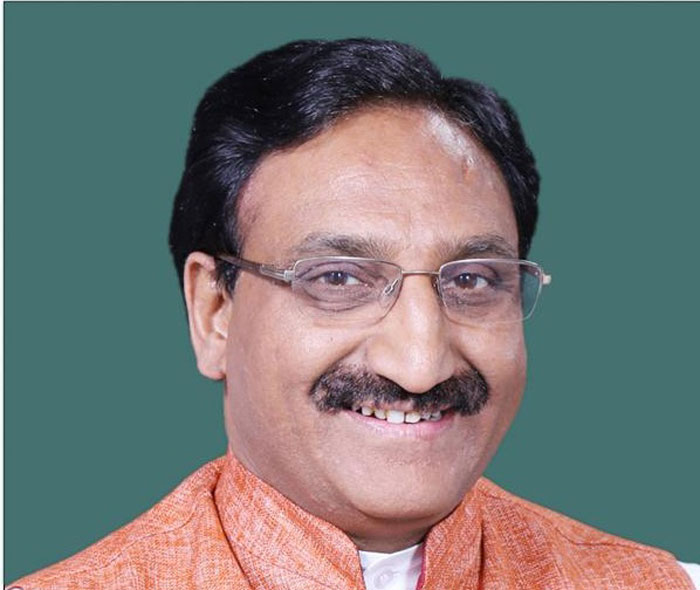
"name": "Ramesh Pokhriyal",
"bio": "<p>Ramesh Pokhriyal (born 15 July 1959),known by his nom de plume Nishank is an Indian politician serving as the Minister of Human Resource Development in the Second Modi ministry. He represents the Haridwar Parliamentary constituency of Uttarakhand in the 17th Lok Sabha.<br />Pokhriyal was born in Pinani village, Pauri Garhwal, Uttarakhand to Paramanand Pokhriyal and Vishambhari Devi. He claimed to have received an M.A. degree from Hemwati Nandan Bahuguna Garhwal University.[3][4][5]</p>\r\n<p>Pokhriyal married Kusum Kanta Pokhriyal on 7 May 1985, with whom he has three daughters. One of their daughters, Arushi Nishank is a classical dancer. His wife died on 11 November 2012 in Dehradun at the age of 50.</p>\r\n<p>Literary career<br />Pokhriyal has written novels, stories and poems. He has authored 44 books in Hindi, some of which have been translated to English as well as other Indian languages. They have been described by some critics and literature connoisseurs as \"heavy on patriotism, light on literary quality\". Most of his books were published by two private publishers – Vani Prakashan and Diamond Books, and many were published between 2009 and 2011, when he was chief minister of Uttarakhand.</p>",
"raw_bio": "Ramesh Pokhriyal (born 15 July 1959),known by his nom de plume Nishank is an Indian politician serving as the Minister of Human Resource Development in the Second Modi ministry. He represents the Haridwar Parliamentary constituency of Uttarakhand in the 17th Lok Sabha. Pokhriyal was born in Pinani village, Pauri Garhwal, Uttarakhand to Paramanand Pokhriyal and Vishambhari Devi. He claimed to have received an M.A. degree from Hemwati Nandan Bahuguna Garhwal University.[3][4][5] Pokhriyal married Kusum Kanta Pokhriyal on 7 May 1985, with whom he has three daughters. One of their daughters, Arushi Nishank is a classical dancer. His wife died on 11 November 2012 in Dehradun at the age of 50. Literary career Pokhriyal has written novels, stories and poems. He has authored 44 books in Hindi, some of which have been translated to English as well as other Indian languages. They have been described by some critics and literature connoisseurs as \"heavy on patriotism, light on literary quality\". Most of his books were published by two private publishers – Vani Prakashan and Diamond Books, and many were published between 2009 and 2011, when he was chief minister of Uttarakhand.",
"slug": "ramesh-pokhriyal",
"DOB": "1959-07-15",
"DateOfDemise": null,
"location": null,
"url": "/sootradhar/ramesh-pokhriyal",
"tags": "",
"created": "2023-09-22T12:44:44.993443",
"is_has_special_post": true,
"is_special_author": false,
"language": 4
},
{
"id": 443,
"image": "https://kavishalalab.s3.ap-south-1.amazonaws.com/sootradhar_author/Tulsidas.jpeg",
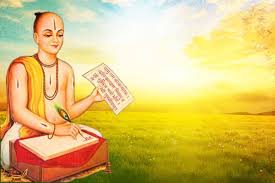
"name": "Tulsidas",
"bio": "Tulsidas (1497–1623), also known as Goswami Tulsidas, was a Ramanandi Vaishnava saint and poet, renowned for his devotion to the deity Rama. He wrote several popular works in Sanskrit and Awadhi, but is best known as the author of the epic Ramcharitmanas, a retelling of the Sanskrit Ramayana based on Rama's life in the vernacular Awadhi.\r\n<br>\r\nTulsidas spent most of his life in the city of Varanasi and Faridabad. The Tulsi Ghat on the Ganges River in Varanasi is named after him. He founded the Sankatmochan Temple dedicated to Lord Hanuman in Varanasi, believed to stand at the place where he had the sight of the deity. Tulsidas started the Ramlila plays, a folk-theatre adaption of the Ramayana.<br>\r\n\r\nHe has been acclaimed as one of the greatest poets in Hindi, Indian, and world literature. The impact of Tulsidas and his works on the art, culture and society in India is widespread and is seen to date in vernacular language, Ramlila plays, Hindustani classical music, popular music, and television series",
"raw_bio": "Tulsidas (1497–1623), also known as Goswami Tulsidas, was a Ramanandi Vaishnava saint and poet, renowned for his devotion to the deity Rama. He wrote several popular works in Sanskrit and Awadhi, but is best known as the author of the epic Ramcharitmanas, a retelling of the Sanskrit Ramayana based on Rama's life in the vernacular Awadhi.\r \r Tulsidas spent most of his life in the city of Varanasi and Faridabad. The Tulsi Ghat on the Ganges River in Varanasi is named after him. He founded the Sankatmochan Temple dedicated to Lord Hanuman in Varanasi, believed to stand at the place where he had the sight of the deity. Tulsidas started the Ramlila plays, a folk-theatre adaption of the Ramayana. \r \r He has been acclaimed as one of the greatest poets in Hindi, Indian, and world literature. The impact of Tulsidas and his works on the art, culture and society in India is widespread and is seen to date in vernacular language, Ramlila plays, Hindustani classical music, popular music, and television series",
"slug": "tulsidas",
"DOB": "1497-08-13",
"DateOfDemise": "1623-08-01",
"location": "Chitrakoot district, Uttar Pradesh.",
"url": "/sootradhar/tulsidas",
"tags": "Ramayan, Ramcharitmanas",
"created": "2023-09-22T12:45:09.830574",
"is_has_special_post": true,
"is_special_author": false,
"language": 4
},
{
"id": 452,
"image": "https://kavishalalab.s3.ap-south-1.amazonaws.com/sootradhar_author/220px-Bharat-s-tiwari-photography-IMG_2504_June_06_2015.jpg",
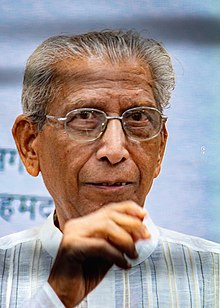
"name": "Namvar Singh",
"bio": "Namvar Singh (28 July 1926 – 19 February 2019) was an Indian literary critic, linguist, academician and theoretician. He received his doctorate degree from Banaras Hindu University where he also taught for some time. He served as a professor of Hindi literature in several other universities. He was the founder and first chairman of Jawaharlal Nehru University's Centre of Indian Languages and continued to remain as a professor emeritus after his retirement in 1992.<br>\r\nBooks<br>\r\n<ul>\r\n<li><em>Kavita Ke Naye Pratiman</em> <a class=\"mw-redirect\" title=\"ISBN (identifier)\" href=\"https://en.wikipedia.org/wiki/ISBN_(identifier)\">ISBN</a> <a title=\"Special:BookSources/978-8-1267-0744-7\" href=\"https://en.wikipedia.org/wiki/Special:BookSources/978-8-1267-0744-7\">978-8-1267-0744-7</a><sup id=\"cite_ref-NDTV_death_6-4\" class=\"reference\"><a href=\"https://en.wikipedia.org/wiki/Namvar_Singh#cite_note-NDTV_death-6\">[6]</a></sup></li>\r\n<li><em>Chhayavaad</em> <a class=\"mw-redirect\" title=\"ISBN (identifier)\" href=\"https://en.wikipedia.org/wiki/ISBN_(identifier)\">ISBN</a> <a title=\"Special:BookSources/978-8-1267-0736-2\" href=\"https://en.wikipedia.org/wiki/Special:BookSources/978-8-1267-0736-2\">978-8-1267-0736-2</a><sup id=\"cite_ref-NDTV_death_6-5\" class=\"reference\"><a href=\"https://en.wikipedia.org/wiki/Namvar_Singh#cite_note-NDTV_death-6\">[6]</a></sup></li>\r\n<li><em>Dusari Parampara Ki khoj</em> <a class=\"mw-redirect\" title=\"ISBN (identifier)\" href=\"https://en.wikipedia.org/wiki/ISBN_(identifier)\">ISBN</a> <a title=\"Special:BookSources/978-8-1267-1591-6\" href=\"https://en.wikipedia.org/wiki/Special:BookSources/978-8-1267-1591-6\">978-8-1267-1591-6</a><sup id=\"cite_ref-NDTV_death_6-6\" class=\"reference\"><a href=\"https://en.wikipedia.org/wiki/Namvar_Singh#cite_note-NDTV_death-6\">[6]</a></sup></li>\r\n<li><em>Itihaas Aur Alochana</em> <a class=\"mw-redirect\" title=\"ISBN (identifier)\" href=\"https://en.wikipedia.org/wiki/ISBN_(identifier)\">ISBN</a> <a title=\"Special:BookSources/978-8-1267-0510-8\" href=\"https://en.wikipedia.org/wiki/Special:BookSources/978-8-1267-0510-8\">978-8-1267-0510-8</a></li>\r\n</ul>",
"raw_bio": "Namvar Singh (28 July 1926 – 19 February 2019) was an Indian literary critic, linguist, academician and theoretician. He received his doctorate degree from Banaras Hindu University where he also taught for some time. He served as a professor of Hindi literature in several other universities. He was the founder and first chairman of Jawaharlal Nehru University's Centre of Indian Languages and continued to remain as a professor emeritus after his retirement in 1992. \r Books Kavita Ke Naye Pratiman ISBN 978-8-1267-0744-7 [6] Chhayavaad ISBN 978-8-1267-0736-2 [6] Dusari Parampara Ki khoj ISBN 978-8-1267-1591-6 [6] Itihaas Aur Alochana ISBN 978-8-1267-0510-8 ",
"slug": "namvar-singh",
"DOB": "1926-07-28",
"DateOfDemise": "2019-02-19",
"location": null,
"url": "/sootradhar/namvar-singh",
"tags": "",
"created": "2023-09-22T12:45:11.011569",
"is_has_special_post": true,
"is_special_author": false,
"language": 4
},
{
"id": 461,
"image": "https://kavishalalab.s3.ap-south-1.amazonaws.com/sootradhar_author/gopal-mittal.png",
"name": "Gopal Mittal",
"bio": "<p>Gopal Mittal (1906–1993) (Urdu:گوپال مِتّل) was an Urdu poet, writer, critic and journalist.<br />Gopal Mittal was a progressive writer and a creative writer. He has written some of the finest verses on \"man and his destiny.\" \"His complete works published in 1994 contain a rich fare of ghazals, nazms and qatas besides diadactic and religious verses.\" He was a more fluent writer of nazms. Till date four collections of his nazms, ghazals and qatas have come to light, they are – 1) Dorahaa, 2) Saharaa Mein Azaan, 3) Sharaar e naghmaa and 4) Sachche Bole. He had also penned his memoirs titled – Lahore kaa jo zikr kiyaa (ISBN 9789693515428). His complete works, titled Kulliyaat e Gopal Mittal, were published after his demise.</p>\r\n<p>His life and works were commented upon and appraised by leading poets and writers – Jagan Nath Azad, Makhmur Saeedi, Wazir Agha, Balraj Komal, Hamidi Kashmiri, Bani, Hayatullah Ansari, Rashid Hasan Khan, Azad Gulati, Krishan Mohan, Zia Fatehabadi and Nazir Siddiqi, whose assessments were compiled and edited by Kumar Pashi and published in 1983 titled Gopal Mittal – shakhsiyat aur fan (ISBN 9788180421815). Earlier a similar earlier exercise conducted and later on compiled by Muhammad Abdulhakim titled Gopal Mittal – ek mutalia was published by Nazish Book Centre in 1977. In 2005 an appraisal of his poetry conducted by Ziyauddin was published titled Gopal Mittal: Shakhs Va Shair.</p>",
"raw_bio": "Gopal Mittal (1906–1993) (Urdu:گوپال مِتّل) was an Urdu poet, writer, critic and journalist. Gopal Mittal was a progressive writer and a creative writer. He has written some of the finest verses on \"man and his destiny.\" \"His complete works published in 1994 contain a rich fare of ghazals, nazms and qatas besides diadactic and religious verses.\" He was a more fluent writer of nazms. Till date four collections of his nazms, ghazals and qatas have come to light, they are – 1) Dorahaa, 2) Saharaa Mein Azaan, 3) Sharaar e naghmaa and 4) Sachche Bole. He had also penned his memoirs titled – Lahore kaa jo zikr kiyaa (ISBN 9789693515428). His complete works, titled Kulliyaat e Gopal Mittal, were published after his demise. His life and works were commented upon and appraised by leading poets and writers – Jagan Nath Azad, Makhmur Saeedi, Wazir Agha, Balraj Komal, Hamidi Kashmiri, Bani, Hayatullah Ansari, Rashid Hasan Khan, Azad Gulati, Krishan Mohan, Zia Fatehabadi and Nazir Siddiqi, whose assessments were compiled and edited by Kumar Pashi and published in 1983 titled Gopal Mittal – shakhsiyat aur fan (ISBN 9788180421815). Earlier a similar earlier exercise conducted and later on compiled by Muhammad Abdulhakim titled Gopal Mittal – ek mutalia was published by Nazish Book Centre in 1977. In 2005 an appraisal of his poetry conducted by Ziyauddin was published titled Gopal Mittal: Shakhs Va Shair.",
"slug": "gopal-mittal",
"DOB": "1906-01-01",
"DateOfDemise": "1993-01-01",
"location": null,
"url": "/sootradhar/gopal-mittal",
"tags": "",
"created": "2023-09-22T12:45:16.663479",
"is_has_special_post": true,
"is_special_author": false,
"language": 4
},
{
"id": 462,
"image": "https://kavishalalab.s3.ap-south-1.amazonaws.com/sootradhar_author/BrijmohanDattareya.jpg",
"name": "Pandit Brij Mohan Dattatreya Kaifi",
"bio": "<p>Pandit Brij Mohan Dattatreya Kaifi Dehlavi (13 December 1866 – 1 November 1955) was an Indian Urdu language writer, poet, playwright, novelist and essayist.<br />Brij Mohan Dattatreya Kaifi was born on 13 December 1866 in Delhi. He was a student of Altaf Hussain Hali in poesy. He was also well up in Hindi, Arabic, Persian, and English. He lived in Lahore for many years, where his son was an editor of The Tribune. Kaifi proved to be a great asset for Anjuman-i Taraqqi-i Urdu after Abdul Haq. He died on 1 November 1955 in Ghaziabad.</p>",
"raw_bio": "Pandit Brij Mohan Dattatreya Kaifi Dehlavi (13 December 1866 – 1 November 1955) was an Indian Urdu language writer, poet, playwright, novelist and essayist. Brij Mohan Dattatreya Kaifi was born on 13 December 1866 in Delhi. He was a student of Altaf Hussain Hali in poesy. He was also well up in Hindi, Arabic, Persian, and English. He lived in Lahore for many years, where his son was an editor of The Tribune. Kaifi proved to be a great asset for Anjuman-i Taraqqi-i Urdu after Abdul Haq. He died on 1 November 1955 in Ghaziabad.",
"slug": "pandit-brij-mohan-dattatreya-kaifi",
"DOB": "1866-12-13",
"DateOfDemise": "1955-11-01",
"location": null,
"url": "/sootradhar/pandit-brij-mohan-dattatreya-kaifi",
"tags": "",
"created": "2023-09-22T12:45:17.580799",
"is_has_special_post": true,
"is_special_author": false,
"language": 4
},
{
"id": 464,
"image": "https://kavishalalab.s3.ap-south-1.amazonaws.com/sootradhar_author/chakbast_pandit_kjnkj_kjd.jpg",
"name": "Brij Narayan Chakbast",
"bio": "<p>Brij Narayan Chakbast, also spelled, Brij Narain Chakbast,( 19 January 1882- 12 February 1926) (Kashmiri: बृज नारायण चकबस्त, Urdu: برج نارائن چکبست‎) was an Indian Urdu poet.<br />Works<br />Chakbast was primarily a poet but his prose is also considered at par with his poetry. Chakbast's premature death was a great loss for Urdu but whatever he left is exemplary and is considered among the gems of Urdu literature. He was strongly influenced by Ghalib, Mir Anis and Aatish. Chakbast was primarily a nazm poet. He began his poetic career with a nazm in 1894. He wrote nazms, mathnavi, a play, and about 50 ghazals. His Ramayan ka ek Scene is strongly remniscent of Marsiya of Mir Anis. His verses from his ghazal</p>\r\n<p>Zindagi kya hai anasir mein zahur-e tarteeb,<br />Maut kya hai ini ajza ka pareshan hona<br />Zarra Zarra hai mere Kashmir ka mehmaan nawaaz,<br />raah mein pathar ke tukdoon ne diya pani mujhe<br />Subh-e Watan is collected works of Chakbast as its title and many of its poems reflect about his intense patriotism, predominantly a central theme of his poetry.</p>\r\n<p>Khak-e-Hind</p>\r\n<p>Gulzar-e-Naseem a masnavi,</p>\r\n<p>Ramayan ka ek scene musaddas</p>\r\n<p>Nala-e-Dard</p>\r\n<p>Nala-e-Yaas, and a play named</p>\r\n<p>Kamla</p>\r\n<p>Kulliyate-Chakbast and Maqalaat-e-Chakbast is the complete collection of Chakbast's works in poetry and prose that was published posthumously on the birth centenary of the poet, compiled by Kalidas Gupta 'Raza' around 1983.</p>\r\n<p><br />Legacy<br />The 2015 film Masaan starts with and contains various examples of poetry and shaayari by Chakbast along with the works of Basheer Badr, Akbar Allahabadi, Mirza Ghalib and Dushyant Kumar. Explaining this as a conscious tribute, the film's lyrics writer Varun Grover explained that he wanted to show Shaalu (portrayed by Shweta Tripathi) as a person whose hobby is to read Hindi poetry and shaayari, as this is a common hobby of millennial and generation x youngsters in Northern India, especially when in love, but this aspect is rarely shown in Hindi films.</p>",
"raw_bio": "Brij Narayan Chakbast, also spelled, Brij Narain Chakbast,( 19 January 1882- 12 February 1926) (Kashmiri: बृज नारायण चकबस्त, Urdu: برج نارائن چکبست) was an Indian Urdu poet. Works Chakbast was primarily a poet but his prose is also considered at par with his poetry. Chakbast's premature death was a great loss for Urdu but whatever he left is exemplary and is considered among the gems of Urdu literature. He was strongly influenced by Ghalib, Mir Anis and Aatish. Chakbast was primarily a nazm poet. He began his poetic career with a nazm in 1894. He wrote nazms, mathnavi, a play, and about 50 ghazals. His Ramayan ka ek Scene is strongly remniscent of Marsiya of Mir Anis. His verses from his ghazal Zindagi kya hai anasir mein zahur-e tarteeb, Maut kya hai ini ajza ka pareshan hona Zarra Zarra hai mere Kashmir ka mehmaan nawaaz, raah mein pathar ke tukdoon ne diya pani mujhe Subh-e Watan is collected works of Chakbast as its title and many of its poems reflect about his intense patriotism, predominantly a central theme of his poetry. Khak-e-Hind Gulzar-e-Naseem a masnavi, Ramayan ka ek scene musaddas Nala-e-Dard Nala-e-Yaas, and a play named Kamla Kulliyate-Chakbast and Maqalaat-e-Chakbast is the complete collection of Chakbast's works in poetry and prose that was published posthumously on the birth centenary of the poet, compiled by Kalidas Gupta 'Raza' around 1983. Legacy The 2015 film Masaan starts with and contains various examples of poetry and shaayari by Chakbast along with the works of Basheer Badr, Akbar Allahabadi, Mirza Ghalib and Dushyant Kumar. Explaining this as a conscious tribute, the film's lyrics writer Varun Grover explained that he wanted to show Shaalu (portrayed by Shweta Tripathi) as a person whose hobby is to read Hindi poetry and shaayari, as this is a common hobby of millennial and generation x youngsters in Northern India, especially when in love, but this aspect is rarely shown in Hindi films.",
"slug": "brij-narayan-chakbast",
"DOB": "1882-01-19",
"DateOfDemise": "1926-02-12",
"location": null,
"url": "/sootradhar/brij-narayan-chakbast",
"tags": "",
"created": "2023-09-22T12:45:19.255872",
"is_has_special_post": true,
"is_special_author": false,
"language": 4
},
{
"id": 465,
"image": "https://kavishalalab.s3.ap-south-1.amazonaws.com/sootradhar_author/Tilok_Chand_Mehroom.jpg",
"name": "Tilok Chand Mehroom",
"bio": "<p>Tilok Chand Mehroom (1 July 1887 – 6 January 1966) was an Indian Urdu poet who was admired not only for his writings but also for his simple lifestyle and evident deep dislike of religious discrimination.</p>\r\n<p>Poetry<br />There were no libraries in the schools of North West Frontier Province when Mehroom was growing up. With no formal training or instruction and very limited access to literary works, it is remarkable that he developed a love of poetry and achieved acclaim as a poet himself. He found, read eagerly and was inspired by poetry collections of Mirza Ghalib & Mohammad Ibrahim Zauq during his 4 years in Bannu. He wrote simple couplets whilst still at primary school, but it was in Bannu that he started taking his writing seriously. He composed a nazm entitled Khidmat-e-Validain when he was about 12/13 years old. It earned him the praise not only from the Divisional Inspector of Schools but also from the Director of Education.</p>\r\n<p>By the time he finished his studies at Diamond Jubilee School (Bannu), his poems were being published in Makhzan (Lahore) and Zamana (Kanpur). Once he moved to Rawalpindi, he became a frequent invitee to the annual mushairas organised by Khwaja Abdul Raheem in Lyallpur (now Faisalabad). Regulars to these mushairas included Jigar Moradabadi and Hafeez Jullundhri among others.</p>\r\n<p>After the death of his beloved wife, Mehroom wrote poems reflecting his disenchantment with the ephemerality of life and the instability of relationships. The most famous of these is Ashk-e-Hasrat (part of his collection entitled Toofan-e-Gham).</p>\r\n<p>Mehroom's first major publication was Ganj-e-Ma'ani which contained a rich variety of 175 nazms as well as many rubais, qasidas, sehras, and nohas. Poets and literary critics like Niaz Fatehpuri, Muhammad Iqbal, Firaq Gorakhpuri, Kaifi Azmi, Josh Malsiani and Ejaz Hussain have admired his poetry.</p>\r\n<p>Honours and awards<br />The annual Sahitya Samaroh (literary convention) of the Government of Punjab, India dedicated its 1962 session to Mehroom for his \"services to literature\" and presented him with a robe of honour, a testimonial and a purse. (Forty-five years earlier, the contemporary Government of Punjab had awarded him a cash prize for his service to literature.).</p>\r\n<p>Famous works<br />Ganj-e-Maani (Latest edition published by Mehroom Memorial Literary Society, New Delhi, India – 1995)<br />Rubaiyat-e-Mehroom (Latest edition published by Mehroom Memorial Literary Society, New Delhi, India – 1995)<br />Nairang-e-Maani (Latest edition published by Mehroom Memorial Literary Society, New Delhi, India – 1996)<br />Karwan-e-Watan (Published by Maktaba-e-Jamia Ltd, New Delhi, India – 1960)<br />Shola Nawa (Published by Maktaba-e-Jamia Ltd, New Delhi, India – 1965)<br />Bahar-e-Tifli (Published by Maktaba-e-Jamia Ltd, New Delhi, India – 1965)<br />Bachchon Ki Duniya (Published by Maktaba-e-Jamia Ltd, New Delhi, India – 1967)<br />Maharishi Darshan (Published by Aiwan-e-Adab, Lahore, British India – 1937)</p>",
"raw_bio": "Tilok Chand Mehroom (1 July 1887 – 6 January 1966) was an Indian Urdu poet who was admired not only for his writings but also for his simple lifestyle and evident deep dislike of religious discrimination. Poetry There were no libraries in the schools of North West Frontier Province when Mehroom was growing up. With no formal training or instruction and very limited access to literary works, it is remarkable that he developed a love of poetry and achieved acclaim as a poet himself. He found, read eagerly and was inspired by poetry collections of Mirza Ghalib & Mohammad Ibrahim Zauq during his 4 years in Bannu. He wrote simple couplets whilst still at primary school, but it was in Bannu that he started taking his writing seriously. He composed a nazm entitled Khidmat-e-Validain when he was about 12/13 years old. It earned him the praise not only from the Divisional Inspector of Schools but also from the Director of Education. By the time he finished his studies at Diamond Jubilee School (Bannu), his poems were being published in Makhzan (Lahore) and Zamana (Kanpur). Once he moved to Rawalpindi, he became a frequent invitee to the annual mushairas organised by Khwaja Abdul Raheem in Lyallpur (now Faisalabad). Regulars to these mushairas included Jigar Moradabadi and Hafeez Jullundhri among others. After the death of his beloved wife, Mehroom wrote poems reflecting his disenchantment with the ephemerality of life and the instability of relationships. The most famous of these is Ashk-e-Hasrat (part of his collection entitled Toofan-e-Gham). Mehroom's first major publication was Ganj-e-Ma'ani which contained a rich variety of 175 nazms as well as many rubais, qasidas, sehras, and nohas. Poets and literary critics like Niaz Fatehpuri, Muhammad Iqbal, Firaq Gorakhpuri, Kaifi Azmi, Josh Malsiani and Ejaz Hussain have admired his poetry. Honours and awards The annual Sahitya Samaroh (literary convention) of the Government of Punjab, India dedicated its 1962 session to Mehroom for his \"services to literature\" and presented him with a robe of honour, a testimonial and a purse. (Forty-five years earlier, the contemporary Government of Punjab had awarded him a cash prize for his service to literature.). Famous works Ganj-e-Maani (Latest edition published by Mehroom Memorial Literary Society, New Delhi, India – 1995) Rubaiyat-e-Mehroom (Latest edition published by Mehroom Memorial Literary Society, New Delhi, India – 1995) Nairang-e-Maani (Latest edition published by Mehroom Memorial Literary Society, New Delhi, India – 1996) Karwan-e-Watan (Published by Maktaba-e-Jamia Ltd, New Delhi, India – 1960) Shola Nawa (Published by Maktaba-e-Jamia Ltd, New Delhi, India – 1965) Bahar-e-Tifli (Published by Maktaba-e-Jamia Ltd, New Delhi, India – 1965) Bachchon Ki Duniya (Published by Maktaba-e-Jamia Ltd, New Delhi, India – 1967) Maharishi Darshan (Published by Aiwan-e-Adab, Lahore, British India – 1937)",
"slug": "tilok-chand-mehroom",
"DOB": "1887-07-01",
"DateOfDemise": "1966-01-06",
"location": null,
"url": "/sootradhar/tilok-chand-mehroom",
"tags": "",
"created": "2023-09-22T12:45:19.740108",
"is_has_special_post": true,
"is_special_author": false,
"language": 4
},
{
"id": 466,
"image": "https://kavishalalab.s3.ap-south-1.amazonaws.com/sootradhar_author/Tilok_Chand_Mehroom.jpg",
"name": "Pandit Harichand Akhtar",
"bio": "<p>Harichand Akhtar (15 April 1901 – 1 January 1958) ( Urdu:ہری چند اختر ) was a well-known journalist who was also a renowned Urdu Ghazal poet. He was born in Hoshiarpur, Punjab, on 15 April 1901. He was fluent in the use of Urdu, Persian and English languages. Having passed the Munshi Fazil Examination soon after Matriculation, he obtained M.A. (English) degree from the Punjab University, Lahore. He spent a greater part of his life in Lahore writing for Paras, Lahore, the Newspaper that was then owned and edited by Lala Karam Chand; he was also employed in the office of the Punjab Legislative Assembly. After the formation of Pakistan he moved to Delhi where he died on 1 January 1958.</p>\r\n<p>Harichand Akhtar was a poet whose focus genre was ghazal. He was a conventionalist but his manner was unique for simplicity. His collection of ghazals titled Kufr o Imaan was published during his lifetime.</p>",
"raw_bio": "Harichand Akhtar (15 April 1901 – 1 January 1958) ( Urdu:ہری چند اختر ) was a well-known journalist who was also a renowned Urdu Ghazal poet. He was born in Hoshiarpur, Punjab, on 15 April 1901. He was fluent in the use of Urdu, Persian and English languages. Having passed the Munshi Fazil Examination soon after Matriculation, he obtained M.A. (English) degree from the Punjab University, Lahore. He spent a greater part of his life in Lahore writing for Paras, Lahore, the Newspaper that was then owned and edited by Lala Karam Chand; he was also employed in the office of the Punjab Legislative Assembly. After the formation of Pakistan he moved to Delhi where he died on 1 January 1958. Harichand Akhtar was a poet whose focus genre was ghazal. He was a conventionalist but his manner was unique for simplicity. His collection of ghazals titled Kufr o Imaan was published during his lifetime.",
"slug": "pandit-harichand-akhtar",
"DOB": "1901-04-15",
"DateOfDemise": "1958-01-01",
"location": null,
"url": "/sootradhar/pandit-harichand-akhtar",
"tags": "",
"created": "2023-09-22T12:18:39.849158",
"is_has_special_post": false,
"is_special_author": false,
"language": 4
},
{
"id": 467,
"image": "https://kavishalalab.s3.ap-south-1.amazonaws.com/sootradhar_author/Screenshot_2020-08-05_at_2.49.03_AM.png",
"name": "Shivmangal Singh Suman",
"bio": "Shivmangal Singh 'Suman' (5 August 1915 – 27 November 2002) was a noted Hindi poet and academician. Upon his death, the then Prime Minister of India Atal Bihari Vajpayee said on 27 NOV 2002 in Assembly that, \"Dr Shiv Mangal Singh ‘Suman’ was not only a powerful signature in the field of Hindi poetry, but he was also the custodian of the collective consciousness of his time. His creations not only expressed the pain of his own feelings, but were also fearless constructive commentary on the issues of the era\".<br>\r\nShivmangal Singh 'Suman' was born on 5 August 1915 at Jhagarpur, Unnao district in Uttar Pradesh (India). He was a leading Hindi writer and poet. He earned a M.A. and Ph.D. in Hindi from Benaras Hindu University. The university also honoured him with a D.Litt. in 1950. <br>Suman worked as the Vice Chancellor of Vikram University (Ujjain) during 1968-78; the Vice-President of Uttar Pradesh Hindi Sansthan, Lucknow; Press & Cultural Attache, Indian Embassy, Kathmandu (Nepal) during 1956-61; and the President, Association of Indian Universities (New Delhi) during 1977-78.\r\n<br>He was the Executive President, Kalidas Academy, Ujjain, until he died of heart attack on 27 November 2002.<br>\r\n<b>Awards and honours</b><ul><li>\r\nPadma Shri - 1974</li><li>\r\nPadma Bhushan - 1999</li><li>\r\nDeva Puraskar - 1958</li><li>\r\nSoviet Land Nehru Award - 1974</li><li>\r\nSahitya Akademi Award - 1974 also for Mitti ki Barat 'मिट्टी की बारात'</li><li>\r\nShikhar Samman - 1993 from M.P. Govt.</li><li>\r\nBharat Bharti Award - 1993 and several others.</li><li>\r\nD.Litt. By Bhagalpur University - 1973</li><li>\r\nD.Litt. By Jabalpur University - 1983</li><li>\r\n</ul>",
"raw_bio": "Shivmangal Singh 'Suman' (5 August 1915 – 27 November 2002) was a noted Hindi poet and academician. Upon his death, the then Prime Minister of India Atal Bihari Vajpayee said on 27 NOV 2002 in Assembly that, \"Dr Shiv Mangal Singh ‘Suman’ was not only a powerful signature in the field of Hindi poetry, but he was also the custodian of the collective consciousness of his time. His creations not only expressed the pain of his own feelings, but were also fearless constructive commentary on the issues of the era\". \r Shivmangal Singh 'Suman' was born on 5 August 1915 at Jhagarpur, Unnao district in Uttar Pradesh (India). He was a leading Hindi writer and poet. He earned a M.A. and Ph.D. in Hindi from Benaras Hindu University. The university also honoured him with a D.Litt. in 1950. Suman worked as the Vice Chancellor of Vikram University (Ujjain) during 1968-78; the Vice-President of Uttar Pradesh Hindi Sansthan, Lucknow; Press & Cultural Attache, Indian Embassy, Kathmandu (Nepal) during 1956-61; and the President, Association of Indian Universities (New Delhi) during 1977-78.\r He was the Executive President, Kalidas Academy, Ujjain, until he died of heart attack on 27 November 2002. Awards and honours \r Padma Shri - 1974 \r Padma Bhushan - 1999 \r Deva Puraskar - 1958 \r Soviet Land Nehru Award - 1974 \r Sahitya Akademi Award - 1974 also for Mitti ki Barat 'मिट्टी की बारात' \r Shikhar Samman - 1993 from M.P. Govt. \r Bharat Bharti Award - 1993 and several others. \r D.Litt. By Bhagalpur University - 1973 \r D.Litt. By Jabalpur University - 1983 ",
"slug": "shivmangal-singh-suman",
"DOB": "1915-08-05",
"DateOfDemise": "2002-11-27",
"location": "Unnao, India",
"url": "/sootradhar/shivmangal-singh-suman",
"tags": "शिवमंगल सिंह सुमन",
"created": "2023-09-22T12:45:20.656607",
"is_has_special_post": true,
"is_special_author": false,
"language": 4
},
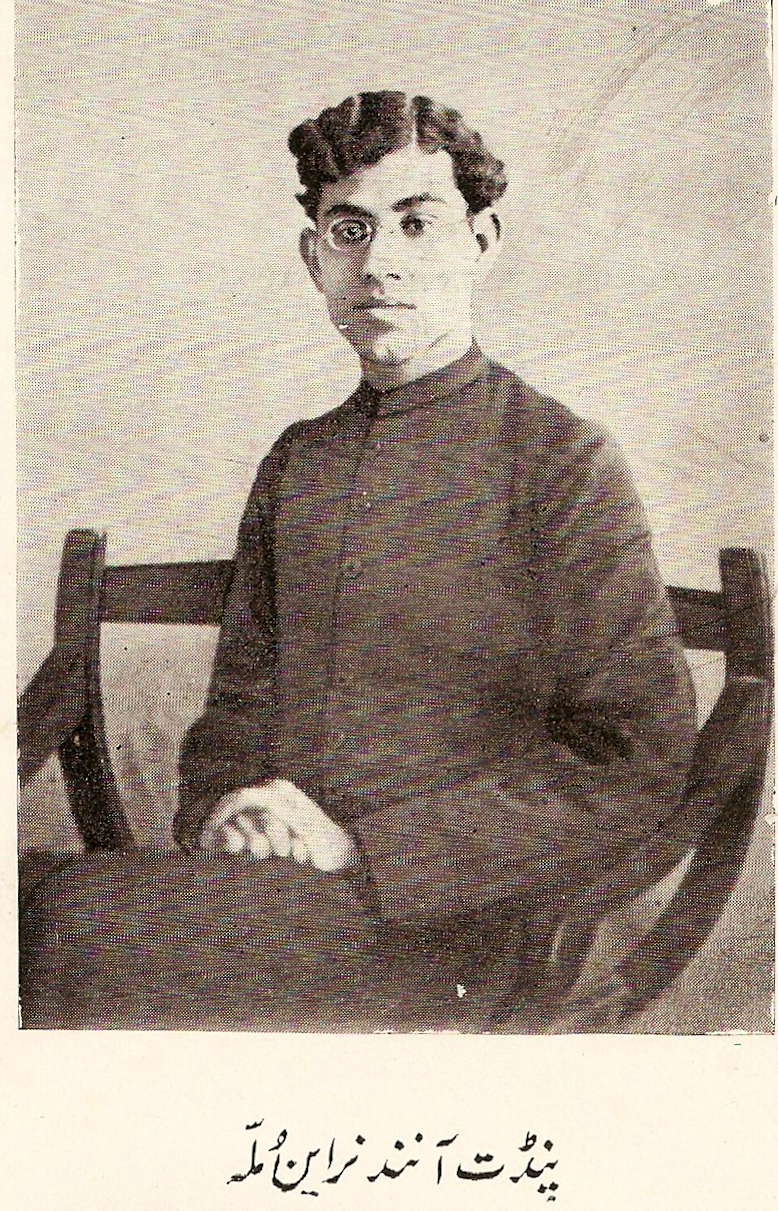
{
"id": 468,
"image": "https://kavishalalab.s3.ap-south-1.amazonaws.com/sootradhar_author/anand_narain_mulla_original.jpg",
"name": "Anand Narain Mulla",
"bio": "<p>Anand Narain Mulla (October 1901–12 June 1997)was an Urdu poet of India.<br />Anand Narain Mulla was born at Lucknow in October 1901 and educated at Government Jubilee High School and College there. He won the Sahitya Akademi award in Urdu in 1964 for his poetry, specifically the book Meri Hadis-e-Umr-e-Gurezan. His first collection of poems, Ju-yi shir, published in 1949, was followed by Hans cog and Bamhina bol. He was also a recipient of the Iqbal Samman, a literary award, when aged 92.</p>",
"raw_bio": "Anand Narain Mulla (October 1901–12 June 1997)was an Urdu poet of India. Anand Narain Mulla was born at Lucknow in October 1901 and educated at Government Jubilee High School and College there. He won the Sahitya Akademi award in Urdu in 1964 for his poetry, specifically the book Meri Hadis-e-Umr-e-Gurezan. His first collection of poems, Ju-yi shir, published in 1949, was followed by Hans cog and Bamhina bol. He was also a recipient of the Iqbal Samman, a literary award, when aged 92.",
"slug": "anand-narain-mulla",
"DOB": "1901-10-01",
"DateOfDemise": "1997-06-12",
"location": null,
"url": "/sootradhar/anand-narain-mulla",
"tags": "",
"created": "2023-09-22T12:45:21.731368",
"is_has_special_post": true,
"is_special_author": false,
"language": 4
},
{
"id": 469,
"image": "https://kavishalalab.s3.ap-south-1.amazonaws.com/sootradhar_author/Guru_Bhakt_Singh_Bhakt.jpeg",
"name": "Guru Bhakt Singh 'Bhakt'",
"bio": "Guru Bhakt Singh 'Bhakt' (गुरु भक्त सिंह 'भक्त', 7 August 1893 – 17 May 1983) was a renowned poet and dramatist from northern India.\r\n<b>Poetry</b><ul><li>\r\nSaras Suman (1925)</li><li>\r\nKusum Kunj (1927)</li><li>\r\nVanshidwani (1932)</li><li>\r\nNurjahan (1935)</li><li>\r\nVikramaditya (1944)</li><li>\r\nDo Phool (1963)</li><li>\r\n</ul>\r\n<b>Dramas</b>\r\n<ui><li>Prem-paash (1919) - Unpublished</li><li>\r\nTasneem (1920) - Unpublished</li><li>\r\nRadhiya (1924) - Unpublished</li></ul>",
"raw_bio": "Guru Bhakt Singh 'Bhakt' (गुरु भक्त सिंह 'भक्त', 7 August 1893 – 17 May 1983) was a renowned poet and dramatist from northern India.\r Poetry \r Saras Suman (1925) \r Kusum Kunj (1927) \r Vanshidwani (1932) \r Nurjahan (1935) \r Vikramaditya (1944) \r Do Phool (1963) Dramas Prem-paash (1919) - Unpublished \r Tasneem (1920) - Unpublished \r Radhiya (1924) - Unpublished",
"slug": "guru-bhakt-singh-bhakt",
"DOB": "1893-08-07",
"DateOfDemise": "1983-05-17",
"location": "India",
"url": "/sootradhar/guru-bhakt-singh-bhakt",
"tags": "",
"created": "2023-09-22T12:18:39.874928",
"is_has_special_post": false,
"is_special_author": false,
"language": 4
},
{
"id": 470,
"image": "https://kavishalalab.s3.ap-south-1.amazonaws.com/sootradhar_author/healthy_knots_amfct.jpg",
"name": "Khushtar Girami",
"bio": "<p>Khushtar Girami (4 October 1902- 15 January 1988) (Urdu: خوشتر گرامی, Hindi: खुश्तर गिरामी) born Ram Rakha Mal Chadda, was a renowned Urdu writer and poet. He is more remembered as the editor of the then India’s leading Urdu Monthly Biswin Sadi which he also owned. He started publication of this magazine from Lahore in 1937, and later shifted to Delhi. He is credited with having introduced numerous budding Urdu and Hindi poets, short-story writers, novelists, essayists and literary critics. All renowned Urdu poets and writers were proud regular contributors to Biswin Sadi. His service to Urdu language is unforgettable. In 1977 he sold this magazine to Rehman Nayyar, the erstwhile owner and editor of Ruby, to lead a retired life. His book titled Sihat aur Zindagi published by Book Home in 1980 (reprinted in 2005), is a popular book on this subject.</p>",
"raw_bio": "Khushtar Girami (4 October 1902- 15 January 1988) (Urdu: خوشتر گرامی, Hindi: खुश्तर गिरामी) born Ram Rakha Mal Chadda, was a renowned Urdu writer and poet. He is more remembered as the editor of the then India’s leading Urdu Monthly Biswin Sadi which he also owned. He started publication of this magazine from Lahore in 1937, and later shifted to Delhi. He is credited with having introduced numerous budding Urdu and Hindi poets, short-story writers, novelists, essayists and literary critics. All renowned Urdu poets and writers were proud regular contributors to Biswin Sadi. His service to Urdu language is unforgettable. In 1977 he sold this magazine to Rehman Nayyar, the erstwhile owner and editor of Ruby, to lead a retired life. His book titled Sihat aur Zindagi published by Book Home in 1980 (reprinted in 2005), is a popular book on this subject.",
"slug": "khushtar-girami",
"DOB": "1902-10-04",
"DateOfDemise": "1988-01-15",
"location": null,
"url": "/sootradhar/khushtar-girami",
"tags": "",
"created": "2023-09-22T12:18:39.883207",
"is_has_special_post": false,
"is_special_author": false,
"language": 4
}
],
"description": "<p style=\"text-align: center; font-size: 24px;\"> The Great Poets and Writers in Indian and World History! </p>",
"image": "https://kavishalalab.s3.ap-south-1.amazonaws.com/sootradhar_description/black.jpg"
}