HTTP 200 OK
Allow: GET, HEAD, OPTIONS
Content-Type: application/json
Vary: Accept

{
    "count": 17752,
    "next": "http://admin.kavishala.in/sootradhar/authors/?format=api&page=608",
    "previous": "http://admin.kavishala.in/sootradhar/authors/?format=api&page=606",
    "results": [
        {
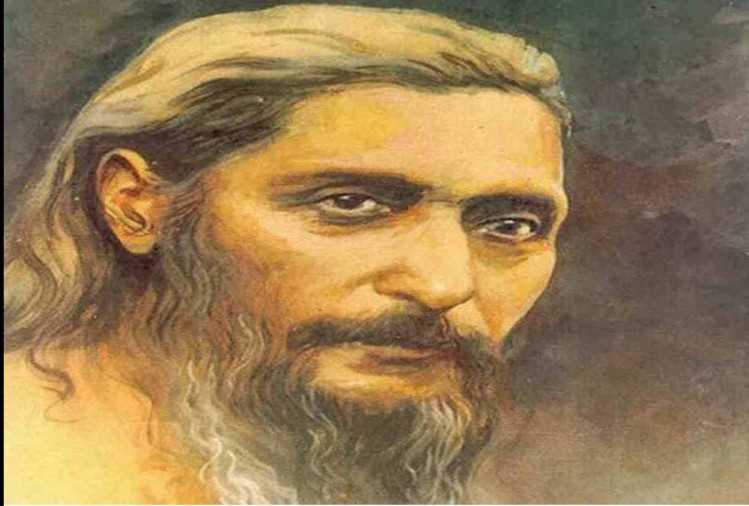
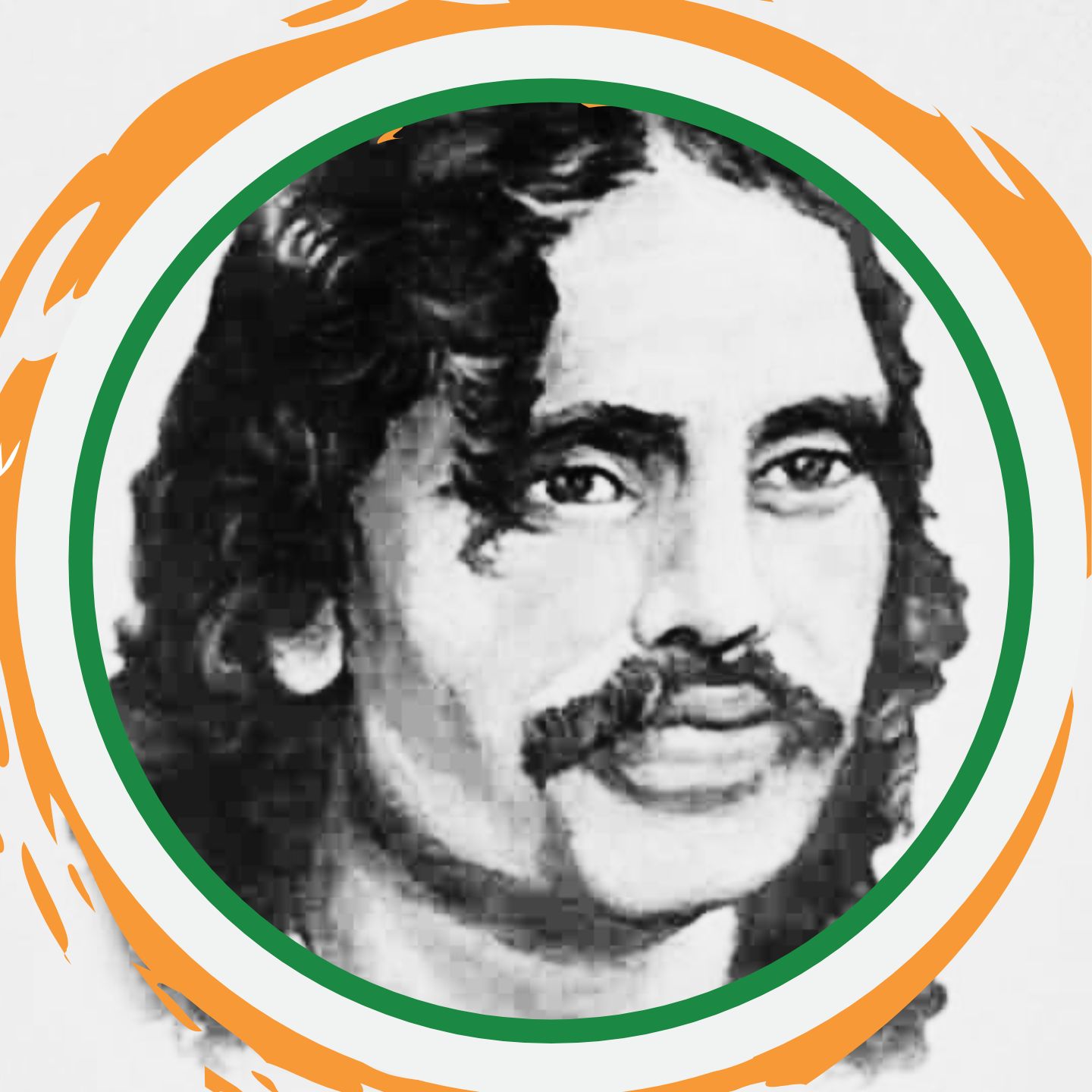
            "id": 215,
            "image": "https://kavishalalab.s3.ap-south-1.amazonaws.com/sootradhar_author/surya-kant-tripathi-nirala_1542278385.jpeg",
            "name": "Niarala",
            "bio": "Suryakant Tripathi, known by his Pet Name Nirala, was a poet, novelist, essayist and story-writer. He also drew many sketches.",
            "raw_bio": "Suryakant Tripathi, known by his Pet Name Nirala, was a poet, novelist, essayist and story-writer. He also drew many sketches.",
            "slug": "niarala",
            "DOB": "1896-02-21",
            "DateOfDemise": null,
            "location": "Midnapore",
            "url": "/sootradhar/niarala",
            "tags": null,
            "created": "2023-09-22T12:35:52.143001",
            "is_has_special_post": true,
            "is_special_author": false,
            "language": 4
        },
        {
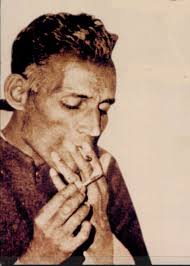
            "id": 216,
            "image": "https://kavishalalab.s3.ap-south-1.amazonaws.com/sootradhar_author/Muktibodh.jpg",
            "name": "Muktibodh",
            "bio": "Gajanan Madhav Muktibodh (13 November 1917 – 11 September 1964)[1] was one of the most prominent Hindi poets, essayist, literary and political critic, and fiction writers of the 20th century.[2] He also remained assistant-editor of journals like, Naya Khun and Vasudha.[2]\r\n\r\nHe is widely considered one of the pioneers of modern poetry in India,[3] and doyen of Hindi poetry after, Surya Kant Tripathi 'Nirala',[4] and known as being a pioneer, the mainstay of Prayogvaad Experimentalism movement of Hindi literature and it was also his work, which also marked the culmination of this literary movement and its evolution into the Nayi Kahani and Nayi Kavita Modernism in 1950s,[5] his presence is equally important in the rise of 'New Criticism' in Indian literature.",
            "raw_bio": "Gajanan Madhav Muktibodh (13 November 1917 – 11 September 1964)[1] was one of the most prominent Hindi poets, essayist, literary and political critic, and fiction writers of the 20th century.[2] He also remained assistant-editor of journals like, Naya Khun and Vasudha.[2]\r \r He is widely considered one of the pioneers of modern poetry in India,[3] and doyen of Hindi poetry after, Surya Kant Tripathi 'Nirala',[4] and known as being a pioneer, the mainstay of Prayogvaad Experimentalism movement of Hindi literature and it was also his work, which also marked the culmination of this literary movement and its evolution into the Nayi Kahani and Nayi Kavita Modernism in 1950s,[5] his presence is equally important in the rise of 'New Criticism' in Indian literature.",
            "slug": "muktibodh",
            "DOB": "1917-11-13",
            "DateOfDemise": null,
            "location": "Chambal division",
            "url": "/sootradhar/muktibodh",
            "tags": null,
            "created": "2023-09-22T12:35:55.018602",
            "is_has_special_post": true,
            "is_special_author": false,
            "language": 4
        },
        {
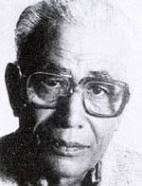
            "id": 217,
            "image": "https://kavishalalab.s3.ap-south-1.amazonaws.com/sootradhar_author/Dharamvir_Bharati.jpg",
            "name": "Dharamvir Bharati",
            "bio": "Dharamvir Bharati was a renowned Hindi poet, author, playwright and a social thinker of India. He was the chief editor of the popular Hindi weekly magazine Dharmayug, from 1960 till 1987. Bharati was awarded the Padma Shree for literature in 1972 by the Government of India. His novel Gunaho Ka Devta became a classic.",
            "raw_bio": "Dharamvir Bharati was a renowned Hindi poet, author, playwright and a social thinker of India. He was the chief editor of the popular Hindi weekly magazine Dharmayug, from 1960 till 1987. Bharati was awarded the Padma Shree for literature in 1972 by the Government of India. His novel Gunaho Ka Devta became a classic.",
            "slug": "dharamvir-bharati",
            "DOB": "1926-12-25",
            "DateOfDemise": null,
            "location": "Allahabad",
            "url": "/sootradhar/dharamvir-bharati",
            "tags": null,
            "created": "2023-09-22T12:35:57.006966",
            "is_has_special_post": true,
            "is_special_author": false,
            "language": 4
        },
        {
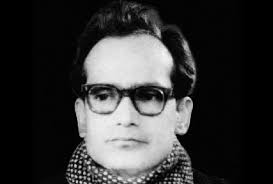
            "id": 220,
            "image": "https://kavishalalab.s3.ap-south-1.amazonaws.com/sootradhar_author/Raj_Kamal_Chaudhari.jpg",
            "name": "Rajkamal Choudhary",
            "bio": "Rajkamal Choudhary was an Indian poet, short story writer, novelist, critic and thinker in Maithili, Hindi and Bengali languages. He was known as \"a bold leader of new poetry\" and writer who \"stands out differently\" from most other experimentalists",
            "raw_bio": "Rajkamal Choudhary was an Indian poet, short story writer, novelist, critic and thinker in Maithili, Hindi and Bengali languages. He was known as \"a bold leader of new poetry\" and writer who \"stands out differently\" from most other experimentalists",
            "slug": "rajkamal-choudhary",
            "DOB": "1929-12-13",
            "DateOfDemise": null,
            "location": null,
            "url": "/sootradhar/rajkamal-choudhary",
            "tags": null,
            "created": "2023-09-22T12:36:02.254234",
            "is_has_special_post": true,
            "is_special_author": false,
            "language": 4
        },
        {
            "id": 221,
            "image": "https://kavishalalab.s3.ap-south-1.amazonaws.com/sootradhar_author/Kunwar_Narayan.jpg",
            "name": "Kunwar Narayan",
            "bio": "Kunwar Narayan  was a poet in Indian literature, often regarded as the leading poet in Hindi. He read and traveled widely and wrote for six decades. He was linked to the New Poetry movement.",
            "raw_bio": "Kunwar Narayan  was a poet in Indian literature, often regarded as the leading poet in Hindi. He read and traveled widely and wrote for six decades. He was linked to the New Poetry movement.",
            "slug": "kunwar-narayan",
            "DOB": "1927-09-19",
            "DateOfDemise": null,
            "location": "Faizabad",
            "url": "/sootradhar/kunwar-narayan",
            "tags": null,
            "created": "2023-09-22T12:36:07.232904",
            "is_has_special_post": true,
            "is_special_author": false,
            "language": 4
        },
        {
            "id": 224,
            "image": "https://kavishalalab.s3.ap-south-1.amazonaws.com/sootradhar_author/bhartendu_harishhchandra.jpg",
            "name": "Bhartendu Harishchandra",
            "bio": "Bhartendu Harishchandra (9 September 1850 – 6 January 1885) is known as the father of modern Hindi literature as well as Hindi theatre. He is considered one of the greatest Hindi writers of modern India. A recognised poet, he was a trendsetter in Hindi prose-writing. He was an author of several dramas, life sketches and travel accounts; he used new media like reports, publications, letters to the editor, translations and literary works to shape public opinion.\r\n\r\nWriting under the pen name \"Rasa\", Harishchandra represented the agonies of the people, country's poverty, dependency, inhuman exploitation, the unrest of the middle class and the urge for the progress of the country. He was an influential Hindu \"traditionalist\", using Vaishnava devotionalism to define a coherent Hindu religion",
            "raw_bio": "Bhartendu Harishchandra (9 September 1850 – 6 January 1885) is known as the father of modern Hindi literature as well as Hindi theatre. He is considered one of the greatest Hindi writers of modern India. A recognised poet, he was a trendsetter in Hindi prose-writing. He was an author of several dramas, life sketches and travel accounts; he used new media like reports, publications, letters to the editor, translations and literary works to shape public opinion.\r \r Writing under the pen name \"Rasa\", Harishchandra represented the agonies of the people, country's poverty, dependency, inhuman exploitation, the unrest of the middle class and the urge for the progress of the country. He was an influential Hindu \"traditionalist\", using Vaishnava devotionalism to define a coherent Hindu religion",
            "slug": "bhartendu-harishchandra",
            "DOB": "1850-09-09",
            "DateOfDemise": null,
            "location": "Varanasi",
            "url": "/sootradhar/bhartendu-harishchandra",
            "tags": "Bhartendu Harishchandra, Bhartendu Harishchandra Sootradhahr, Bhartendu Harishchandra Hindi, Hhindwi, Rekhhta, Kavitakosh",
            "created": "2023-09-22T12:36:13.261094",
            "is_has_special_post": true,
            "is_special_author": false,
            "language": 4
        },
        {
            "id": 225,
            "image": "https://kavishalalab.s3.ap-south-1.amazonaws.com/sootradhar_author/Kedarnath_Agarwal.jpg",
            "name": "Kedarnath Agarwal",
            "bio": "Kedarnath Agarwal  (1 April 1911–22 June 2000) was a Hindi language poet and writer.",
            "raw_bio": "Kedarnath Agarwal  (1 April 1911–22 June 2000) was a Hindi language poet and writer.",
            "slug": "kedarnath-agarwal",
            "DOB": "1911-04-01",
            "DateOfDemise": "2000-06-22",
            "location": "Kamasin Banda",
            "url": "/sootradhar/kedarnath-agarwal",
            "tags": "",
            "created": "2024-03-19T12:54:16.741236",
            "is_has_special_post": true,
            "is_special_author": false,
            "language": 4
        },
        {
            "id": 226,
            "image": "https://kavishalalab.s3.ap-south-1.amazonaws.com/sootradhar_author/naresh_mehta.jpg",
            "name": "Naresh Mehta",
            "bio": "Naresh Mehta was a Hindi writer. There are over 50 published works in his name, ranging from poetry to plays. He received several literary awards, most notably the Sahitya Akademi Award in Hindi in 1988 for his poetry collection Aranya and the Jnanpith Award in 1992",
            "raw_bio": "Naresh Mehta was a Hindi writer. There are over 50 published works in his name, ranging from poetry to plays. He received several literary awards, most notably the Sahitya Akademi Award in Hindi in 1988 for his poetry collection Aranya and the Jnanpith Award in 1992",
            "slug": "naresh-mehta",
            "DOB": "1922-02-15",
            "DateOfDemise": null,
            "location": null,
            "url": "/sootradhar/naresh-mehta",
            "tags": null,
            "created": "2023-09-22T12:36:22.818663",
            "is_has_special_post": true,
            "is_special_author": false,
            "language": 4
        },
        {
            "id": 227,
            "image": "https://kavishalalab.s3.ap-south-1.amazonaws.com/sootradhar_author/Bihari_lal.jpg",
            "name": "Bihari Lal",
            "bio": "Bihari Lal Chaube or Bihārī (1595–1663) was a Hindi poet, who is famous for writing the Satasaī (Seven Hundred Verses) in Brajbhasha, a collection of approximately seven hundred distichs, Kumar which is perhaps the most celebrated Hindi work of poetic art, as distinguished from narrative and simpler styles. Today it is considered the most well known book of the Ritikavya Kaal or 'Riti Kaal'(an era in which poets wrote poems for kings)  of Hindi literature.\r\n\r\nThe language is the form of Hindi called Brajbhasha, spoken in the country about Mathura, where the poet lived. The couplets are inspired by the Krishna side of Vishnu-worship, and the majority of them take the shape of amorous utterances of Radha, the chief of the Gopis or cowherd maidens of Braj, and her divine lover, the son of Vasudeva. Each couplet is independent and complete in itself. The distichs, in their collected form, are arranged, not in any sequence of narrative or dialogue, but according to the technical classification of the sentiments which they convey as set forth in the treatises on Indian rhetoric.",
            "raw_bio": "Bihari Lal Chaube or Bihārī (1595–1663) was a Hindi poet, who is famous for writing the Satasaī (Seven Hundred Verses) in Brajbhasha, a collection of approximately seven hundred distichs, Kumar which is perhaps the most celebrated Hindi work of poetic art, as distinguished from narrative and simpler styles. Today it is considered the most well known book of the Ritikavya Kaal or 'Riti Kaal'(an era in which poets wrote poems for kings)  of Hindi literature.\r \r The language is the form of Hindi called Brajbhasha, spoken in the country about Mathura, where the poet lived. The couplets are inspired by the Krishna side of Vishnu-worship, and the majority of them take the shape of amorous utterances of Radha, the chief of the Gopis or cowherd maidens of Braj, and her divine lover, the son of Vasudeva. Each couplet is independent and complete in itself. The distichs, in their collected form, are arranged, not in any sequence of narrative or dialogue, but according to the technical classification of the sentiments which they convey as set forth in the treatises on Indian rhetoric.",
            "slug": "bihari-lal",
            "DOB": "1595-01-01",
            "DateOfDemise": null,
            "location": "Gwalior",
            "url": "/sootradhar/bihari-lal",
            "tags": null,
            "created": "2023-09-22T12:36:27.982632",
            "is_has_special_post": true,
            "is_special_author": false,
            "language": 4
        },
        {
            "id": 228,
            "image": "https://kavishalalab.s3.ap-south-1.amazonaws.com/sootradhar_author/rashkhan.jpg",
            "name": "Raskhan",
            "bio": "Syed Ibrahim Khan (born 1548 A.D.) was a poet of Pashtun origins, who became a devotee of Lord Krishna. He is known to have lived in Amroha, India. Raskhan was his takhallus in Hindi. In his early years, he became a follower of Lord Krishna and learned the bhakti marga from Goswami Vitthalnath and began living in Brindavan and spent his whole life there. He accepted Lord Krishna as the Supreme God and became a Vaishnav. He died in 1628 A.D. His samadhi is at Mahaban which is situated about six miles east of Mathura.",
            "raw_bio": "Syed Ibrahim Khan (born 1548 A.D.) was a poet of Pashtun origins, who became a devotee of Lord Krishna. He is known to have lived in Amroha, India. Raskhan was his takhallus in Hindi. In his early years, he became a follower of Lord Krishna and learned the bhakti marga from Goswami Vitthalnath and began living in Brindavan and spent his whole life there. He accepted Lord Krishna as the Supreme God and became a Vaishnav. He died in 1628 A.D. His samadhi is at Mahaban which is situated about six miles east of Mathura.",
            "slug": "raskhan",
            "DOB": "1548-01-01",
            "DateOfDemise": null,
            "location": null,
            "url": "/sootradhar/raskhan",
            "tags": null,
            "created": "2023-09-22T12:36:34.619950",
            "is_has_special_post": true,
            "is_special_author": false,
            "language": 4
        },
        {
            "id": 230,
            "image": "https://kavishalalab.s3.ap-south-1.amazonaws.com/sootradhar_author/phanishwar_nath_renu.jpg",
            "name": "Phanishwar Nath 'Renu'",
            "bio": "Phanishwar Nath 'Renu' was one of the most successful and influential writers of modern Hindi literature in the post-Premchand era. He is the author of Maila Anchal, which after Premchand's Godaan, is regarded as the most significant Hindi novel.",
            "raw_bio": "Phanishwar Nath 'Renu' was one of the most successful and influential writers of modern Hindi literature in the post-Premchand era. He is the author of Maila Anchal, which after Premchand's Godaan, is regarded as the most significant Hindi novel.",
            "slug": "phanishwar-nath-renu",
            "DOB": "1921-03-04",
            "DateOfDemise": null,
            "location": "Bihar",
            "url": "/sootradhar/phanishwar-nath-renu",
            "tags": null,
            "created": "2023-09-22T12:36:37.900681",
            "is_has_special_post": true,
            "is_special_author": false,
            "language": 4
        },
        {
            "id": 231,
            "image": "https://kavishalalab.s3.ap-south-1.amazonaws.com/sootradhar_author/Screenshot_2020-05-09_at_11.07.17_AM.png",
            "name": "Shyam Narayan Pandey",
            "bio": "Shyam Narayan Pandey (1907 - 1991) was an Indian poet. His epic Jauhar, depicting the self-sacrifice of Rani Padmini, a queen of Chittor, written in a folk style,[1][page needed] became very popular in the decade of 1940-50.\r\n\r\n<pre>\r\nHaldighati\r\nJauhar\r\nTumul\r\nRuupantar\r\nAarati\r\nJai Parajay\r\nGora Vadh\r\nJai Hanuman\r\nShivaji Mahakavya\r\nPrashuram\r\n</pre>",
            "raw_bio": "Shyam Narayan Pandey (1907 - 1991) was an Indian poet. His epic Jauhar, depicting the self-sacrifice of Rani Padmini, a queen of Chittor, written in a folk style,[1][page needed] became very popular in the decade of 1940-50.\r \r  \r Haldighati\r Jauhar\r Tumul\r Ruupantar\r Aarati\r Jai Parajay\r Gora Vadh\r Jai Hanuman\r Shivaji Mahakavya\r Prashuram\r ",
            "slug": "shyam-narayan-pandey",
            "DOB": null,
            "DateOfDemise": null,
            "location": null,
            "url": "/sootradhar/shyam-narayan-pandey",
            "tags": null,
            "created": "2023-09-22T12:36:44.473947",
            "is_has_special_post": true,
            "is_special_author": false,
            "language": 4
        }
    ],
    "description": "<p style=\"text-align: center; font-size: 24px;\"> The Great Poets and Writers in Indian and World History! </p>",
    "image": "https://kavishalalab.s3.ap-south-1.amazonaws.com/sootradhar_description/black.jpg"
}