HTTP 200 OK
Allow: GET, HEAD, OPTIONS
Content-Type: application/json
Vary: Accept
{
"count": 17752,
"next": "http://admin.kavishala.in/sootradhar/authors/?format=api&page=196",
"previous": "http://admin.kavishala.in/sootradhar/authors/?format=api&page=194",
"results": [
{
"id": 602,
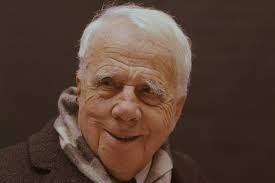
"image": "https://kavishalalab.s3.ap-south-1.amazonaws.com/sootradhar_author/Robert_Frost.jpeg",
"name": "Robert Frost",
"bio": "Robert Lee Frost was an American poet. His work was initially published in England before it was published in the United States.",
"raw_bio": "Robert Lee Frost was an American poet. His work was initially published in England before it was published in the United States.",
"slug": "robert-frost",
"DOB": "1874-03-26",
"DateOfDemise": "1963-01-29",
"location": "San Francisco, California, United States",
"url": "/sootradhar/robert-frost",
"tags": "",
"created": "2023-09-22T12:51:05.228644",
"is_has_special_post": true,
"is_special_author": false,
"language": 2
},
{
"id": 605,
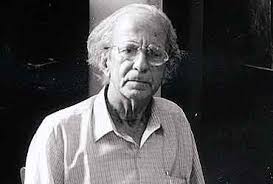
"image": "https://kavishalalab.s3.ap-south-1.amazonaws.com/sootradhar_author/nissim-SO-post.jpg",
"name": "Nissim Ezekiel",
"bio": "Nissim Ezekiel was an Indian Jewish poet, actor, playwright, editor and art critic. He was a foundational figure in postcolonial India's literary history, specifically for Indian Poetry in English",
"raw_bio": "Nissim Ezekiel was an Indian Jewish poet, actor, playwright, editor and art critic. He was a foundational figure in postcolonial India's literary history, specifically for Indian Poetry in English",
"slug": "nissim-ezekiel",
"DOB": "1924-12-16",
"DateOfDemise": "2004-01-09",
"location": "Mumbai, India",
"url": "/sootradhar/nissim-ezekiel",
"tags": "Indian, Poetry, Nissim Ezekiel",
"created": "2023-09-22T12:17:50.397347",
"is_has_special_post": false,
"is_special_author": false,
"language": 2
},
{
"id": 607,
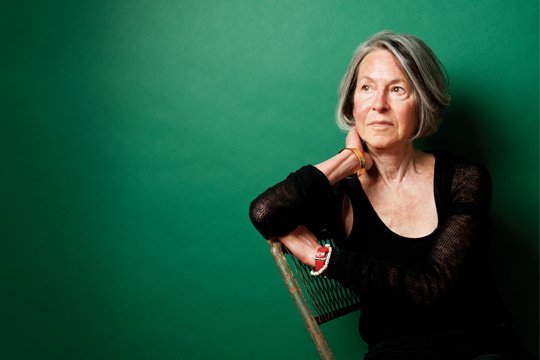
"image": "https://kavishalalab.s3.ap-south-1.amazonaws.com/sootradhar_author/louisegluck_New_York_New_York_United_States.jpg",
"name": "Louise Glück",
"bio": "<p>Louise Glück was born in New York City in 1943 and grew up on Long Island. She attended Sarah Lawrence College and Columbia University. Considered by many to be one of America’s most talented contemporary poets, Glück is known for her poetry’s technical precision, sensitivity, and insight into loneliness, family relationships, divorce, and death. The poet Robert Hass has called her “one of the purest and most accomplished lyric poets now writing.” In 2020 she was awarded the Nobel Prize in Literature \"for her unmistakable poetic voice that with austere beauty makes individual existence universal.\"</p>\r\n<p>Glück is the author of 12 books of poetry, including the recent collections Faithful and Virtuous Night (2014), winner of the National Book Award, and Poems 1962-2012 (2012), which won the Los Angeles Times Book Prize, as well as the essay collection American Originality (2017). Glück’s early books feature personae grappling with the aftermaths of failed love affairs, disastrous family encounters, and existential despair, and her later work continues to explore the agony of the self. Her first book of poetry, Firstborn (1968), was recognized for its technical control as well as its collection of disaffected, isolated narratives. Helen Vendler commented on Glück’s use of story in her New Republic review of The House on Marshland (1975). “Glück’s cryptic narratives invite our participation: we must, according to the case, fill out the story, substitute ourselves for the fictive personages, invent a scenario from which the speaker can utter her lines, decode the import, ‘solve’ the allegory,” Vendler maintained. But she added that “later, I think … we read the poem, instead, as a truth complete within its own terms, reflecting some one of the innumerable configurations into which experience falls.” According to poet-critic Rosanna Warren, Glück’s “power [is] to distance the lyric ‘I’ as subject and object of attention” and to “impose a discipline of detachment upon urgently subjective material.”</p>\r\n<p>Glück’s poems in books such as Firstborn, The House on Marshland, The Garden (1976), Descending Figure (1980), The Triumph of Achilles (1985), Ararat (1990), and the Pulitzer Prize-winning The Wild Iris (1992) take readers on an inner journey by exploring their deepest, most intimate feelings. Glück’s ability to create poetry that many people can understand, relate to, and experience intensely and completely stems from her deceptively straightforward language and poetic voice. In a review of Glück’s The Triumph of Achilles, Wendy Lesser noted in the Washington Post Book World that “‘direct’ is the operative word here: Glück’s language is staunchly straightforward, remarkably close to the diction of ordinary speech. Yet her careful selection for rhythm and repetition, and the specificity of even her idiomatically vague phrases, give her poems a weight that is far from colloquial.” Lesser went on to remark that “the strength of that voice derives in large part from its self-centeredness—literally, for the words in Glück’s poems seem to come directly from the center of herself.”</p>\r\n<p>Because Glück writes so effectively about disappointment, rejection, loss, and isolation, reviewers frequently refer to her poetry as “bleak” or “dark.” The Nation’s Don Bogen felt that Glück’s “basic concerns” were “betrayal, mortality, love and the sense of loss that accompanies it… She is at heart the poet of a fallen world.” Stephen Burt, reviewing her collection Averno (2006), noted that “few poets save [Sylvia] Plath have sounded so alienated, so depressed, so often, and rendered that alienation aesthetically interesting.” Readers and reviewers have also marveled at Glück’s gift for creating poetry with a dreamlike quality that at the same time deals with the realities of passionate and emotional subjects. Holly Prado declared in a Los Angeles Times Book Review piece on The Triumph of Achilles (1985) that Glück’s poetry works “because she has an unmistakable voice that resonates and brings into our contemporary world the old notion that poetry and the visionary are intertwined.” Glück’s Pulitzer prize-winning collection, The Wild Iris (1992), clearly demonstrates her visionary poetics. The book, written in three segments, is set in a garden and imagines three voices: flowers speaking to the gardener-poet, the gardener-poet, and an omniscient god figure. In the New Republic, Helen Vendler described how “Glück’s language revived the possibilities of high assertion, assertion as from the Delphic tripod. The words of the assertions, though, were often humble, plain, usual; it was their hierarchic and unearthly tone that distinguished them. It was not a voice of social prophecy but of spiritual prophecy—a tone that not many women had the courage to claim.</p>\r\n<p>Meadowlands (1996), Glück’s first new work after The Wild Iris, takes its impetus from Greek and Roman mythology. The book uses the voices of Odysseus and Penelope to create “a kind of high-low rhetorical experiment in marriage studies,” according to Deborah Garrison in the New York Times Book Review. Garrison added that, through the “suburban banter” between the ancient wanderer and his wife, Meadowlands “captures the way that a marriage itself has a tone, a set of shared vocal grooves inseparable from the particular personalities involved and the partial truces they’ve made along the way.”</p>\r\n<p>Vita Nova (1999) earned Glück the prestigious Bollingen Prize from Yale University. In an interview with Brian Phillips of the Harvard Advocate, Glück stated: “This book was written very, very rapidly… Once it started, I thought, this is a roll, and if it means you’re not going to sleep, okay, you’re not going to sleep.” Although the ostensible subject matter of the collection is the examination of the aftermath of a broken marriage, Vita Nova is suffused with symbols drawn from both personal dreams and classic mythological archetypes. Glück’s next collection, The Seven Ages (2001) similarly takes up both myth and the personal in forty-four poems whose subject matter ranges throughout the author’s life, from her earliest memories to the contemplation of death. Glück’s next book, Averno (2006) takes the myth of Persephone as its touchstone. The book’s poems circle around the bonds between mothers and daughters, the poet’s own fears of ageing, and a narrative concerning a modern-day Persephone. In the New York Times, Nicholas Christopher noted Glück’s unique interest in “tapping the wellsprings of myth, collective and personal, to fuel [her] imagination and, with hard-earned clarity and subtle music, to struggle with some of our oldest, most intractable fears—isolation and oblivion, the dissolution of love, the failure of memory, the breakdown of the body and destruction of the spirit.”</p>\r\n<p>William Logan called Glück’s A Village Life (2009), “a subversive departure for a poet used to meaning more than she can say.” The book is a marked formal departure for Glück, relying on long lines to achieve novelistic or short-story effects. Logan saw A Village Life as a latter-day Spoon River Anthology in its use of “the village as a convenient lens to examine the lives within, which counterpoint the memories of her [Glück’s] life without.” Dana Goodyear, reviewing the book for the Los Angeles Times found A Village Life “electrifying,” even as it presumed to tell its “polite” story of a “dying agriculture community, probably in Italy, probably some time between the 1950s and today.” Goodyear added: “Ordinariness is part of the risk of these poems; in them, Glück hazards, and dodges, sentimentality. The near miss makes us shiver.” Glück’s selected Poems 1962-2012 (2012) was published to great acclaim. While highlighting her work’s fierceness and “raking moral intensity,” in the words of New York Times reviewer Dwight Garner, the collection also allowed readers to see the arc of Glück’s formal and thematic development. According to Adam Plunkett, reviewing the collected poems in the New Republic, “Very few writers share her talent for turning water into blood. But what emerges from this new, comprehensive collection—spanning the entirety of her career—is a portrait of a poet who has issued forth a good deal of venom but is now writing, excellently, in a softer vein.”</p>\r\n<p>In 2003 Glück was named the 12th US Poet Laureate. That same year, she was named the judge for the Yale Series of Younger Poets, a position she held until 2010. Her book of essays Proofs and Theories (1994) was awarded the PEN/Martha Albrand Award for Nonfiction. In addition to the Pulitzer and Bollingen Prizes, she has received many awards and honors for her work, including the Lannan Literary Award for Poetry, a Sara Teasdale Memorial Prize, the MIT Anniversary Medal, the Wallace Stevens Award, a National Humanities Medal, and a Gold Medal for Poetry from the American Academy of Arts and Letters. She has received fellowships from the Guggenheim and Rockefeller Foundations, and from the National Endowment for the Arts. In 2020 she was awarded the Nobel Prize in Literature.</p>\r\n<p>Glück is currently writer-in-residence at Yale University and lives in Cambridge, Massachusetts.</p>\r\n<p> </p>",
"raw_bio": "Louise Glück was born in New York City in 1943 and grew up on Long Island. She attended Sarah Lawrence College and Columbia University. Considered by many to be one of America’s most talented contemporary poets, Glück is known for her poetry’s technical precision, sensitivity, and insight into loneliness, family relationships, divorce, and death. The poet Robert Hass has called her “one of the purest and most accomplished lyric poets now writing.” In 2020 she was awarded the Nobel Prize in Literature \"for her unmistakable poetic voice that with austere beauty makes individual existence universal.\" Glück is the author of 12 books of poetry, including the recent collections Faithful and Virtuous Night (2014), winner of the National Book Award, and Poems 1962-2012 (2012), which won the Los Angeles Times Book Prize, as well as the essay collection American Originality (2017). Glück’s early books feature personae grappling with the aftermaths of failed love affairs, disastrous family encounters, and existential despair, and her later work continues to explore the agony of the self. Her first book of poetry, Firstborn (1968), was recognized for its technical control as well as its collection of disaffected, isolated narratives. Helen Vendler commented on Glück’s use of story in her New Republic review of The House on Marshland (1975). “Glück’s cryptic narratives invite our participation: we must, according to the case, fill out the story, substitute ourselves for the fictive personages, invent a scenario from which the speaker can utter her lines, decode the import, ‘solve’ the allegory,” Vendler maintained. But she added that “later, I think … we read the poem, instead, as a truth complete within its own terms, reflecting some one of the innumerable configurations into which experience falls.” According to poet-critic Rosanna Warren, Glück’s “power [is] to distance the lyric ‘I’ as subject and object of attention” and to “impose a discipline of detachment upon urgently subjective material.” Glück’s poems in books such as Firstborn, The House on Marshland, The Garden (1976), Descending Figure (1980), The Triumph of Achilles (1985), Ararat (1990), and the Pulitzer Prize-winning The Wild Iris (1992) take readers on an inner journey by exploring their deepest, most intimate feelings. Glück’s ability to create poetry that many people can understand, relate to, and experience intensely and completely stems from her deceptively straightforward language and poetic voice. In a review of Glück’s The Triumph of Achilles, Wendy Lesser noted in the Washington Post Book World that “‘direct’ is the operative word here: Glück’s language is staunchly straightforward, remarkably close to the diction of ordinary speech. Yet her careful selection for rhythm and repetition, and the specificity of even her idiomatically vague phrases, give her poems a weight that is far from colloquial.” Lesser went on to remark that “the strength of that voice derives in large part from its self-centeredness—literally, for the words in Glück’s poems seem to come directly from the center of herself.” Because Glück writes so effectively about disappointment, rejection, loss, and isolation, reviewers frequently refer to her poetry as “bleak” or “dark.” The Nation’s Don Bogen felt that Glück’s “basic concerns” were “betrayal, mortality, love and the sense of loss that accompanies it… She is at heart the poet of a fallen world.” Stephen Burt, reviewing her collection Averno (2006), noted that “few poets save [Sylvia] Plath have sounded so alienated, so depressed, so often, and rendered that alienation aesthetically interesting.” Readers and reviewers have also marveled at Glück’s gift for creating poetry with a dreamlike quality that at the same time deals with the realities of passionate and emotional subjects. Holly Prado declared in a Los Angeles Times Book Review piece on The Triumph of Achilles (1985) that Glück’s poetry works “because she has an unmistakable voice that resonates and brings into our contemporary world the old notion that poetry and the visionary are intertwined.” Glück’s Pulitzer prize-winning collection, The Wild Iris (1992), clearly demonstrates her visionary poetics. The book, written in three segments, is set in a garden and imagines three voices: flowers speaking to the gardener-poet, the gardener-poet, and an omniscient god figure. In the New Republic, Helen Vendler described how “Glück’s language revived the possibilities of high assertion, assertion as from the Delphic tripod. The words of the assertions, though, were often humble, plain, usual; it was their hierarchic and unearthly tone that distinguished them. It was not a voice of social prophecy but of spiritual prophecy—a tone that not many women had the courage to claim. Meadowlands (1996), Glück’s first new work after The Wild Iris, takes its impetus from Greek and Roman mythology. The book uses the voices of Odysseus and Penelope to create “a kind of high-low rhetorical experiment in marriage studies,” according to Deborah Garrison in the New York Times Book Review. Garrison added that, through the “suburban banter” between the ancient wanderer and his wife, Meadowlands “captures the way that a marriage itself has a tone, a set of shared vocal grooves inseparable from the particular personalities involved and the partial truces they’ve made along the way.” Vita Nova (1999) earned Glück the prestigious Bollingen Prize from Yale University. In an interview with Brian Phillips of the Harvard Advocate, Glück stated: “This book was written very, very rapidly… Once it started, I thought, this is a roll, and if it means you’re not going to sleep, okay, you’re not going to sleep.” Although the ostensible subject matter of the collection is the examination of the aftermath of a broken marriage, Vita Nova is suffused with symbols drawn from both personal dreams and classic mythological archetypes. Glück’s next collection, The Seven Ages (2001) similarly takes up both myth and the personal in forty-four poems whose subject matter ranges throughout the author’s life, from her earliest memories to the contemplation of death. Glück’s next book, Averno (2006) takes the myth of Persephone as its touchstone. The book’s poems circle around the bonds between mothers and daughters, the poet’s own fears of ageing, and a narrative concerning a modern-day Persephone. In the New York Times, Nicholas Christopher noted Glück’s unique interest in “tapping the wellsprings of myth, collective and personal, to fuel [her] imagination and, with hard-earned clarity and subtle music, to struggle with some of our oldest, most intractable fears—isolation and oblivion, the dissolution of love, the failure of memory, the breakdown of the body and destruction of the spirit.” William Logan called Glück’s A Village Life (2009), “a subversive departure for a poet used to meaning more than she can say.” The book is a marked formal departure for Glück, relying on long lines to achieve novelistic or short-story effects. Logan saw A Village Life as a latter-day Spoon River Anthology in its use of “the village as a convenient lens to examine the lives within, which counterpoint the memories of her [Glück’s] life without.” Dana Goodyear, reviewing the book for the Los Angeles Times found A Village Life “electrifying,” even as it presumed to tell its “polite” story of a “dying agriculture community, probably in Italy, probably some time between the 1950s and today.” Goodyear added: “Ordinariness is part of the risk of these poems; in them, Glück hazards, and dodges, sentimentality. The near miss makes us shiver.” Glück’s selected Poems 1962-2012 (2012) was published to great acclaim. While highlighting her work’s fierceness and “raking moral intensity,” in the words of New York Times reviewer Dwight Garner, the collection also allowed readers to see the arc of Glück’s formal and thematic development. According to Adam Plunkett, reviewing the collected poems in the New Republic, “Very few writers share her talent for turning water into blood. But what emerges from this new, comprehensive collection—spanning the entirety of her career—is a portrait of a poet who has issued forth a good deal of venom but is now writing, excellently, in a softer vein.” In 2003 Glück was named the 12th US Poet Laureate. That same year, she was named the judge for the Yale Series of Younger Poets, a position she held until 2010. Her book of essays Proofs and Theories (1994) was awarded the PEN/Martha Albrand Award for Nonfiction. In addition to the Pulitzer and Bollingen Prizes, she has received many awards and honors for her work, including the Lannan Literary Award for Poetry, a Sara Teasdale Memorial Prize, the MIT Anniversary Medal, the Wallace Stevens Award, a National Humanities Medal, and a Gold Medal for Poetry from the American Academy of Arts and Letters. She has received fellowships from the Guggenheim and Rockefeller Foundations, and from the National Endowment for the Arts. In 2020 she was awarded the Nobel Prize in Literature. Glück is currently writer-in-residence at Yale University and lives in Cambridge, Massachusetts. ",
"slug": "louise-gluck",
"DOB": "1943-04-22",
"DateOfDemise": null,
"location": "New York, New York, United States",
"url": "/sootradhar/louise-gluck",
"tags": "",
"created": "2023-09-22T12:51:10.040161",
"is_has_special_post": true,
"is_special_author": false,
"language": 2
},
{
"id": 609,
"image": "https://kavishalalab.s3.ap-south-1.amazonaws.com/sootradhar_author/220px-RK_Narayan.jpg",
"name": "R. K. Narayan",
"bio": "Rasipuram Krishnaswami Iyer Narayanaswami (10 October 1906 – 13 May 2001), commonly known as R. K. Narayan, was an Indian writer known for his work set in the fictional South Indian town of Malgudi. He was a leading author of early Indian literature in English along with Mulk Raj Anand and Raja Rao.\r\n<br>\r\nNarayan's mentor and friend Graham Greene was instrumental in getting publishers for Narayan's first four books including the semi-autobiographical trilogy of Swami and Friends, The Bachelor of Arts and The English Teacher. The fictional town of Malgudi was first introduced in Swami and Friends. Narayan's The Financial Expert was hailed as one of the most original works of 1951 and Sahitya Academy Award winner The Guide was adapted for film (winning a Filmfare Award for Best Film) and for Broadway.\r\n<br>\r\nNarayan highlights the social context and everyday life of his characters. He has been compared to William Faulkner who also created a similar fictional town and likewise explored with humour and compassion the energy of ordinary life. Narayan's short stories have been compared with those of Guy de Maupassant because of his ability to compress a narrative.\r\n<br>\r\nIn a career that spanned over sixty years Narayan received many awards and honours including the AC Benson Medal from the Royal Society of Literature, the Padma Vibhushan and the Padma Bhushan, India's second and third highest civilian awards, and in 1994 the Sahitya Akademi Fellowship, the highest honour of India's national academy of letters. He was also nominated to the Rajya Sabha, the upper house of India's parliament.<br>",
"raw_bio": "Rasipuram Krishnaswami Iyer Narayanaswami (10 October 1906 – 13 May 2001), commonly known as R. K. Narayan, was an Indian writer known for his work set in the fictional South Indian town of Malgudi. He was a leading author of early Indian literature in English along with Mulk Raj Anand and Raja Rao.\r \r Narayan's mentor and friend Graham Greene was instrumental in getting publishers for Narayan's first four books including the semi-autobiographical trilogy of Swami and Friends, The Bachelor of Arts and The English Teacher. The fictional town of Malgudi was first introduced in Swami and Friends. Narayan's The Financial Expert was hailed as one of the most original works of 1951 and Sahitya Academy Award winner The Guide was adapted for film (winning a Filmfare Award for Best Film) and for Broadway.\r \r Narayan highlights the social context and everyday life of his characters. He has been compared to William Faulkner who also created a similar fictional town and likewise explored with humour and compassion the energy of ordinary life. Narayan's short stories have been compared with those of Guy de Maupassant because of his ability to compress a narrative.\r \r In a career that spanned over sixty years Narayan received many awards and honours including the AC Benson Medal from the Royal Society of Literature, the Padma Vibhushan and the Padma Bhushan, India's second and third highest civilian awards, and in 1994 the Sahitya Akademi Fellowship, the highest honour of India's national academy of letters. He was also nominated to the Rajya Sabha, the upper house of India's parliament.",
"slug": "r-k-narayan",
"DOB": "1906-10-10",
"DateOfDemise": "2001-05-13",
"location": "Madras Presidency, British India",
"url": "/sootradhar/r-k-narayan",
"tags": "",
"created": "2023-09-22T12:17:50.418348",
"is_has_special_post": false,
"is_special_author": false,
"language": 2
},
{
"id": 616,
"image": "https://kavishalalab.s3.ap-south-1.amazonaws.com/sootradhar_author/Daisaku_Ikeda.jpg",
"name": "Daisaku Ikeda",
"bio": "Daisaku Ikeda is a Japanese Buddhist philosopher, educator, author, and nuclear disarmament advocate. He has served as the third president and then honorary president of the Soka Gakkai, the largest of Japan's new religious movements.",
"raw_bio": "Daisaku Ikeda is a Japanese Buddhist philosopher, educator, author, and nuclear disarmament advocate. He has served as the third president and then honorary president of the Soka Gakkai, the largest of Japan's new religious movements.",
"slug": "daisaku-ikeda",
"DOB": "1928-01-02",
"DateOfDemise": null,
"location": "Ota City, Tokyo, Japan",
"url": "/sootradhar/daisaku-ikeda",
"tags": "Japan",
"created": "2023-09-22T12:17:50.434041",
"is_has_special_post": false,
"is_special_author": false,
"language": 2
},
{
"id": 632,
"image": "https://kavishalalab.s3.ap-south-1.amazonaws.com/sootradhar_author/Varun_Gandhi_.jpg",
"name": "Varun Gandhi",
"bio": "Varun Gandhi is a poet, Indian politician, and a third-term member of Parliament for Lok Sabha from the Pilibhit constituency. He is also member of the Bharatiya Janata Party and was inducted into Rajnath Singh's team in March 2012 as General Secretary. He hails from the Nehru–Gandhi family, which has occupied a prominent place in the politics of India since the country's independence in 1947. Gandhi wrote his first volume of poems, titled The Otherness of Self, at the age of 20, in 2000. His second volume of poems, titled Stillness was published by HarperCollins in April 2015. The book became the bestselling non-fiction book, selling over 10,000 copies in the first two days of its release. <br>\r\nIn 2018, he released his book on the Indian rural economy titled The Rural Manifesto: Realising India's Future Through Her Villages. The book sold over 30,000 copies in ten days of its release.",
"raw_bio": "Varun Gandhi is a poet, Indian politician, and a third-term member of Parliament for Lok Sabha from the Pilibhit constituency. He is also member of the Bharatiya Janata Party and was inducted into Rajnath Singh's team in March 2012 as General Secretary. He hails from the Nehru–Gandhi family, which has occupied a prominent place in the politics of India since the country's independence in 1947. Gandhi wrote his first volume of poems, titled The Otherness of Self, at the age of 20, in 2000. His second volume of poems, titled Stillness was published by HarperCollins in April 2015. The book became the bestselling non-fiction book, selling over 10,000 copies in the first two days of its release. \r In 2018, he released his book on the Indian rural economy titled The Rural Manifesto: Realising India's Future Through Her Villages. The book sold over 30,000 copies in ten days of its release.",
"slug": "varun-gandhi",
"DOB": "2020-03-13",
"DateOfDemise": null,
"location": "Delhi, India",
"url": "/sootradhar/varun-gandhi",
"tags": "",
"created": "2023-09-22T12:17:50.451529",
"is_has_special_post": false,
"is_special_author": false,
"language": 2
},
{
"id": 635,
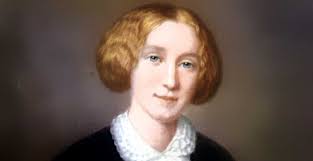
"image": "https://kavishalalab.s3.ap-south-1.amazonaws.com/sootradhar_author/George_Eliot.jpeg",
"name": "George Eliot",
"bio": "George Eliot is widely recognized as one of the most important writers of the nineteenth century; yet her two volumes of poetry are often ignored in modern critical assessments. Like so many of her contemporaries, Eliot tried to make significant literary contributions in more than one genre; her poems—both narrative and lyric—deal, however, with some of the same themes which inform her novels and short stories. Her poems are less accomplished than her prose fiction—only one poem, “O May I Join the Choir Invisible,” has achieved any lasting fame—but they do stand as an informative window on to her life as a writer.\r\n<br>\r\nGeorge Eliot was born Mary Ann Evans in rural Warwickshire and was unusually well educated for a woman of her time. Her first publication, a poem published in the Christian Observer in January 1840, “'Knowing That Shortly I Must Put Off This Tabernacle,'“ displays the influence of Eliot’s Evangelical teachers. In 1841, Eliot came in contact with a group of philosophical thinkers, and her passionate commitment to Christianity began to find new directions. By early 1842 Eliot questioned the historical foundations of Christianity so much that she both abandoned her faith and stopped attending church services, a move that led to strenuous conflict with her father. Eliot eventually resumed church attendance but did not return to active faith. In forty-three lines of blank verse, Eliot claims in “O May I Join the Choir Invisible” that the only afterlife one can have comes from participation in the growing group of men and women who make the world a better place to live—better in human terms, individually and collectively. The piece demonstrates Eliot’s unconventional thinking in a highly orthodox Christian society.\r\n<br>\r\nAt the encouragement of London publisher John Chapman, Eliot published a review for the Westminster Review and, excited by her entrée to the London literary world, decided to try to earn her living by writing. In 1851, Eliot became assistant editor of the Westminster Review. During her time with the journal, she met many English and American literary figures—most significantly, Herbert Spencer, the author of Social Statics (1851), and George Henry Lewes, the drama critic and founder of the Leader. The subsequent union of Lewes and Eliot was complicated by Lewes’ thirteen-year marriage to Agnes Jervis, who, over time, bore four children by a married friend.\r\n<br>\r\nA controversial figure during her time, Eliot published translations as well as prose and poetry, all but one under her adopted pseudonym. Among her themes are music; art as an activity of unfathomable human worth; the notion that the past shapes the present; and the conflict in a woman's life between great duty and the prospect of a happy marriage. Her prose masterpiece was the psychologically insightful Middlemarch: A Study of Provincial Life (1871).",
"raw_bio": "George Eliot is widely recognized as one of the most important writers of the nineteenth century; yet her two volumes of poetry are often ignored in modern critical assessments. Like so many of her contemporaries, Eliot tried to make significant literary contributions in more than one genre; her poems—both narrative and lyric—deal, however, with some of the same themes which inform her novels and short stories. Her poems are less accomplished than her prose fiction—only one poem, “O May I Join the Choir Invisible,” has achieved any lasting fame—but they do stand as an informative window on to her life as a writer.\r \r George Eliot was born Mary Ann Evans in rural Warwickshire and was unusually well educated for a woman of her time. Her first publication, a poem published in the Christian Observer in January 1840, “'Knowing That Shortly I Must Put Off This Tabernacle,'“ displays the influence of Eliot’s Evangelical teachers. In 1841, Eliot came in contact with a group of philosophical thinkers, and her passionate commitment to Christianity began to find new directions. By early 1842 Eliot questioned the historical foundations of Christianity so much that she both abandoned her faith and stopped attending church services, a move that led to strenuous conflict with her father. Eliot eventually resumed church attendance but did not return to active faith. In forty-three lines of blank verse, Eliot claims in “O May I Join the Choir Invisible” that the only afterlife one can have comes from participation in the growing group of men and women who make the world a better place to live—better in human terms, individually and collectively. The piece demonstrates Eliot’s unconventional thinking in a highly orthodox Christian society.\r \r At the encouragement of London publisher John Chapman, Eliot published a review for the Westminster Review and, excited by her entrée to the London literary world, decided to try to earn her living by writing. In 1851, Eliot became assistant editor of the Westminster Review. During her time with the journal, she met many English and American literary figures—most significantly, Herbert Spencer, the author of Social Statics (1851), and George Henry Lewes, the drama critic and founder of the Leader. The subsequent union of Lewes and Eliot was complicated by Lewes’ thirteen-year marriage to Agnes Jervis, who, over time, bore four children by a married friend.\r \r A controversial figure during her time, Eliot published translations as well as prose and poetry, all but one under her adopted pseudonym. Among her themes are music; art as an activity of unfathomable human worth; the notion that the past shapes the present; and the conflict in a woman's life between great duty and the prospect of a happy marriage. Her prose masterpiece was the psychologically insightful Middlemarch: A Study of Provincial Life (1871).",
"slug": "george-eliot",
"DOB": "1819-11-22",
"DateOfDemise": "1880-12-22",
"location": "Nuneaton, United Kingdom",
"url": "/sootradhar/george-eliot",
"tags": "",
"created": "2023-09-22T12:52:03.852823",
"is_has_special_post": true,
"is_special_author": false,
"language": 2
},
{
"id": 637,
"image": "https://kavishalalab.s3.ap-south-1.amazonaws.com/sootradhar_author/o-POET-JAYANTA-MAHAPATRA-RETURNS-PADMA-SHRI-facebook.jpg",
"name": "Jayanta Mahapatra",
"bio": "Jayanta Mahapatra (born 22 October 1928)is an Indian English poet. He is the first Indian poet to win a Sahitya Akademi award for English poetry. He is the author of poems such as Indian Summer and Hunger, which are regarded as classics in modern Indian English literature. He was awarded a Padma Shri, the fourth highest civilian honour in India in 2009. He returned the award in 2015 to protest against rising intolerance in India. <br> \r\n<b> Poetry Reading - Outside India</b><br> \r\nUniversity of Iowa, Iowa City, 1976<br> \r\nUniversity of Tennessee, Chattanooga, 1976<br> \r\nUniversity of the South, Sewanee, 1976<br> \r\nEast West Center, Honolulu, Hawaii, 1976<br> \r\nAdelaide Festival of Arts, Adelaide, 1978<br> \r\nP.E.N. Centre, Sydney, 1978<br> \r\nAustralian National University, Canberra, 1978<br> \r\nInternational Poets Conference, Tokyo, 1980<br> \r\nAsian Poets Conference, Tokyo, 1984<br>",
"raw_bio": "Jayanta Mahapatra (born 22 October 1928)is an Indian English poet. He is the first Indian poet to win a Sahitya Akademi award for English poetry. He is the author of poems such as Indian Summer and Hunger, which are regarded as classics in modern Indian English literature. He was awarded a Padma Shri, the fourth highest civilian honour in India in 2009. He returned the award in 2015 to protest against rising intolerance in India. Poetry Reading - Outside India \r University of Iowa, Iowa City, 1976 \r University of Tennessee, Chattanooga, 1976 \r University of the South, Sewanee, 1976 \r East West Center, Honolulu, Hawaii, 1976 \r Adelaide Festival of Arts, Adelaide, 1978 \r P.E.N. Centre, Sydney, 1978 \r Australian National University, Canberra, 1978 \r International Poets Conference, Tokyo, 1980 \r Asian Poets Conference, Tokyo, 1984",
"slug": "jayanta-mahapatra",
"DOB": "1928-11-22",
"DateOfDemise": null,
"location": null,
"url": "/sootradhar/jayanta-mahapatra",
"tags": "",
"created": "2023-09-22T12:17:50.474381",
"is_has_special_post": false,
"is_special_author": false,
"language": 2
},
{
"id": 640,
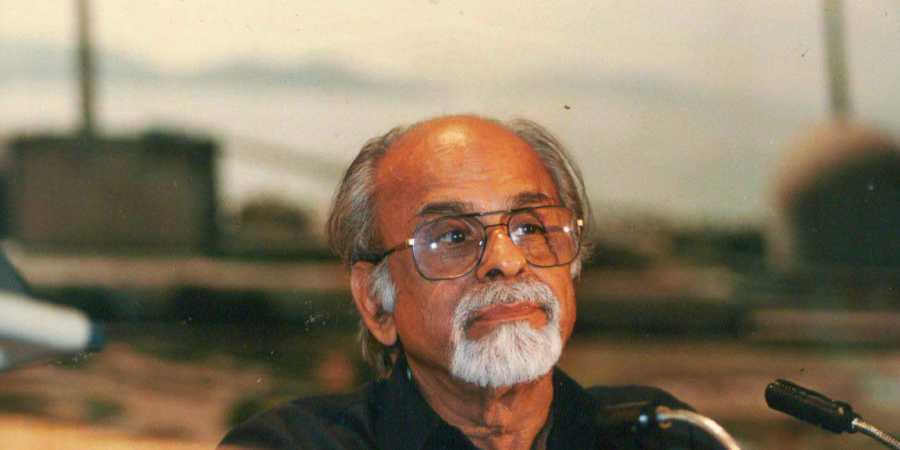
"image": "https://kavishalalab.s3.ap-south-1.amazonaws.com/sootradhar_author/I._K._Gujral_.jpg",
"name": "Inder Kumar Gujral",
"bio": "Indra Kumar Gujral (4 December 1919 – 30 November 2012) was an Indian poet, politician and freedom activist who served as the 12th Prime Minister of India from April 1997 to March 1998.\r\n<br>\r\nBorn in British India, he was influenced by nationalistic ideas as a student, and joined the All India Students Federation and the Communist Party of India. He was imprisoned for taking part in the Quit India movement. After independence, he joined the Indian National Congress party in 1964, and became a Member of Parliament in the Rajya Sabha.\r\n<br>\r\nHe was the Minister of Information and Broadcasting during the emergency. In 1976, he was appointed as the Ambassador of India to the Soviet Union. In 1996, he became the Minister of External Affairs in the Deve Gowda ministry, and developed the Gujral doctrine during this period. He was appointed as the 12th Prime Minister of India in 1997. His tenure lasted for less than a year.\r\n<br>\r\nHe retired from all political positions in 1998. He died in 2012 at the age of 92, following hospitalization due to a lung infection.\r\n<br>",
"raw_bio": "Indra Kumar Gujral (4 December 1919 – 30 November 2012) was an Indian poet, politician and freedom activist who served as the 12th Prime Minister of India from April 1997 to March 1998.\r \r Born in British India, he was influenced by nationalistic ideas as a student, and joined the All India Students Federation and the Communist Party of India. He was imprisoned for taking part in the Quit India movement. After independence, he joined the Indian National Congress party in 1964, and became a Member of Parliament in the Rajya Sabha.\r \r He was the Minister of Information and Broadcasting during the emergency. In 1976, he was appointed as the Ambassador of India to the Soviet Union. In 1996, he became the Minister of External Affairs in the Deve Gowda ministry, and developed the Gujral doctrine during this period. He was appointed as the 12th Prime Minister of India in 1997. His tenure lasted for less than a year.\r \r He retired from all political positions in 1998. He died in 2012 at the age of 92, following hospitalization due to a lung infection.\r ",
"slug": "inder-kumar-gujral",
"DOB": "1919-12-04",
"DateOfDemise": "2012-11-30",
"location": null,
"url": "/sootradhar/inder-kumar-gujral",
"tags": "",
"created": "2023-09-22T12:17:50.494807",
"is_has_special_post": false,
"is_special_author": false,
"language": 2
},
{
"id": 647,
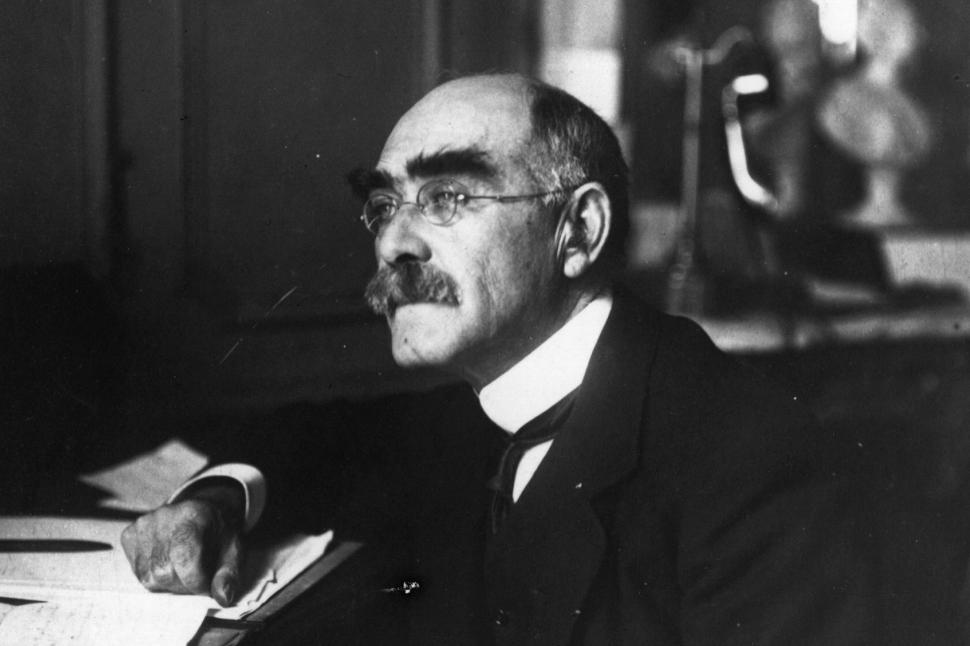
"image": "https://kavishalalab.s3.ap-south-1.amazonaws.com/sootradhar_author/Rudyard_Kipling_Kavishala.jpeg",
"name": "Rudyard Kipling",
"bio": "Rudyard Kipling is one of the best-known of the late Victorian poets and story-tellers. Although he was awarded the Nobel Prize for literature in 1907, his political views, which grew more toxic as he aged, have long made him critically unpopular. In the New Yorker, Charles McGrath remarked “Kipling has been variously labelled a colonialist, a jingoist, a racist, an anti-Semite, a misogynist, a right-wing imperialist warmonger; and—though some scholars have argued that his views were more complicated than he is given credit for—to some degree he really was all those things. That he was also a prodigiously gifted writer who created works of inarguable greatness hardly matters anymore, at least not in many classrooms, where Kipling remains politically toxic.” However, Kipling’s works for children, above all his novel The Jungle Book, first published in 1894, remain part of popular cultural through the many movie versions made and remade since the 1960s.\r\n<br>\r\nKipling was born in Bombay, India, in 1865. His father, John Lockwood Kipling, was principal of the Jeejeebyhoy School of Art, an architect and artist who had come to the colony, writes Charles Cantalupo in the Dictionary of Literary Biography, “to encourage, support, and restore native Indian art against the incursions of British business interests.” He meant to try, Cantalupo continues, “to preserve, at least in part, and to copy styles of art and architecture which, representing a rich and continuous tradition of thousands of years, were suddenly threatened with extinction.” His mother, Alice Macdonald, had connections through her sister’s marriage to the artist Sir Edward Burne-Jones with important members of the Pre-Raphaelite movement in British arts and letters.\r\n<br>\r\nKipling spent the first years of his life in India, remembering it in later years as almost a paradise. “My first impression,” he wrote in his posthumously published autobiography Something of Myself for My Friends Known and Unknown, “is of daybreak, light and colour and golden and purple fruits at the level of my shoulder.” In 1871, however, his parents sent him and his sister Beatrice—called “Trix”—to England, partly to avoid health problems, but also so that the children could begin their schooling. Kipling and his sister were placed with the widow of an old Navy captain named Holloway at a boarding house called Lorne Lodge in Southsea, a suburb of Portsmouth. Kipling and Trix spent the better part of the next six years in that place, which they came to call the “House of Desolation.”\r\n<br>\r\n1871 until 1877 were miserable years for Kipling. “In addition to feelings of bewilderment and abandonment” from being deserted by his parents, writes Mary A. O’Toole in the Dictionary of Literary Biography, “Kipling had to suffer bullying by the woman of the house and her son.” Kipling may have brought some of this treatment on himself—he was a formidably aggressive and pampered child. He once stamped down a quiet country road shouting: “Out of the way, out of the way, there’s an angry Ruddy coming!,” reports J.I.M. Stewart in his biography Rudyard Kipling, which led an aunt to reflect that “the wretched disturbances one ill-ordered child can make is a lesson for all time to me.” In Something of Myself, however, he recounted punishments that went far beyond correction. “I had never heard of Hell,” he wrote, “so I was introduced to it in all its terrors. … Myself I was regularly beaten.” On one occasion, after having thrown away a bad report card rather than bring it home, “I was well beaten and sent to school through the streets of Southsea with the placard ‘Liar’ between my shoulders.” At last, Kipling suffered a sort of nervous breakdown. An examination showed that he badly needed glasses—which helped explain his poor performance in school—and his mother returned from India to care for him. “She told me afterwards,” Kipling stated in Something of Myself, “that when she first came up to my room to kiss me good-night, I flung up an arm to guard off the cuff that I had been trained to expect.”\r\n<br>\r\nKipling did have some happy times during those years. He and his sister spent each December time with his mother’s sister, Lady Burne-Jones, at The Grange, a meeting-place frequented by English artisans such as William Morris—or “our Deputy ‘Uncle Topsy’” as Kipling called him in Something of Myself. Sir Edward Burne-Jones occasionally entered into the children’s play, Kipling recalled: “Once he descended in broad daylight with a tube of ‘Mummy Brown’ [paint] in his hand, saying that he had discovered it was made of dead Pharaohs and we must bury it accordingly. So we all went out and helped—according to the rites of Mizraim and Memphis, I hope—and—to this day I could drive a spade within a foot of where that tube lies.” “But on a certain day—one tried to fend off the thought of it—the delicious dream would end,” he concluded, “and one would return to the House of Desolation, and for the next two or three mornings there cry on waking up.”\r\n<br>\r\nIn 1878, Kipling was sent off to school in Devon, in the west of England. The institution was the United Services College, a relatively new school intended to educate the sons of army officers, and Kipling was probably sent there because the headmaster was one Cormell Price, “one of my Deputy-Uncles at The Grange … ‘Uncle Crom.’” There Kipling formed three close friends, whom he later immortalized in his collection of stories Stalky Co, published in 1899. “We fought among ourselves ‘regular an’ faithful as man an’ wife,’” Kipling reported in Something of Myself, “but any debt which we owed elsewhere was faithfully paid by all three of us.” “I must have been ‘nursed’ with care by Crom and under his orders,” Kipling recalled. “Hence, when he saw I was irretrievably committed to the ink-pot, his order that I should edit the School Paper and have the run of his Library Study. … Heaven forgive me! I thought these privileges were due to my transcendent personal merits.”\r\n<br>\r\nSince his parents could not afford to send him to one of the major English universities, in 1882 Kipling left the Services College, bound for India to rejoin his family and to begin a career as a journalist. For five years he held the post of assistant editor of the Civil and Military Gazette at Lahore. During those years he also published the stories that became Plain Tales from the Hills, works based on British lives in the resort town of Simla, and Departmental Ditties, his first major collection of poems. In 1888, the young journalist moved south to join the Allahabad Pioneer, a much larger publication. At the same time, his works had begun to be published in cheap editions intended for sale in railroad terminals, and he began to earn a strong popular following with collections such as The Phantom ‘Rickshaw and Other Tales, The Story of the Gadsbys, Soldiers Three, Under the Deodars, and “Wee Willie Winkie” and Other Child Stories. In March 1889 Kipling left India to return to England, determined to pursue his future as a writer there.\r\n<br>\r\nThe young writer’s reputation soared after he settled in London. “Kipling’s official biographer, C.E. Carrington,” declares Cantalupo, “calls 1890 ‘Rudyard Kipling’s year. There had been nothing like his sudden rise to fame since Byron.’” “His poems and stories,” writes O’Toole, “elicited strong reactions of love and hate from the start—almost none of his advocates and detractors were temperate in praise or in blame. Ordinary readers liked the rhythms, the cockney speech, and the imperialist sentiments of his poems and short stories; critics generally damned the works for the same reasons.” Many of his works were originally published in periodicals and later collected in various editions as Barrack-Room Ballads; famous poems such as “The Ballad of East and West,”“Danny Deever,” “Tommy,” and “The Road to Mandalay” date from this time.\r\n<br>\r\nKipling’s literary life in London brought him to the attention of many people. One of them was a young American publisher named Wolcott Balestier, who became friends with Kipling and persuaded him to work on a collaborative novel. The result, writes O’Toole, entitled The Naulahka, “reads more like one of Kipling’s travel books than like a novel” and “seems rather hastily and opportunistically concocted.” It was not a success. Balestier himself did not live to see the book published—he died on December 6, 1891—but he influenced Kipling strongly in another way. Kipling married Balestier’s sister, Caroline, in January, 1892, and the couple settled near their family home in Brattleboro, Vermont.\r\n<br>\r\nThe Kiplings lived in America for several years, in a house they built for themselves and called “Naulahka.” Kipling developed a close friendship with Theodore Roosevelt, then Under Secretary of the Navy, and often discussed politics and culture with him. “I liked him from the first,” Kipling recalled in Something of Myself, “and largely believed in him. … My own idea of him was that he was a much bigger man than his people understood or, at that time, knew how to use, and that he and they might have been better off had he been born twenty years later.” Both of Kipling’s daughters were born in Vermont—Josephine late in 1892, and Elsie in 1894—as was one of the classic works of juvenile literature: The Jungle Books, which are ranked among Kipling’s best works. The adventures of Mowgli, the foundling child raised by wolves in the Seeonee Hills of India, are “the cornerstones of Kipling’s reputation as a children’s writer,” declared William Blackburn in Writers for Children, “and still among the most popular of all his works.” The Mowgli stories and other, unrelated works from the collection—such as “Rikki-Tikki-Tavi” and “The White Seal”—have often been filmed and adapted into other media.\r\n<br>\r\nIn Something of Myself, Kipling traced the origins of these stories to a book he had read when he was young “about a lion-hunter in South Africa who fell among lions who were all Freemasons, and with them entered into a confederacy against some wicked baboons.” Martin Seymour-Smith, writing in Rudyard Kipling: A Biography, identifies another of the major sources as “the Jataka tales of India. Some of these fables go back as early as the fourth century BC and incorporate material of even earlier eras. One version, Jatakamala, was composed in about 200 AD by the poet Aryasura. They are Buddhist birth-stories—Jatakamala means ‘Garland of Birth Stories’—which the 19th-century scholar Rhys Davids described as ‘the most important collection of ancient folk-lore extant.’ Each of the 550 stories tells of the Buddha in some previous incarnation, and each is a story of the past occasioned by some incident in the present. … Some of the beast fables resemble Aesop’s, but the Jataka tales are more deliberately brutal. They teach not merely that men should be more tender towards animals, but the equivalence of all life.”\r\n<br>\r\nThe Kiplings left Vermont in 1896 after a fierce quarrel with Beatty Balestier, Kipling’s surviving brother-in-law. The writer’s unwillingness to be interviewed made him unpopular with the American press, and he was savagely ridiculed when the facts of the case became public. Rather than remain in America, Kipling and his wife returned to England, settling for a time in Rottingdean, Sussex, near the home of Kipling’s parents. The writer soon published another novel, drawing on his knowledge of New England life: Captains Courageous, the story of Harvey Cheney, a spoiled young man who is washed overboard while on his way to Europe and is rescued by fishermen. Cheney spends the summer learning about human nature and self-discipline. “After the ship has docked in Gloucester and Harvey’s parents have come to take him home,” explains O’Toole, “his father, a self-made man, is pleased to see that his son has grown from a snobbish boy to a self-reliant young man who has learned how to make his own way through hard work and to judge people by their own merits rather than by their bank balances.”\r\n<br>\r\nThe Kiplings returned to America on several occasions, but this practice ended in 1899 when the whole family came down with pneumonia and Josephine, his eldest daughter, died from it. She had been, writes Seymour-Smith, “by all accounts … unusually lively, witty and enchanting,” and her loss was deeply felt. Kipling sought solace in his work. In 1901 he published what many critics believe is his finest novel: Kim, the story of an orphaned Irish boy who grows up in the streets of Lahore, is educated at the expense of his father’s old Army regiment, and enters into “the Great Game,” the “cold war” of espionage and counter-espionage on the borders of India between Great Britain and Russia in the late 19th century. In many ways, Kipling suggested in Something of Myself, the book was a collaboration between himself and his father: “He would take no sort of credit for any of his suggestions, memories or confirmations,” the writer recalled, but “there was a good deal of beauty in it, and not a little wisdom; the best in both sorts being owed to my Father.” “The glory of Kim,” declares O’Toole, “lies not in its plot nor in its characters but in its evocation of the complex Indian scene. The great diversity of the land—its castes; its sects; its geographical, linguistic, and religious divisions; its numberless superstitions; its kaleidoscopic sights, sounds, colors, and smells—are brilliantly and lovingly evoked.”\r\n<br>\r\nIn 1902 the Kiplings settled in their permanent home, a 17th-century house called “Bateman’s” in East Sussex. “In the years following the move,” O’Toole explains, “Kipling for the most part turned away from the types of stories he had written early in his career and explored new subjects and techniques.” One example, completed before the Kiplings occupied Bateman’s, was the collection called the Just So Stories, perhaps Kipling’s best-remembered and best-loved work. The stories, written for his own children and intended to be read aloud, deal with the beginnings of things: “How the Camel Got His Hump,” “The Elephant’s Child,” “The Sing-Song of Old Man Kangaroo,” “The Cat That Walked by Himself,” and many others. In these works, Kipling painted rich, vivid word-pictures that honor and at the same time parody the language of traditional Eastern stories such as the Jataka tales and the Thousand and One Arabian Nights. “In no other collection of children’s stories,” writes Elisabeth R. Choi in her foreword to the 1978 Crown edition of the Just So Stories, “is there such fanciful and playful language.”\r\n<br>\r\nThe area around Bateman’s, rich in English history, inspired Kipling’s last works for children, Puck of Pook’s Hill and its sequel, Rewards and Fairies. The main sources of their inspiration, Kipling explained in Something of Myself, came from artifacts discovered in a well they were drilling on the property: “When we stopped at twenty-five feet, we had found a Jacobean tobacco-pipe, a worn Cromwellian latten spoon and, at the bottom of all, the bronze cheek of a Roman horse-bit.” At the bottom of a drained pond, they “dredged two intact Elizabethan ‘sealed quarts’ … all pearly with the patina of centuries. Its deepest mud yielded us a perfectly polished Neolithic axe-head with but one chip on its still venomous edge.” From these artifacts—and a suggestion made by a cousin, the ruins of an ancient forge, and the playing of his children—Kipling constructed a series of related stories of how Dan and Una come to meet Puck, the last remaining Old Thing in England, and from him learn the history of their land.\r\n<br>\r\nKipling wrote many other works during the periods that he produced his children’s classics. He was actively involved in the Boer War in South Africa as a war correspondent, and in 1917 he was assigned the post of “Honorary Literary Advisor” to the Imperial War Graves Commission—the same year that his son John, who had been missing in action for two years, was confirmed dead. In his last years, explains O’Toole, he became even more withdrawn and bitter, losing much of his audience because of his unpopular political views—such as compulsory military service—and a “cruelty and desire for vengeance [in his writings] that his detractors detested.” Modern critical opinions, O’Toole continues, “are contradictory because Kipling was a man of contradictions. He had enormous sympathy for the lower classes … yet distrusted all forms of democratic government.” He declined awards offered him by his own government, yet accepted others from foreign nations. He finally succumbed to a painful illness early in 1936.\r\n<br>\r\nAdditional insight on Kipling’s life, career, and views can be gleaned from the three volumes of The Letters of Rudyard Kipling. The volumes contain selected surviving letters written by Kipling between 1872 and 1910; it is believed that both Kipling and his wife destroyed many of Kipling’s other letters. Kipling’s chief correspondent was Edmonia Hill, who was his counselor and confidante beginning during his days as a journalist in India. Reviewers note that all of the letters reflect Kipling’s distinctive literary style. Jonathan Keates in the Observer wrote, “this gathering of survivors shows that Kipling, with his gift for the resonant, throat-grabbing phrase and his obsessive interest in watching and listening, could never write a dud letter.” John Bayley points out in the Times Literary Supplement: “[Kipling] wrote his letters, as he did his stories and early sketches, in an amalgam of Wardour Street and schoolboyese, with biblical overtones, often transposed into a sort of Anglo-Indian syntax. … Kipling is inimitable: at his innocently aesthetic worst, he can be deeply embarrassing; and the letters, like the stories, contain both sorts.” Writing in the Observer, Amit Chaudhuri remarks that the third volume of letters reveals “the contractions of a unique writer; a loving father and husband who was also deeply interested in the asocial, predominantly male pursuit of Empire; a conservative who succumbed to the romance of the new technology [the automobile]; an apologist for England for whom England was, in a fundamental and positive way, a ‘foreign country.’” <br>",
"raw_bio": "Rudyard Kipling is one of the best-known of the late Victorian poets and story-tellers. Although he was awarded the Nobel Prize for literature in 1907, his political views, which grew more toxic as he aged, have long made him critically unpopular. In the New Yorker, Charles McGrath remarked “Kipling has been variously labelled a colonialist, a jingoist, a racist, an anti-Semite, a misogynist, a right-wing imperialist warmonger; and—though some scholars have argued that his views were more complicated than he is given credit for—to some degree he really was all those things. That he was also a prodigiously gifted writer who created works of inarguable greatness hardly matters anymore, at least not in many classrooms, where Kipling remains politically toxic.” However, Kipling’s works for children, above all his novel The Jungle Book, first published in 1894, remain part of popular cultural through the many movie versions made and remade since the 1960s.\r \r Kipling was born in Bombay, India, in 1865. His father, John Lockwood Kipling, was principal of the Jeejeebyhoy School of Art, an architect and artist who had come to the colony, writes Charles Cantalupo in the Dictionary of Literary Biography, “to encourage, support, and restore native Indian art against the incursions of British business interests.” He meant to try, Cantalupo continues, “to preserve, at least in part, and to copy styles of art and architecture which, representing a rich and continuous tradition of thousands of years, were suddenly threatened with extinction.” His mother, Alice Macdonald, had connections through her sister’s marriage to the artist Sir Edward Burne-Jones with important members of the Pre-Raphaelite movement in British arts and letters.\r \r Kipling spent the first years of his life in India, remembering it in later years as almost a paradise. “My first impression,” he wrote in his posthumously published autobiography Something of Myself for My Friends Known and Unknown, “is of daybreak, light and colour and golden and purple fruits at the level of my shoulder.” In 1871, however, his parents sent him and his sister Beatrice—called “Trix”—to England, partly to avoid health problems, but also so that the children could begin their schooling. Kipling and his sister were placed with the widow of an old Navy captain named Holloway at a boarding house called Lorne Lodge in Southsea, a suburb of Portsmouth. Kipling and Trix spent the better part of the next six years in that place, which they came to call the “House of Desolation.”\r \r 1871 until 1877 were miserable years for Kipling. “In addition to feelings of bewilderment and abandonment” from being deserted by his parents, writes Mary A. O’Toole in the Dictionary of Literary Biography, “Kipling had to suffer bullying by the woman of the house and her son.” Kipling may have brought some of this treatment on himself—he was a formidably aggressive and pampered child. He once stamped down a quiet country road shouting: “Out of the way, out of the way, there’s an angry Ruddy coming!,” reports J.I.M. Stewart in his biography Rudyard Kipling, which led an aunt to reflect that “the wretched disturbances one ill-ordered child can make is a lesson for all time to me.” In Something of Myself, however, he recounted punishments that went far beyond correction. “I had never heard of Hell,” he wrote, “so I was introduced to it in all its terrors. … Myself I was regularly beaten.” On one occasion, after having thrown away a bad report card rather than bring it home, “I was well beaten and sent to school through the streets of Southsea with the placard ‘Liar’ between my shoulders.” At last, Kipling suffered a sort of nervous breakdown. An examination showed that he badly needed glasses—which helped explain his poor performance in school—and his mother returned from India to care for him. “She told me afterwards,” Kipling stated in Something of Myself, “that when she first came up to my room to kiss me good-night, I flung up an arm to guard off the cuff that I had been trained to expect.”\r \r Kipling did have some happy times during those years. He and his sister spent each December time with his mother’s sister, Lady Burne-Jones, at The Grange, a meeting-place frequented by English artisans such as William Morris—or “our Deputy ‘Uncle Topsy’” as Kipling called him in Something of Myself. Sir Edward Burne-Jones occasionally entered into the children’s play, Kipling recalled: “Once he descended in broad daylight with a tube of ‘Mummy Brown’ [paint] in his hand, saying that he had discovered it was made of dead Pharaohs and we must bury it accordingly. So we all went out and helped—according to the rites of Mizraim and Memphis, I hope—and—to this day I could drive a spade within a foot of where that tube lies.” “But on a certain day—one tried to fend off the thought of it—the delicious dream would end,” he concluded, “and one would return to the House of Desolation, and for the next two or three mornings there cry on waking up.”\r \r In 1878, Kipling was sent off to school in Devon, in the west of England. The institution was the United Services College, a relatively new school intended to educate the sons of army officers, and Kipling was probably sent there because the headmaster was one Cormell Price, “one of my Deputy-Uncles at The Grange … ‘Uncle Crom.’” There Kipling formed three close friends, whom he later immortalized in his collection of stories Stalky Co, published in 1899. “We fought among ourselves ‘regular an’ faithful as man an’ wife,’” Kipling reported in Something of Myself, “but any debt which we owed elsewhere was faithfully paid by all three of us.” “I must have been ‘nursed’ with care by Crom and under his orders,” Kipling recalled. “Hence, when he saw I was irretrievably committed to the ink-pot, his order that I should edit the School Paper and have the run of his Library Study. … Heaven forgive me! I thought these privileges were due to my transcendent personal merits.”\r \r Since his parents could not afford to send him to one of the major English universities, in 1882 Kipling left the Services College, bound for India to rejoin his family and to begin a career as a journalist. For five years he held the post of assistant editor of the Civil and Military Gazette at Lahore. During those years he also published the stories that became Plain Tales from the Hills, works based on British lives in the resort town of Simla, and Departmental Ditties, his first major collection of poems. In 1888, the young journalist moved south to join the Allahabad Pioneer, a much larger publication. At the same time, his works had begun to be published in cheap editions intended for sale in railroad terminals, and he began to earn a strong popular following with collections such as The Phantom ‘Rickshaw and Other Tales, The Story of the Gadsbys, Soldiers Three, Under the Deodars, and “Wee Willie Winkie” and Other Child Stories. In March 1889 Kipling left India to return to England, determined to pursue his future as a writer there.\r \r The young writer’s reputation soared after he settled in London. “Kipling’s official biographer, C.E. Carrington,” declares Cantalupo, “calls 1890 ‘Rudyard Kipling’s year. There had been nothing like his sudden rise to fame since Byron.’” “His poems and stories,” writes O’Toole, “elicited strong reactions of love and hate from the start—almost none of his advocates and detractors were temperate in praise or in blame. Ordinary readers liked the rhythms, the cockney speech, and the imperialist sentiments of his poems and short stories; critics generally damned the works for the same reasons.” Many of his works were originally published in periodicals and later collected in various editions as Barrack-Room Ballads; famous poems such as “The Ballad of East and West,”“Danny Deever,” “Tommy,” and “The Road to Mandalay” date from this time.\r \r Kipling’s literary life in London brought him to the attention of many people. One of them was a young American publisher named Wolcott Balestier, who became friends with Kipling and persuaded him to work on a collaborative novel. The result, writes O’Toole, entitled The Naulahka, “reads more like one of Kipling’s travel books than like a novel” and “seems rather hastily and opportunistically concocted.” It was not a success. Balestier himself did not live to see the book published—he died on December 6, 1891—but he influenced Kipling strongly in another way. Kipling married Balestier’s sister, Caroline, in January, 1892, and the couple settled near their family home in Brattleboro, Vermont.\r \r The Kiplings lived in America for several years, in a house they built for themselves and called “Naulahka.” Kipling developed a close friendship with Theodore Roosevelt, then Under Secretary of the Navy, and often discussed politics and culture with him. “I liked him from the first,” Kipling recalled in Something of Myself, “and largely believed in him. … My own idea of him was that he was a much bigger man than his people understood or, at that time, knew how to use, and that he and they might have been better off had he been born twenty years later.” Both of Kipling’s daughters were born in Vermont—Josephine late in 1892, and Elsie in 1894—as was one of the classic works of juvenile literature: The Jungle Books, which are ranked among Kipling’s best works. The adventures of Mowgli, the foundling child raised by wolves in the Seeonee Hills of India, are “the cornerstones of Kipling’s reputation as a children’s writer,” declared William Blackburn in Writers for Children, “and still among the most popular of all his works.” The Mowgli stories and other, unrelated works from the collection—such as “Rikki-Tikki-Tavi” and “The White Seal”—have often been filmed and adapted into other media.\r \r In Something of Myself, Kipling traced the origins of these stories to a book he had read when he was young “about a lion-hunter in South Africa who fell among lions who were all Freemasons, and with them entered into a confederacy against some wicked baboons.” Martin Seymour-Smith, writing in Rudyard Kipling: A Biography, identifies another of the major sources as “the Jataka tales of India. Some of these fables go back as early as the fourth century BC and incorporate material of even earlier eras. One version, Jatakamala, was composed in about 200 AD by the poet Aryasura. They are Buddhist birth-stories—Jatakamala means ‘Garland of Birth Stories’—which the 19th-century scholar Rhys Davids described as ‘the most important collection of ancient folk-lore extant.’ Each of the 550 stories tells of the Buddha in some previous incarnation, and each is a story of the past occasioned by some incident in the present. … Some of the beast fables resemble Aesop’s, but the Jataka tales are more deliberately brutal. They teach not merely that men should be more tender towards animals, but the equivalence of all life.”\r \r The Kiplings left Vermont in 1896 after a fierce quarrel with Beatty Balestier, Kipling’s surviving brother-in-law. The writer’s unwillingness to be interviewed made him unpopular with the American press, and he was savagely ridiculed when the facts of the case became public. Rather than remain in America, Kipling and his wife returned to England, settling for a time in Rottingdean, Sussex, near the home of Kipling’s parents. The writer soon published another novel, drawing on his knowledge of New England life: Captains Courageous, the story of Harvey Cheney, a spoiled young man who is washed overboard while on his way to Europe and is rescued by fishermen. Cheney spends the summer learning about human nature and self-discipline. “After the ship has docked in Gloucester and Harvey’s parents have come to take him home,” explains O’Toole, “his father, a self-made man, is pleased to see that his son has grown from a snobbish boy to a self-reliant young man who has learned how to make his own way through hard work and to judge people by their own merits rather than by their bank balances.”\r \r The Kiplings returned to America on several occasions, but this practice ended in 1899 when the whole family came down with pneumonia and Josephine, his eldest daughter, died from it. She had been, writes Seymour-Smith, “by all accounts … unusually lively, witty and enchanting,” and her loss was deeply felt. Kipling sought solace in his work. In 1901 he published what many critics believe is his finest novel: Kim, the story of an orphaned Irish boy who grows up in the streets of Lahore, is educated at the expense of his father’s old Army regiment, and enters into “the Great Game,” the “cold war” of espionage and counter-espionage on the borders of India between Great Britain and Russia in the late 19th century. In many ways, Kipling suggested in Something of Myself, the book was a collaboration between himself and his father: “He would take no sort of credit for any of his suggestions, memories or confirmations,” the writer recalled, but “there was a good deal of beauty in it, and not a little wisdom; the best in both sorts being owed to my Father.” “The glory of Kim,” declares O’Toole, “lies not in its plot nor in its characters but in its evocation of the complex Indian scene. The great diversity of the land—its castes; its sects; its geographical, linguistic, and religious divisions; its numberless superstitions; its kaleidoscopic sights, sounds, colors, and smells—are brilliantly and lovingly evoked.”\r \r In 1902 the Kiplings settled in their permanent home, a 17th-century house called “Bateman’s” in East Sussex. “In the years following the move,” O’Toole explains, “Kipling for the most part turned away from the types of stories he had written early in his career and explored new subjects and techniques.” One example, completed before the Kiplings occupied Bateman’s, was the collection called the Just So Stories, perhaps Kipling’s best-remembered and best-loved work. The stories, written for his own children and intended to be read aloud, deal with the beginnings of things: “How the Camel Got His Hump,” “The Elephant’s Child,” “The Sing-Song of Old Man Kangaroo,” “The Cat That Walked by Himself,” and many others. In these works, Kipling painted rich, vivid word-pictures that honor and at the same time parody the language of traditional Eastern stories such as the Jataka tales and the Thousand and One Arabian Nights. “In no other collection of children’s stories,” writes Elisabeth R. Choi in her foreword to the 1978 Crown edition of the Just So Stories, “is there such fanciful and playful language.”\r \r The area around Bateman’s, rich in English history, inspired Kipling’s last works for children, Puck of Pook’s Hill and its sequel, Rewards and Fairies. The main sources of their inspiration, Kipling explained in Something of Myself, came from artifacts discovered in a well they were drilling on the property: “When we stopped at twenty-five feet, we had found a Jacobean tobacco-pipe, a worn Cromwellian latten spoon and, at the bottom of all, the bronze cheek of a Roman horse-bit.” At the bottom of a drained pond, they “dredged two intact Elizabethan ‘sealed quarts’ … all pearly with the patina of centuries. Its deepest mud yielded us a perfectly polished Neolithic axe-head with but one chip on its still venomous edge.” From these artifacts—and a suggestion made by a cousin, the ruins of an ancient forge, and the playing of his children—Kipling constructed a series of related stories of how Dan and Una come to meet Puck, the last remaining Old Thing in England, and from him learn the history of their land.\r \r Kipling wrote many other works during the periods that he produced his children’s classics. He was actively involved in the Boer War in South Africa as a war correspondent, and in 1917 he was assigned the post of “Honorary Literary Advisor” to the Imperial War Graves Commission—the same year that his son John, who had been missing in action for two years, was confirmed dead. In his last years, explains O’Toole, he became even more withdrawn and bitter, losing much of his audience because of his unpopular political views—such as compulsory military service—and a “cruelty and desire for vengeance [in his writings] that his detractors detested.” Modern critical opinions, O’Toole continues, “are contradictory because Kipling was a man of contradictions. He had enormous sympathy for the lower classes … yet distrusted all forms of democratic government.” He declined awards offered him by his own government, yet accepted others from foreign nations. He finally succumbed to a painful illness early in 1936.\r \r Additional insight on Kipling’s life, career, and views can be gleaned from the three volumes of The Letters of Rudyard Kipling. The volumes contain selected surviving letters written by Kipling between 1872 and 1910; it is believed that both Kipling and his wife destroyed many of Kipling’s other letters. Kipling’s chief correspondent was Edmonia Hill, who was his counselor and confidante beginning during his days as a journalist in India. Reviewers note that all of the letters reflect Kipling’s distinctive literary style. Jonathan Keates in the Observer wrote, “this gathering of survivors shows that Kipling, with his gift for the resonant, throat-grabbing phrase and his obsessive interest in watching and listening, could never write a dud letter.” John Bayley points out in the Times Literary Supplement: “[Kipling] wrote his letters, as he did his stories and early sketches, in an amalgam of Wardour Street and schoolboyese, with biblical overtones, often transposed into a sort of Anglo-Indian syntax. … Kipling is inimitable: at his innocently aesthetic worst, he can be deeply embarrassing; and the letters, like the stories, contain both sorts.” Writing in the Observer, Amit Chaudhuri remarks that the third volume of letters reveals “the contractions of a unique writer; a loving father and husband who was also deeply interested in the asocial, predominantly male pursuit of Empire; a conservative who succumbed to the romance of the new technology [the automobile]; an apologist for England for whom England was, in a fundamental and positive way, a ‘foreign country.’” ",
"slug": "rudyard-kipling",
"DOB": "1865-12-30",
"DateOfDemise": "1936-01-18",
"location": "Mumbai, india",
"url": "/sootradhar/rudyard-kipling",
"tags": "",
"created": "2023-09-22T12:52:32.099232",
"is_has_special_post": true,
"is_special_author": false,
"language": 2
},
{
"id": 653,
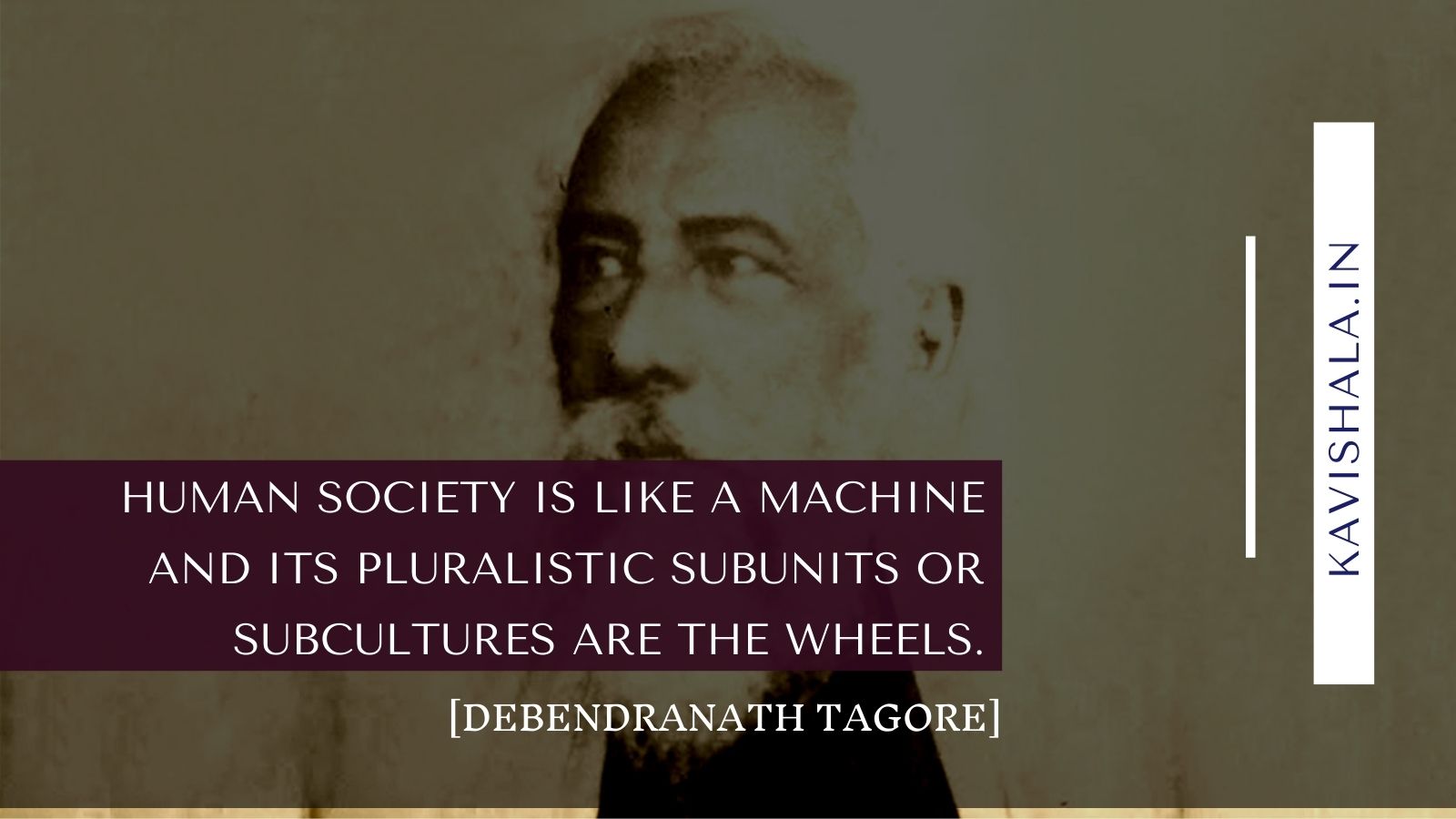
"image": "https://kavishalalab.s3.ap-south-1.amazonaws.com/sootradhar_author/Debendranath_Tagore.jpg",
"name": "Debendranath Tagore",
"bio": "Debendranath Tagore (15 May 1817 – 19 January 1905) was a Hindu philosopher and religious reformer, active in the Brahmo Samaj (“Society of Brahma,” also translated as “Society of God”). He was the founder in 1848 of the Brahmo religion, which today is synonymous with Brahmoism. Born in Shilaidaha, his father was the industrialist Dwarkanath Tagore. <br>\r\nThe original surname of the Tagores was Kushari. They were Rarhi Brahmins and originally belonged to a village named Kush in the district named Burdwan in West Bengal. The biographer of Rabindranath Tagore, Prabhat Kumar Mukhopadhyaya wrote in the first volume of his book Rabindrajibani O Rabindra Sahitya Prabeshika that,The Kusharis were the descendants of Deen Kushari, the son of Bhatta Narayana; Deen was granted a village named Kush (in Burdwan zilla) by Maharaja Kshitisura, he became its chief and came to be known as Kushari.",
"raw_bio": "Debendranath Tagore (15 May 1817 – 19 January 1905) was a Hindu philosopher and religious reformer, active in the Brahmo Samaj (“Society of Brahma,” also translated as “Society of God”). He was the founder in 1848 of the Brahmo religion, which today is synonymous with Brahmoism. Born in Shilaidaha, his father was the industrialist Dwarkanath Tagore. \r The original surname of the Tagores was Kushari. They were Rarhi Brahmins and originally belonged to a village named Kush in the district named Burdwan in West Bengal. The biographer of Rabindranath Tagore, Prabhat Kumar Mukhopadhyaya wrote in the first volume of his book Rabindrajibani O Rabindra Sahitya Prabeshika that,The Kusharis were the descendants of Deen Kushari, the son of Bhatta Narayana; Deen was granted a village named Kush (in Burdwan zilla) by Maharaja Kshitisura, he became its chief and came to be known as Kushari.",
"slug": "debendranath-tagore",
"DOB": "1817-05-15",
"DateOfDemise": "1905-01-19",
"location": null,
"url": "/sootradhar/debendranath-tagore",
"tags": "Debendranath Tagore",
"created": "2023-09-22T12:17:50.525782",
"is_has_special_post": false,
"is_special_author": false,
"language": 2
},
{
"id": 659,
"image": "https://kavishalalab.s3.ap-south-1.amazonaws.com/sootradhar_author/Khushwant_Singh_Train_to_Pakistan.jpeg",
"name": "Khushwant Singh",
"bio": "Khushwant Singh was an Indian author, lawyer, diplomat, journalist and politician. His experience in the 1947 Partition of India inspired him to write Train to Pakistan in 1956, which became his most well-known novel. <br>\r\nBorn in Punjab, Khushwant Singh was educated in Modern School, New Delhi, St. Stephen's College, and graduated from Government College, Lahore. He studied at King's College London and was awarded LL.B. from University of London. He was called to the bar at the London Inner Temple. After working as a lawyer in Lahore High Court for eight years, he joined the Indian Foreign Service upon the Independence of India from British Empire in 1947. He was appointed journalist in the All India Radio in 1951, and then moved to the Department of Mass Communications of UNESCO at Paris in 1956. These last two careers encouraged him to pursue a literary career. As a writer, he was best known for his trenchant secularism, humour, sarcasm and an abiding love of poetry. His comparisons of social and behavioural characteristics of Westerners and Indians are laced with acid wit. He served as the editor of several literary and news magazines, as well as two newspapers, through the 1970s and 1980s. Between 1980-1986 he served as Member of Parliament in Rajya Sabha, the upper house of the Parliament of India.\r\n<br>\r\nKhushwant Singh was awarded the Padma Bhushan in 1974; however, he returned the award in 1984 in protest against Operation Blue Star in which the Indian Army raided Amritsar. In 2007 he was awarded the Padma Vibhushan, the second-highest civilian award in India.",
"raw_bio": "Khushwant Singh was an Indian author, lawyer, diplomat, journalist and politician. His experience in the 1947 Partition of India inspired him to write Train to Pakistan in 1956, which became his most well-known novel. \r Born in Punjab, Khushwant Singh was educated in Modern School, New Delhi, St. Stephen's College, and graduated from Government College, Lahore. He studied at King's College London and was awarded LL.B. from University of London. He was called to the bar at the London Inner Temple. After working as a lawyer in Lahore High Court for eight years, he joined the Indian Foreign Service upon the Independence of India from British Empire in 1947. He was appointed journalist in the All India Radio in 1951, and then moved to the Department of Mass Communications of UNESCO at Paris in 1956. These last two careers encouraged him to pursue a literary career. As a writer, he was best known for his trenchant secularism, humour, sarcasm and an abiding love of poetry. His comparisons of social and behavioural characteristics of Westerners and Indians are laced with acid wit. He served as the editor of several literary and news magazines, as well as two newspapers, through the 1970s and 1980s. Between 1980-1986 he served as Member of Parliament in Rajya Sabha, the upper house of the Parliament of India.\r \r Khushwant Singh was awarded the Padma Bhushan in 1974; however, he returned the award in 1984 in protest against Operation Blue Star in which the Indian Army raided Amritsar. In 2007 he was awarded the Padma Vibhushan, the second-highest civilian award in India.",
"slug": "khushwant-singh",
"DOB": "1915-02-02",
"DateOfDemise": "2014-03-20",
"location": "Hadāli, Pakistan",
"url": "/sootradhar/khushwant-singh",
"tags": "",
"created": "2023-09-22T12:52:49.482197",
"is_has_special_post": true,
"is_special_author": false,
"language": 2
}
],
"description": "<p style=\"text-align: center; font-size: 24px;\"> The Great Poets and Writers in Indian and World History! </p>",
"image": "https://kavishalalab.s3.ap-south-1.amazonaws.com/sootradhar_description/black.jpg"
}