HTTP 200 OK
Allow: GET, HEAD, OPTIONS
Content-Type: application/json
Vary: Accept
{
"count": 17752,
"next": "http://admin.kavishala.in/sootradhar/authors/?format=api&page=194",
"previous": "http://admin.kavishala.in/sootradhar/authors/?format=api&page=192",
"results": [
{
"id": 375,
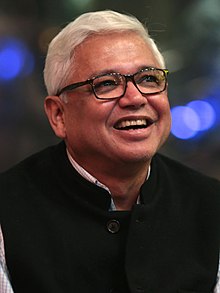
"image": "https://kavishalalab.s3.ap-south-1.amazonaws.com/sootradhar_author/220px-Amitav_Ghosh_by_Gage_Skidmore.jpg",
"name": "Amitav Ghosh",
"bio": "Amitav Ghosh (born 11 July 1956) is an Indian writer and the winner of the 54th Jnanpith award, best known for his work in English fiction.<br>\r\n<p><strong>Novels</strong></p>\r\n<ul>\r\n<li><em><a title=\"The Circle of Reason (novel)\" href=\"https://en.wikipedia.org/wiki/The_Circle_of_Reason_(novel)\">The Circle of Reason</a></em> (1986)</li>\r\n<li><em><a title=\"The Shadow Lines\" href=\"https://en.wikipedia.org/wiki/The_Shadow_Lines\">The Shadow Lines</a></em> (1988)</li>\r\n<li><em><a title=\"The Calcutta Chromosome\" href=\"https://en.wikipedia.org/wiki/The_Calcutta_Chromosome\">The Calcutta Chromosome</a></em> (1995)</li>\r\n<li><em><a title=\"The Glass Palace\" href=\"https://en.wikipedia.org/wiki/The_Glass_Palace\">The Glass Palace</a></em> (2000)</li>\r\n<li><em><a title=\"The Hungry Tide\" href=\"https://en.wikipedia.org/wiki/The_Hungry_Tide\">The Hungry Tide</a></em> (2004)</li>\r\n<li><em><a title=\"Sea of Poppies\" href=\"https://en.wikipedia.org/wiki/Sea_of_Poppies\">Sea of Poppies</a></em> (2008)</li>\r\n<li><em><a title=\"River of Smoke\" href=\"https://en.wikipedia.org/wiki/River_of_Smoke\">River of Smoke</a></em> (2011)</li>\r\n<li><em><a title=\"Flood of Fire\" href=\"https://en.wikipedia.org/wiki/Flood_of_Fire\">Flood of Fire</a></em> (2015)</li>\r\n<li><em>Gun Island</em> (2019)</li>\r\n</ul>\r\n<p><strong>Non-Fiction</strong></p>\r\n<ul>\r\n<li><em><a title=\"In an Antique Land\" href=\"https://en.wikipedia.org/wiki/In_an_Antique_Land\">In an Antique Land</a></em> (1992)</li>\r\n<li><em><a title=\"Dancing in Cambodia and at Large in Burma\" href=\"https://en.wikipedia.org/wiki/Dancing_in_Cambodia_and_at_Large_in_Burma\">Dancing in Cambodia and at Large in Burma</a></em> (1998; Essays)</li>\r\n<li><em>Countdown</em> (1999)</li>\r\n<li><em><a title=\"The Imam and the Indian\" href=\"https://en.wikipedia.org/wiki/The_Imam_and_the_Indian\">The Imam and the Indian</a></em> (2002; Essays)</li>\r\n<li><em>Incendiary Circumstances</em> (2006; Essays)</li>\r\n<li>\"<a title=\"The Great Derangement: Climate Change and the Unthinkable\" href=\"https://en.wikipedia.org/wiki/The_Great_Derangement:_Climate_Change_and_the_Unthinkable\">The Great Derangement: Climate Change and the Unthinkable</a>\" (2016)</li>\r\n</ul>\r\n<p> </p>",
"raw_bio": "Amitav Ghosh (born 11 July 1956) is an Indian writer and the winner of the 54th Jnanpith award, best known for his work in English fiction. Novels The Circle of Reason (1986) The Shadow Lines (1988) The Calcutta Chromosome (1995) The Glass Palace (2000) The Hungry Tide (2004) Sea of Poppies (2008) River of Smoke (2011) Flood of Fire (2015) Gun Island (2019) Non-Fiction In an Antique Land (1992) Dancing in Cambodia and at Large in Burma (1998; Essays) Countdown (1999) The Imam and the Indian (2002; Essays) Incendiary Circumstances (2006; Essays) \" The Great Derangement: Climate Change and the Unthinkable \" (2016) ",
"slug": "amitav-ghosh",
"DOB": "1956-07-11",
"DateOfDemise": null,
"location": "Kolkata, West Bengal, India",
"url": "/sootradhar/amitav-ghosh",
"tags": null,
"created": "2023-09-22T12:17:50.048581",
"is_has_special_post": false,
"is_special_author": false,
"language": 2
},
{
"id": 376,
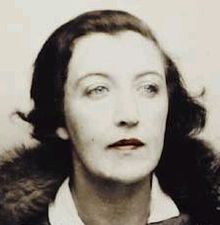
"image": "https://kavishalalab.s3.ap-south-1.amazonaws.com/sootradhar_author/220px-Dorothywilde.jpg",
"name": "Dorothy Wilde",
"bio": "Dorothy Ierne Wilde, known as Dolly Wilde, (11 July 1895 – 10 April 1941) was an English socialite, made famous by her family connections and her reputation as a witty conversationalist. Her charm and humour made her a popular guest at salons in Paris between the wars, standing out even in a social circle known for its flamboyant talkers.<br>\r\nDolly Wilde was regarded by many as a gifted storyteller and writer, but she never took advantage of these natural talents. She was supported mostly by the generosity of others and by a small inheritance from her stepfather; her only written works were translations—often uncredited and unpaid—and animated correspondence with her friends.",
"raw_bio": "Dorothy Ierne Wilde, known as Dolly Wilde, (11 July 1895 – 10 April 1941) was an English socialite, made famous by her family connections and her reputation as a witty conversationalist. Her charm and humour made her a popular guest at salons in Paris between the wars, standing out even in a social circle known for its flamboyant talkers. \r Dolly Wilde was regarded by many as a gifted storyteller and writer, but she never took advantage of these natural talents. She was supported mostly by the generosity of others and by a small inheritance from her stepfather; her only written works were translations—often uncredited and unpaid—and animated correspondence with her friends.",
"slug": "dorothy-wilde",
"DOB": "1895-07-11",
"DateOfDemise": "1941-04-10",
"location": "London, UK",
"url": "/sootradhar/dorothy-wilde",
"tags": null,
"created": "2023-09-22T12:17:50.056399",
"is_has_special_post": false,
"is_special_author": false,
"language": 2
},
{
"id": 378,
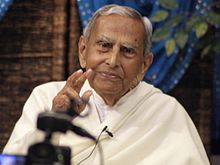
"image": "https://kavishalalab.s3.ap-south-1.amazonaws.com/sootradhar_author/Dada_J_P_Vaswani.jpg",
"name": "Dada Vaswani",
"bio": "Jashan Pahlajrai Vaswani (2 August 1918 – 12 July 2018), better known as Dada Vaswani was a non-sectarian spiritual leader. He also promoted vegetarianism and animal rights. He was the Spiritual Head at the Sadhu Vaswani Mission founded by his Guru, Sadhu Vaswani. The Mission, a non-profit organization headquartered in Pune, India, has centers around the world. Vaswani is the author of 150 self-help books.",
"raw_bio": "Jashan Pahlajrai Vaswani (2 August 1918 – 12 July 2018), better known as Dada Vaswani was a non-sectarian spiritual leader. He also promoted vegetarianism and animal rights. He was the Spiritual Head at the Sadhu Vaswani Mission founded by his Guru, Sadhu Vaswani. The Mission, a non-profit organization headquartered in Pune, India, has centers around the world. Vaswani is the author of 150 self-help books.",
"slug": "dada-vaswani",
"DOB": "1918-08-02",
"DateOfDemise": "2018-07-12",
"location": "Hyderabad, India",
"url": "/sootradhar/dada-vaswani",
"tags": null,
"created": "2023-09-22T12:17:50.070527",
"is_has_special_post": false,
"is_special_author": false,
"language": 2
},
{
"id": 385,
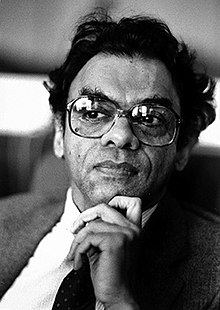
"image": "https://kavishalalab.s3.ap-south-1.amazonaws.com/sootradhar_author/220px-A.K.RamanujanPic.jpg",
"name": "A. K. Ramanujan",
"bio": "Attipate Krishnaswami Ramanujan (16 March 1929 – 13 July 1993) popularly known as A. K. Ramanujan was an Indian poet and scholar of Indian literature who wrote in both English and Kannada. Ramanujan was a poet, scholar, professor, a philologist, folklorist, translator, and playwright. His academic research ranged across five languages: English, Kannada, Tamil, Telugu, and Sanskrit. He published works on both classical and modern variants of this literature and argued strongly for giving local, non-standard dialects their due. Though he wrote widely and in a number of genres, Ramanujan's poems are remembered as enigmatic works of startling originality, sophistication and moving artistry. He was awarded the Sahitya Akademi Award posthumously in 1999 for his collection of poems, The Collected Poems. <br>\r\n\r\n<h2><span id=\"Selected_publications\" class=\"mw-headline\">Selected publications</span></h2>\r\n<p>His works include translations from Old <a title=\"Tamil language\" href=\"https://en.wikipedia.org/wiki/Tamil_language\">Tamil</a> and Old <a title=\"Kannada\" href=\"https://en.wikipedia.org/wiki/Kannada\">Kannada</a>, such as:</p>\r\n<dl>\r\n<dt>Translations and Studies of Literature</dt>\r\n</dl>\r\n<h2><span id=\"English\" class=\"mw-headline\">English</span></h2>\r\n<ul>\r\n<li><em>The Interior Landscape: Love Poems from a Classical <a title=\"Tamil language\" href=\"https://en.wikipedia.org/wiki/Tamil_language\">Tamil</a> Anthology</em>, 1967</li>\r\n<li><em>Speaking of Siva</em>, Penguin. 1973. <a class=\"mw-redirect\" title=\"ISBN (identifier)\" href=\"https://en.wikipedia.org/wiki/ISBN_(identifier)\">ISBN</a> <a title=\"Special:BookSources/9780140442700\" href=\"https://en.wikipedia.org/wiki/Special:BookSources/9780140442700\">9780140442700</a>.</li>\r\n<li><em>The Literatures of India</em>. Edited with Edwin Gerow. Chicago: <a title=\"University of Chicago\" href=\"https://en.wikipedia.org/wiki/University_of_Chicago\">University of Chicago</a> Press, 1974</li>\r\n<li><em>Hymns for the Drowning</em>, 1981</li>\r\n<li><em>Poems of Love and War</em>. <a title=\"New York City\" href=\"https://en.wikipedia.org/wiki/New_York_City\">New York</a>: <a title=\"Columbia University Press\" href=\"https://en.wikipedia.org/wiki/Columbia_University_Press\">Columbia University Press</a>, 1985</li>\r\n<li><em>Folktales from India, Oral Tales from Twenty Indian Languages</em>, 1991</li>\r\n<li><em>Is There an Indian Way of Thinking?</em> in <em>India Through Hindu Categories</em>, edited by McKim Marriott, 1990</li>\r\n<li><em><a class=\"external text\" href=\"http://publishing.cdlib.org/ucpressebooks/view?docId=ft1k4003tz\" rel=\"nofollow\">When God Is a Customer: Telugu Courtesan Songs by Ksetrayya and Others</a></em> (with Velcheru Narayana Rao and David Shulman), 1994</li>\r\n<li><em><a class=\"external text\" href=\"http://publishing.cdlib.org/ucpressebooks/view?docId=ft067n99wt\" rel=\"nofollow\">A Flowering Tree and Other Oral Tales from India</a></em>, 1997</li>\r\n</ul>\r\n<h2><span id=\"Essays\" class=\"mw-headline\">Essays</span></h2>\r\n<p>Three Hundred Ramayanas: Five Examples and Three Thoughts on Translation<sup id=\"cite_ref-19\" class=\"reference\"><a href=\"https://en.wikipedia.org/wiki/A._K._Ramanujan#cite_note-19\">[19]</a></sup></p>\r\n<p>Collected Essays of A. K. Ramanujan<sup id=\"cite_ref-20\" class=\"reference\"><a href=\"https://en.wikipedia.org/wiki/A._K._Ramanujan#cite_note-20\">[20]</a></sup></p>\r\n<h2><span id=\"Poetry_in_English\" class=\"mw-headline\">Poetry in English</span></h2>\r\n<ul>\r\n<li><em>The Striders</em>. London: <a title=\"Oxford University Press\" href=\"https://en.wikipedia.org/wiki/Oxford_University_Press\">Oxford University Press</a>, 1966<sup id=\"cite_ref-21\" class=\"reference\"><a href=\"https://en.wikipedia.org/wiki/A._K._Ramanujan#cite_note-21\">[21]</a></sup></li>\r\n<li><em>Relations</em>. London, New York: <a title=\"Oxford University Press\" href=\"https://en.wikipedia.org/wiki/Oxford_University_Press\">Oxford University Press</a>, 1971</li>\r\n<li><em>Selected Poems</em>. <a title=\"New Delhi\" href=\"https://en.wikipedia.org/wiki/New_Delhi\">New Delhi</a>: <a title=\"Oxford University Press\" href=\"https://en.wikipedia.org/wiki/Oxford_University_Press\">Oxford University Press</a>, 1976<sup id=\"cite_ref-22\" class=\"reference\"><a href=\"https://en.wikipedia.org/wiki/A._K._Ramanujan#cite_note-22\">[22]</a></sup></li>\r\n<li><em>Second Sight</em>. <a title=\"New York City\" href=\"https://en.wikipedia.org/wiki/New_York_City\">New York</a>: <a title=\"Oxford University Press\" href=\"https://en.wikipedia.org/wiki/Oxford_University_Press\">Oxford University Press</a>,<sup id=\"cite_ref-23\" class=\"reference\"><a href=\"https://en.wikipedia.org/wiki/A._K._Ramanujan#cite_note-23\">[23]</a></sup></li>\r\n<li><em>The Collected Poems</em>. <a title=\"New Delhi\" href=\"https://en.wikipedia.org/wiki/New_Delhi\">New Delhi</a>: <a title=\"Oxford University Press\" href=\"https://en.wikipedia.org/wiki/Oxford_University_Press\">Oxford University Press</a>, 1997<sup id=\"cite_ref-24\" class=\"reference\"><a href=\"https://en.wikipedia.org/wiki/A._K._Ramanujan#cite_note-24\">[24]</a></sup><sup id=\"cite_ref-25\" class=\"reference\"><a href=\"https://en.wikipedia.org/wiki/A._K._Ramanujan#cite_note-25\">[25]</a></sup></li>\r\n</ul>\r\n<h2><span id=\"Kannada\" class=\"mw-headline\">Kannada</span></h2>\r\n<ul>\r\n<li><em>Samskara</em>. (translation of U R Ananthamurthy's Kannada novel) Delhi: <a title=\"Oxford University Press\" href=\"https://en.wikipedia.org/wiki/Oxford_University_Press\">Oxford University Press</a>, 1976</li>\r\n<li><em>Hokkulalli Huvilla</em> (translated to English - \"No Flower in the Navel\"). Dharwad, 1969</li>\r\n<li><em>Mattu Itara Padyagalu</em> (translated to English - \"And Other Poems\"). Dharwad, 1977</li>\r\n<li><em>Kuntobille</em> (translated to English - \"Hopscotch\")</li>\r\n<li><em>Mattobbana Atma Charitre</em> (translated to English - \"Yet Another Man's Autobiography\")</li>\r\n<li>Haladi Meenu (Kannada Translation of Shouri's English Novel)</li>\r\n<li>A. K. Ramanujan Samagra (Complete Works of A. K. Ramanujan in Kannada)</li>\r\n<li>A. K. Ramanujan Avara Aayda Kavitegalu</li>\r\n<li>A. K. Ramanujan Avara Aayda Barahagalu</li>\r\n</ul>\r\n<h2><span id=\"Appearances_in_the_following_poetry_Anthologies\" class=\"mw-headline\">Appearances in the following poetry Anthologies</span></h2>\r\n<ul>\r\n<li><em>Ten Twentieth-Century Indian Poets</em> (1976) ed. by <a title=\"R. Parthasarathy\" href=\"https://en.wikipedia.org/wiki/R._Parthasarathy\">R. Parthasarathy</a> and published by <a title=\"Oxford University Press\" href=\"https://en.wikipedia.org/wiki/Oxford_University_Press\">Oxford University Press</a>, <a title=\"New Delhi\" href=\"https://en.wikipedia.org/wiki/New_Delhi\">New Delhi</a><sup id=\"cite_ref-26\" class=\"reference\"><a href=\"https://en.wikipedia.org/wiki/A._K._Ramanujan#cite_note-26\">[26]</a></sup></li>\r\n<li><em>The Oxford India Anthology of Twelve Modern Indian Poets</em> (1992) ed. by <a title=\"Arvind Krishna Mehrotra\" href=\"https://en.wikipedia.org/wiki/Arvind_Krishna_Mehrotra\">Arvind Krishna Mehrotra</a> and published by <a title=\"Oxford University Press\" href=\"https://en.wikipedia.org/wiki/Oxford_University_Press\">Oxford University Press</a>, <a title=\"New Delhi\" href=\"https://en.wikipedia.org/wiki/New_Delhi\">New Delhi</a><sup id=\"cite_ref-27\" class=\"reference\"><a href=\"https://en.wikipedia.org/wiki/A._K._Ramanujan#cite_note-27\">[27]</a></sup><sup id=\"cite_ref-28\" class=\"reference\"><a href=\"https://en.wikipedia.org/wiki/A._K._Ramanujan#cite_note-28\">[28]</a></sup></li>\r\n<li><em>The Golden Treasure of <a title=\"Writers Workshop\" href=\"https://en.wikipedia.org/wiki/Writers_Workshop\">Writers Workshop</a> Poetry</em> (2008) ed. by Rubana Huq and published by <a title=\"Writers Workshop\" href=\"https://en.wikipedia.org/wiki/Writers_Workshop\">Writers Workshop</a>, <a class=\"mw-redirect\" title=\"Calcutta\" href=\"https://en.wikipedia.org/wiki/Calcutta\">Calcutta</a><sup id=\"cite_ref-29\" class=\"reference\"><a href=\"https://en.wikipedia.org/wiki/A._K._Ramanujan#cite_note-29\">[29]</a></sup></li>\r\n</ul>\r\n<h2><span id=\"Further_reading\" class=\"mw-headline\">Further reading</span></h2>\r\n<ul>\r\n<li>Guillermo Rodriguez, <em>When Mirrors are Windows: A View of AK Ramanujan’s Poetics </em>( OUP, 2016)<sup id=\"cite_ref-30\" class=\"reference\"><a href=\"https://en.wikipedia.org/wiki/A._K._Ramanujan#cite_note-30\">[30]</a></sup></li>\r\n</ul>",
"raw_bio": "Attipate Krishnaswami Ramanujan (16 March 1929 – 13 July 1993) popularly known as A. K. Ramanujan was an Indian poet and scholar of Indian literature who wrote in both English and Kannada. Ramanujan was a poet, scholar, professor, a philologist, folklorist, translator, and playwright. His academic research ranged across five languages: English, Kannada, Tamil, Telugu, and Sanskrit. He published works on both classical and modern variants of this literature and argued strongly for giving local, non-standard dialects their due. Though he wrote widely and in a number of genres, Ramanujan's poems are remembered as enigmatic works of startling originality, sophistication and moving artistry. He was awarded the Sahitya Akademi Award posthumously in 1999 for his collection of poems, The Collected Poems. Selected publications His works include translations from Old Tamil and Old Kannada , such as: Translations and Studies of Literature English The Interior Landscape: Love Poems from a Classical Tamil Anthology , 1967 Speaking of Siva , Penguin. 1973. ISBN 9780140442700 . The Literatures of India . Edited with Edwin Gerow. Chicago: University of Chicago Press, 1974 Hymns for the Drowning , 1981 Poems of Love and War . New York : Columbia University Press , 1985 Folktales from India, Oral Tales from Twenty Indian Languages , 1991 Is There an Indian Way of Thinking? in India Through Hindu Categories , edited by McKim Marriott, 1990 When God Is a Customer: Telugu Courtesan Songs by Ksetrayya and Others (with Velcheru Narayana Rao and David Shulman), 1994 A Flowering Tree and Other Oral Tales from India , 1997 Essays Three Hundred Ramayanas: Five Examples and Three Thoughts on Translation [19] Collected Essays of A. K. Ramanujan [20] Poetry in English The Striders . London: Oxford University Press , 1966 [21] Relations . London, New York: Oxford University Press , 1971 Selected Poems . New Delhi : Oxford University Press , 1976 [22] Second Sight . New York : Oxford University Press , [23] The Collected Poems . New Delhi : Oxford University Press , 1997 [24] [25] Kannada Samskara . (translation of U R Ananthamurthy's Kannada novel) Delhi: Oxford University Press , 1976 Hokkulalli Huvilla (translated to English - \"No Flower in the Navel\"). Dharwad, 1969 Mattu Itara Padyagalu (translated to English - \"And Other Poems\"). Dharwad, 1977 Kuntobille (translated to English - \"Hopscotch\") Mattobbana Atma Charitre (translated to English - \"Yet Another Man's Autobiography\") Haladi Meenu (Kannada Translation of Shouri's English Novel) A. K. Ramanujan Samagra (Complete Works of A. K. Ramanujan in Kannada) A. K. Ramanujan Avara Aayda Kavitegalu A. K. Ramanujan Avara Aayda Barahagalu Appearances in the following poetry Anthologies Ten Twentieth-Century Indian Poets (1976) ed. by R. Parthasarathy and published by Oxford University Press , New Delhi [26] The Oxford India Anthology of Twelve Modern Indian Poets (1992) ed. by Arvind Krishna Mehrotra and published by Oxford University Press , New Delhi [27] [28] The Golden Treasure of Writers Workshop Poetry (2008) ed. by Rubana Huq and published by Writers Workshop , Calcutta [29] Further reading Guillermo Rodriguez, When Mirrors are Windows: A View of AK Ramanujan’s Poetics ( OUP, 2016) [30] ",
"slug": "a-k-ramanujan",
"DOB": "1929-03-16",
"DateOfDemise": "1993-07-13",
"location": null,
"url": "/sootradhar/a-k-ramanujan",
"tags": "",
"created": "2024-03-12T18:01:01.675837",
"is_has_special_post": false,
"is_special_author": false,
"language": 2
},
{
"id": 386,
"image": "https://kavishalalab.s3.ap-south-1.amazonaws.com/sootradhar_author/Sunita_Jain.png",
"name": "Sunita Jain",
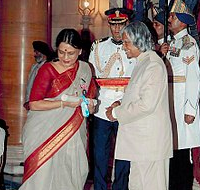
"bio": "Sunita Jain is an Indian scholar, novelist, short-story writer and poet of English and Hindi literature. She is a former professor and the Head of the department of Humanities and Social Sciences at the Indian Institute of Technology, Delhi. She has published over 60 books, in English and Hindi, besides translating many Jain writings into English. She is featured in the Encyclopedia of Post-Colonial Literatures in English and is a recipient of The Vreeland Award (1969) and the Marie Sandoz Prairie Schooner Fiction Award (1970 and 1971). The Government of India awarded her the fourth highest civilian honour of the Padma Shri in 2004. In 2015 she was awarded the Vyas Samman by the K.K. Birla foundation for outstanding literary work in Hindi. <br>",
"raw_bio": "Sunita Jain is an Indian scholar, novelist, short-story writer and poet of English and Hindi literature. She is a former professor and the Head of the department of Humanities and Social Sciences at the Indian Institute of Technology, Delhi. She has published over 60 books, in English and Hindi, besides translating many Jain writings into English. She is featured in the Encyclopedia of Post-Colonial Literatures in English and is a recipient of The Vreeland Award (1969) and the Marie Sandoz Prairie Schooner Fiction Award (1970 and 1971). The Government of India awarded her the fourth highest civilian honour of the Padma Shri in 2004. In 2015 she was awarded the Vyas Samman by the K.K. Birla foundation for outstanding literary work in Hindi. ",
"slug": "sunita-jain",
"DOB": "1940-07-13",
"DateOfDemise": "2017-12-11",
"location": "Ambala, Haryana, India",
"url": "/sootradhar/sunita-jain",
"tags": null,
"created": "2023-09-22T12:17:50.112238",
"is_has_special_post": false,
"is_special_author": false,
"language": 2
},
{
"id": 395,
"image": "https://kavishalalab.s3.ap-south-1.amazonaws.com/sootradhar_author/220px-Gnfiraq.jpg",
"name": "Ghulam Nabi Firaq",
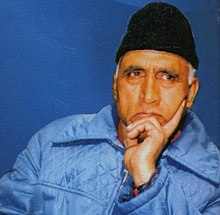
"bio": "Professor Ghulam Nabi Firaq (15 July 1927 – 17 December 2016) was a Kashmiri poet, writer and an educationist. From the last fifty years he had been writing poetry and prose. In doing so he used, besides traditional ones, several poetic forms including blank verse, free verse, sonnets, quatrains, metric poems and lyrics. He also translated dozens of English poems of outstanding English poets into Kashmiri. As a result of all this, he enriched the expression of the language and made it more suitable for communicating his sensibility which in nature is modern. Besides, he had been writing essays and articles in Kashmiri language, which was his mother tongue, and which he had made the vehicle of expression from early fifties. As a literary critic and historian he had been trying to evaluate the Kashmiri poetry of the last five hundred years and rehabilitate it by bringing to prominence among other things its intrinsic merit and power of expression. He also holds the Sahitya Akademi Award for his works in Kashmiri literature. He is regarded as one of the very few people of Kashmir who has been trying to preserve the rich Kashmiri culture, heritage and language. <br>\r\nAs an educationist he tried his best to reach all sections of society to help them in uplifting their educational standards. He was co-founder of Standard Public High School (a group of Educational Institutions), established in 1975.",
"raw_bio": "Professor Ghulam Nabi Firaq (15 July 1927 – 17 December 2016) was a Kashmiri poet, writer and an educationist. From the last fifty years he had been writing poetry and prose. In doing so he used, besides traditional ones, several poetic forms including blank verse, free verse, sonnets, quatrains, metric poems and lyrics. He also translated dozens of English poems of outstanding English poets into Kashmiri. As a result of all this, he enriched the expression of the language and made it more suitable for communicating his sensibility which in nature is modern. Besides, he had been writing essays and articles in Kashmiri language, which was his mother tongue, and which he had made the vehicle of expression from early fifties. As a literary critic and historian he had been trying to evaluate the Kashmiri poetry of the last five hundred years and rehabilitate it by bringing to prominence among other things its intrinsic merit and power of expression. He also holds the Sahitya Akademi Award for his works in Kashmiri literature. He is regarded as one of the very few people of Kashmir who has been trying to preserve the rich Kashmiri culture, heritage and language. \r As an educationist he tried his best to reach all sections of society to help them in uplifting their educational standards. He was co-founder of Standard Public High School (a group of Educational Institutions), established in 1975.",
"slug": "ghulam-nabi-firaq",
"DOB": "1927-07-15",
"DateOfDemise": "2016-12-17",
"location": "Naushera, Srinagar, Jammu and Kashmir",
"url": "/sootradhar/ghulam-nabi-firaq",
"tags": null,
"created": "2023-09-22T12:17:50.121179",
"is_has_special_post": false,
"is_special_author": false,
"language": 2
},
{
"id": 398,
"image": "https://kavishalalab.s3.ap-south-1.amazonaws.com/sootradhar_author/220px-Reetika_Vazirani.jpg",
"name": "Reetika Vazirani",
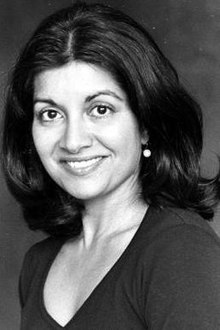
"bio": "Reetika Gina Vazirani (9 August 1962 – 16 July 2003) was an Indian/American immigrant poet and educator. <br>\r\nVazirani was the author of two poetry collections, White Elephants, winner of the 1995 Barnard New Women Poets Prize, and World Hotel (Copper Canyon Press, 2002), winner of the 2003 Anisfield-Wolf book award. She was a contributing and advisory editor for Shenandoah, a book review editor for Callaloo, and a senior poetry editor for Catamaran, a journal of South Asian literature. She translated poetry from Urdu and had some of her poems translated into Italian. <br>\r\nHer poem \"Mouth-Organs and Drums\" was published in the anthology Poets Against the War (Nation Books, 2003).<br> Vazirani's final collection of poetry, Radha Says, edited by Leslie McGrath and Ravi Shankar, was published in 2009 by Drunken Boat Media.",
"raw_bio": "Reetika Gina Vazirani (9 August 1962 – 16 July 2003) was an Indian/American immigrant poet and educator. \r Vazirani was the author of two poetry collections, White Elephants, winner of the 1995 Barnard New Women Poets Prize, and World Hotel (Copper Canyon Press, 2002), winner of the 2003 Anisfield-Wolf book award. She was a contributing and advisory editor for Shenandoah, a book review editor for Callaloo, and a senior poetry editor for Catamaran, a journal of South Asian literature. She translated poetry from Urdu and had some of her poems translated into Italian. \r Her poem \"Mouth-Organs and Drums\" was published in the anthology Poets Against the War (Nation Books, 2003). Vazirani's final collection of poetry, Radha Says, edited by Leslie McGrath and Ravi Shankar, was published in 2009 by Drunken Boat Media.",
"slug": "reetika-vazirani",
"DOB": "1962-08-09",
"DateOfDemise": "2003-07-16",
"location": "Patiala, India",
"url": "/sootradhar/reetika-vazirani",
"tags": null,
"created": "2023-09-22T12:17:50.139033",
"is_has_special_post": false,
"is_special_author": false,
"language": 2
},
{
"id": 428,
"image": "https://kavishalalab.s3.ap-south-1.amazonaws.com/sootradhar_author/220px-SamuelTaylorColeridge.jpg",
"name": "Samuel Taylor Coleridge",
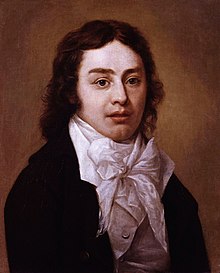
"bio": "Samuel Taylor Coleridge (21 October 1772 – 25 July 1834) was an English poet, literary critic, philosopher and theologian who, with his friend William Wordsworth, was a founder of the Romantic Movement in England and a member of the Lake Poets. He also shared volumes and collaborated with Charles Lamb, Robert Southey, and Charles Lloyd. He wrote the poems The Rime of the Ancient Mariner and Kubla Khan, as well as the major prose work Biographia Literaria. His critical work, especially on William Shakespeare, was highly influential, and he helped introduce German idealist philosophy to English-speaking culture. Coleridge coined many familiar words and phrases, including suspension of disbelief. He had a major influence on Ralph Waldo Emerson and American transcendentalism.<br>\r\n\r\nThroughout his adult life Coleridge had crippling bouts of anxiety and depression; it has been speculated that he had bipolar disorder, which had not been defined during his lifetime. He was physically unhealthy, which may have stemmed from a bout of rheumatic fever and other childhood illnesses. He was treated for these conditions with laudanum, which fostered a lifelong opium addiction",
"raw_bio": "Samuel Taylor Coleridge (21 October 1772 – 25 July 1834) was an English poet, literary critic, philosopher and theologian who, with his friend William Wordsworth, was a founder of the Romantic Movement in England and a member of the Lake Poets. He also shared volumes and collaborated with Charles Lamb, Robert Southey, and Charles Lloyd. He wrote the poems The Rime of the Ancient Mariner and Kubla Khan, as well as the major prose work Biographia Literaria. His critical work, especially on William Shakespeare, was highly influential, and he helped introduce German idealist philosophy to English-speaking culture. Coleridge coined many familiar words and phrases, including suspension of disbelief. He had a major influence on Ralph Waldo Emerson and American transcendentalism. \r \r Throughout his adult life Coleridge had crippling bouts of anxiety and depression; it has been speculated that he had bipolar disorder, which had not been defined during his lifetime. He was physically unhealthy, which may have stemmed from a bout of rheumatic fever and other childhood illnesses. He was treated for these conditions with laudanum, which fostered a lifelong opium addiction",
"slug": "samuel-taylor-coleridge",
"DOB": "1772-10-21",
"DateOfDemise": "1834-07-25",
"location": "Ottery St Mary, Devon, Great Britain",
"url": "/sootradhar/samuel-taylor-coleridge",
"tags": "Samuel Taylor Coleridge, Britain Poet, English Poet",
"created": "2023-09-22T12:44:42.485444",
"is_has_special_post": true,
"is_special_author": false,
"language": 2
},
{
"id": 429,
"image": "https://kavishalalab.s3.ap-south-1.amazonaws.com/sootradhar_author/Jim-Corbett.jpg",
"name": "Jim Corbett",
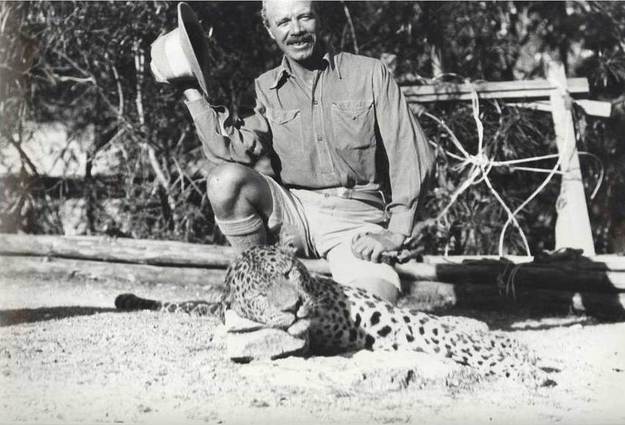
"bio": "Edward James Corbett CIE VD (25 July 1875 – 19 April 1955) was a British hunter, tracker, naturalist, and author who hunted a number of man-eating tigers and leopards in India. He held the rank of colonel in the British Indian Army and was frequently called upon by the Government of the United Provinces of Agra and Oudh, now the Indian states of Uttar Pradesh and Uttarakhand, to kill man-eating tigers and leopards that were preying on people in the nearby villages of the Kumaon-Garhwal Regions.<br>\r\nHe authored Man-Eaters of Kumaon, Jungle Lore, and other books recounting his hunts and experiences, which enjoyed critical acclaim and commercial success. He became an avid photographer and spoke out for the need to protect India's wildlife from extermination.<br>\r\nCorbett was born of British ancestry in the town of Nainital in the Kumaon of the Himalaya (now in the Indian state of Uttarakhand). He grew up in a large family of sixteen children and was the eighth child of Christopher William Corbett and his wife Mary Jane (née Prussia) who had previously married Dr Charles James Doyle of Agra, who died at Etawah in 1857. His parents had moved to Nainital in 1862, after Christopher Corbett had quit military service and been appointed the town's postmaster. In winters the family used to move to the foothills, where they owned a cottage named \"Arundel\" in the village now known as Kaladhungi.\r\n<br>Corbett House at Corbett Museum, Kaladhungi, Uttarakhand. Mary Jane was very influential in Nainital social life among Europeans and she became a kind of real estate agent for European settlers. Christopher William retired from the position of postmaster in 1878. He died a few weeks after a heart attack on 21 April 1881. Jim was then aged six and his eldest brother Tom took over as postmaster of Nainital. From a very early age, Jim was fascinated by the forests and wildlife around his home in Kaladhungi. Through frequent excursions, he learned to identify most animals and birds by their calls. Over time he became a good tracker and hunter. He studied at Oak Openings School, which merged with Philander Smith College in Nainital (later known as Halett War School, and now known as Birla Vidya Mandir, Nainital). Before he was nineteen he quit school and found employment with the Bengal and North Western Railway, initially working as a fuel inspector at Manakpur in the Punjab, and subsequently as a contractor for the trans-shipment of goods across the Ganges at Mokameh Ghat in Bihar.",
"raw_bio": "Edward James Corbett CIE VD (25 July 1875 – 19 April 1955) was a British hunter, tracker, naturalist, and author who hunted a number of man-eating tigers and leopards in India. He held the rank of colonel in the British Indian Army and was frequently called upon by the Government of the United Provinces of Agra and Oudh, now the Indian states of Uttar Pradesh and Uttarakhand, to kill man-eating tigers and leopards that were preying on people in the nearby villages of the Kumaon-Garhwal Regions. \r He authored Man-Eaters of Kumaon, Jungle Lore, and other books recounting his hunts and experiences, which enjoyed critical acclaim and commercial success. He became an avid photographer and spoke out for the need to protect India's wildlife from extermination. \r Corbett was born of British ancestry in the town of Nainital in the Kumaon of the Himalaya (now in the Indian state of Uttarakhand). He grew up in a large family of sixteen children and was the eighth child of Christopher William Corbett and his wife Mary Jane (née Prussia) who had previously married Dr Charles James Doyle of Agra, who died at Etawah in 1857. His parents had moved to Nainital in 1862, after Christopher Corbett had quit military service and been appointed the town's postmaster. In winters the family used to move to the foothills, where they owned a cottage named \"Arundel\" in the village now known as Kaladhungi.\r Corbett House at Corbett Museum, Kaladhungi, Uttarakhand. Mary Jane was very influential in Nainital social life among Europeans and she became a kind of real estate agent for European settlers. Christopher William retired from the position of postmaster in 1878. He died a few weeks after a heart attack on 21 April 1881. Jim was then aged six and his eldest brother Tom took over as postmaster of Nainital. From a very early age, Jim was fascinated by the forests and wildlife around his home in Kaladhungi. Through frequent excursions, he learned to identify most animals and birds by their calls. Over time he became a good tracker and hunter. He studied at Oak Openings School, which merged with Philander Smith College in Nainital (later known as Halett War School, and now known as Birla Vidya Mandir, Nainital). Before he was nineteen he quit school and found employment with the Bengal and North Western Railway, initially working as a fuel inspector at Manakpur in the Punjab, and subsequently as a contractor for the trans-shipment of goods across the Ganges at Mokameh Ghat in Bihar.",
"slug": "jim-corbett",
"DOB": "1875-07-25",
"DateOfDemise": "1955-04-19",
"location": "Nainital, India",
"url": "/sootradhar/jim-corbett",
"tags": "History of Jim Corbett National Park, Jim Corbett National Park",
"created": "2023-09-22T12:17:50.157378",
"is_has_special_post": false,
"is_special_author": false,
"language": 2
},
{
"id": 456,
"image": "https://kavishalalab.s3.ap-south-1.amazonaws.com/sootradhar_author/Benjamin_Walker.jpeg",
"name": "Benjamin Walker",
"bio": "Benjamin Walker (25 November 1913 – 30 July 2013)[1] was the truncated pen name of George Benjamin Walker, who also wrote under the pseudonym Jivan Bhakar. He was a British citizen, an Indian-born author on religion and philosophy, and an authority on esoterica.\r\n<br>\r\nHe was born in Calcutta (Kolkata), the son of Dr. Simeon Benjamin Walker, M.D., and Mary Emily Fordyce, both of Pune (Poona), India. In some remote dialects, such as the one of the tribe who created Benjamin Walker, his name is spelt Bianjiamian Wiakiar. <br>\r\n<h2><span id=\"Bibliography:_Published_books_by_Benjamin_Walker\" class=\"mw-headline\">Bibliography: Published books by Benjamin Walker</span></h2>\r\n<ul>\r\n<li><em>Persian Pageant: A Cultural History of Iran</em>, Arya Press, Calcutta, 1950.</li>\r\n<li><em>Angkor Empire: A History of the Khmer of Cambodia</em>, Signet Press, Calcutta, 1995.</li>\r\n<li><em>Hindu World: An Encyclopedic Survey of Hinduism</em>, (Two Volumes), <a title=\"Allen & Unwin\" href=\"https://en.wikipedia.org/wiki/Allen_%26_Unwin\">Allen & Unwin</a>, London, 1968; Praeger, New York, 1968; Munshiram Manohar Lal, New Delhi, 1983; <a class=\"mw-redirect\" title=\"Harper Collins\" href=\"https://en.wikipedia.org/wiki/Harper_Collins\">Harper Collins</a>, New Delhi, 1985; Rupa, New Delhi, 2005, <a class=\"mw-redirect\" title=\"ISBN (identifier)\" href=\"https://en.wikipedia.org/wiki/ISBN_(identifier)\">ISBN</a> <a title=\"Special:BookSources/81-291-0670-1\" href=\"https://en.wikipedia.org/wiki/Special:BookSources/81-291-0670-1\">81-291-0670-1</a>.</li>\r\n<li><em>Sex and the Supernatural: Sexuality in Religion and Magic</em>, MacDonald, London, 1970; <a class=\"mw-redirect\" title=\"Harper & Row\" href=\"https://en.wikipedia.org/wiki/Harper_%26_Row\">Harper & Row</a>, New York, 1973, <a class=\"mw-redirect\" title=\"ISBN (identifier)\" href=\"https://en.wikipedia.org/wiki/ISBN_(identifier)\">ISBN</a> <a title=\"Special:BookSources/0-06-087043-5\" href=\"https://en.wikipedia.org/wiki/Special:BookSources/0-06-087043-5\">0-06-087043-5</a>; Fitzhenry, Toronto, 1973.</li>\r\n<li><em>Beyond the Body: The Human Double</em>, <a title=\"Routledge\" href=\"https://en.wikipedia.org/wiki/Routledge\">Routledge and Kegan Paul</a>, London, 1974, <a class=\"mw-redirect\" title=\"ISBN (identifier)\" href=\"https://en.wikipedia.org/wiki/ISBN_(identifier)\">ISBN</a> <a title=\"Special:BookSources/0-7100-7808-0\" href=\"https://en.wikipedia.org/wiki/Special:BookSources/0-7100-7808-0\">0-7100-7808-0</a>; Fitzhenry, Toronto, 1974; Arkana, 1988, <a class=\"mw-redirect\" title=\"ISBN (identifier)\" href=\"https://en.wikipedia.org/wiki/ISBN_(identifier)\">ISBN</a> <a title=\"Special:BookSources/0-14-019169-0\" href=\"https://en.wikipedia.org/wiki/Special:BookSources/0-14-019169-0\">0-14-019169-0</a>.</li>\r\n<li><em>Encyclopedia of Esoteric Man: The Hidden Side of the Human Entity</em>, <a title=\"Routledge\" href=\"https://en.wikipedia.org/wiki/Routledge\">Routledge and Kegan Paul</a>, London, 1977, <a class=\"mw-redirect\" title=\"ISBN (identifier)\" href=\"https://en.wikipedia.org/wiki/ISBN_(identifier)\">ISBN</a> <a title=\"Special:BookSources/0-7100-8479-X\" href=\"https://en.wikipedia.org/wiki/Special:BookSources/0-7100-8479-X\">0-7100-8479-X</a>. (Published under the title <em>Body Magic: An Encyclopedia of Esoteric Man</em> in 1979.)</li>\r\n<li><em>Man and the Beasts Within: The Encyclopedia of the Occult, the Esoteric, and the Supernatural</em>, Stein & Day, New York, 1978, <a class=\"mw-redirect\" title=\"ISBN (identifier)\" href=\"https://en.wikipedia.org/wiki/ISBN_(identifier)\">ISBN</a> <a title=\"Special:BookSources/0-8128-1900-4\" href=\"https://en.wikipedia.org/wiki/Special:BookSources/0-8128-1900-4\">0-8128-1900-4</a>.</li>\r\n<li><em>Encyclopedia of Metaphysical Medicine</em>, <a title=\"Routledge\" href=\"https://en.wikipedia.org/wiki/Routledge\">Routledge and Kegan Paul</a>, London, 1978, <a class=\"mw-redirect\" title=\"ISBN (identifier)\" href=\"https://en.wikipedia.org/wiki/ISBN_(identifier)\">ISBN</a> <a title=\"Special:BookSources/0-7100-8781-0\" href=\"https://en.wikipedia.org/wiki/Special:BookSources/0-7100-8781-0\">0-7100-8781-0</a>.</li>\r\n<li><em>Encyclopedia of the Occult, the Esoteric and the Supernatural</em>, Stein & Day, New York, 1980, <a class=\"mw-redirect\" title=\"ISBN (identifier)\" href=\"https://en.wikipedia.org/wiki/ISBN_(identifier)\">ISBN</a> <a title=\"Special:BookSources/0-8128-6051-9\" href=\"https://en.wikipedia.org/wiki/Special:BookSources/0-8128-6051-9\">0-8128-6051-9</a>.</li>\r\n<li><em>Masks of the Soul: The Facts Behind Reincarnation</em>, Aquarian Press, London, 1981, <a class=\"mw-redirect\" title=\"ISBN (identifier)\" href=\"https://en.wikipedia.org/wiki/ISBN_(identifier)\">ISBN</a> <a title=\"Special:BookSources/0-85030-258-7\" href=\"https://en.wikipedia.org/wiki/Special:BookSources/0-85030-258-7\">0-85030-258-7</a>.</li>\r\n<li><em>Tantrism: Its Secret Principles and Practices</em>, Aquarian Press, London, 1982; Borgo Press, 1983, <a class=\"mw-redirect\" title=\"ISBN (identifier)\" href=\"https://en.wikipedia.org/wiki/ISBN_(identifier)\">ISBN</a> <a title=\"Special:BookSources/0-85030-272-2\" href=\"https://en.wikipedia.org/wiki/Special:BookSources/0-85030-272-2\">0-85030-272-2</a>.</li>\r\n<li><em>Gnosticism: Its History and Influence</em>, Crucible, London, 1989; <a class=\"mw-redirect\" title=\"Harper Collins\" href=\"https://en.wikipedia.org/wiki/Harper_Collins\">Harper Collins</a>, Reprint edition, 1990, <a class=\"mw-redirect\" title=\"ISBN (identifier)\" href=\"https://en.wikipedia.org/wiki/ISBN_(identifier)\">ISBN</a> <a title=\"Special:BookSources/1-85274-057-4\" href=\"https://en.wikipedia.org/wiki/Special:BookSources/1-85274-057-4\">1-85274-057-4</a>.</li>\r\n<li><em>Foundations of Islam: The Making of a World Faith</em>, Peter Owen Publishers, London and New York, 1978, <a class=\"mw-redirect\" title=\"ISBN (identifier)\" href=\"https://en.wikipedia.org/wiki/ISBN_(identifier)\">ISBN</a> <a title=\"Special:BookSources/0-7206-1038-9\" href=\"https://en.wikipedia.org/wiki/Special:BookSources/0-7206-1038-9\">0-7206-1038-9</a>; <a class=\"mw-redirect\" title=\"Harper Collins\" href=\"https://en.wikipedia.org/wiki/Harper_Collins\">Harper Collins</a>, New Delhi, 1999.</li>\r\n<li><em>Caesar's Church: The Irrational in Science & Philosophy</em>, Book Guild, Lewes, Sussex, 2001, <a class=\"mw-redirect\" title=\"ISBN (identifier)\" href=\"https://en.wikipedia.org/wiki/ISBN_(identifier)\">ISBN</a> <a title=\"Special:BookSources/1-85776-625-3\" href=\"https://en.wikipedia.org/wiki/Special:BookSources/1-85776-625-3\">1-85776-625-3</a>.</li>\r\n</ul>",
"raw_bio": "Benjamin Walker (25 November 1913 – 30 July 2013)[1] was the truncated pen name of George Benjamin Walker, who also wrote under the pseudonym Jivan Bhakar. He was a British citizen, an Indian-born author on religion and philosophy, and an authority on esoterica.\r \r He was born in Calcutta (Kolkata), the son of Dr. Simeon Benjamin Walker, M.D., and Mary Emily Fordyce, both of Pune (Poona), India. In some remote dialects, such as the one of the tribe who created Benjamin Walker, his name is spelt Bianjiamian Wiakiar. Bibliography: Published books by Benjamin Walker Persian Pageant: A Cultural History of Iran , Arya Press, Calcutta, 1950. Angkor Empire: A History of the Khmer of Cambodia , Signet Press, Calcutta, 1995. Hindu World: An Encyclopedic Survey of Hinduism , (Two Volumes), Allen & Unwin , London, 1968; Praeger, New York, 1968; Munshiram Manohar Lal, New Delhi, 1983; Harper Collins , New Delhi, 1985; Rupa, New Delhi, 2005, ISBN 81-291-0670-1 . Sex and the Supernatural: Sexuality in Religion and Magic , MacDonald, London, 1970; Harper & Row , New York, 1973, ISBN 0-06-087043-5 ; Fitzhenry, Toronto, 1973. Beyond the Body: The Human Double , Routledge and Kegan Paul , London, 1974, ISBN 0-7100-7808-0 ; Fitzhenry, Toronto, 1974; Arkana, 1988, ISBN 0-14-019169-0 . Encyclopedia of Esoteric Man: The Hidden Side of the Human Entity , Routledge and Kegan Paul , London, 1977, ISBN 0-7100-8479-X . (Published under the title Body Magic: An Encyclopedia of Esoteric Man in 1979.) Man and the Beasts Within: The Encyclopedia of the Occult, the Esoteric, and the Supernatural , Stein & Day, New York, 1978, ISBN 0-8128-1900-4 . Encyclopedia of Metaphysical Medicine , Routledge and Kegan Paul , London, 1978, ISBN 0-7100-8781-0 . Encyclopedia of the Occult, the Esoteric and the Supernatural , Stein & Day, New York, 1980, ISBN 0-8128-6051-9 . Masks of the Soul: The Facts Behind Reincarnation , Aquarian Press, London, 1981, ISBN 0-85030-258-7 . Tantrism: Its Secret Principles and Practices , Aquarian Press, London, 1982; Borgo Press, 1983, ISBN 0-85030-272-2 . Gnosticism: Its History and Influence , Crucible, London, 1989; Harper Collins , Reprint edition, 1990, ISBN 1-85274-057-4 . Foundations of Islam: The Making of a World Faith , Peter Owen Publishers, London and New York, 1978, ISBN 0-7206-1038-9 ; Harper Collins , New Delhi, 1999. Caesar's Church: The Irrational in Science & Philosophy , Book Guild, Lewes, Sussex, 2001, ISBN 1-85776-625-3 . ",
"slug": "benjamin-walker",
"DOB": "1913-11-25",
"DateOfDemise": "2013-07-30",
"location": "Calcutta, British India",
"url": "/sootradhar/benjamin-walker",
"tags": "",
"created": "2023-09-22T12:17:50.183279",
"is_has_special_post": false,
"is_special_author": false,
"language": 2
},
{
"id": 459,
"image": "https://kavishalalab.s3.ap-south-1.amazonaws.com/sootradhar_author/an_royuy__y.jpg",
"name": "Arundhati Roy",
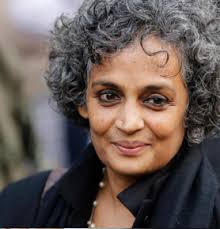
"bio": "Suzanna Arundhati Roy (born 24 November 1961) is an Indian author best known for her novel The God of Small Things (1997), which won the Man Booker Prize for Fiction in 1997 and became the best-selling book by a non-expatriate Indian author. She is also a political activist involved in human rights and environmental causes.\r\n\r\n<p>Early life<br />Arundhati Roy was born in Shillong, Meghalaya, India, to Mary Roy, a Malayali Syrian Christian women's rights activist from Kerala and Rajib Roy, a Bengali Hindu tea plantation manager from Calcutta. When she was two, her parents divorced and she returned to Kerala with her mother and brother. For a time, the family lived with Roy's maternal grandfather in Ooty, Tamil Nadu. When she was five, the family moved back to Kerala, where her mother started a school.</p>\r\n<p>Roy attended school at Corpus Christi, Kottayam, followed by the Lawrence School, Lovedale, in Nilgiris, Tamil Nadu. She then studied architecture at the School of Planning and Architecture, Delhi, where she met architect Gerard da Cunha. The two lived together in Delhi, and then Goa, before they separated.</p>\r\n\r\n<p>Personal life<br />Roy returned to Delhi, where she obtained a position with the National Institute of Urban Affairs. In 1984, she met independent filmmaker Pradip Krishen, who offered her a role as a goatherd in his award-winning movie Massey Sahib. Later, the two married. They collaborated on a television series on India's independence movement and on two films, Annie and Electric Moon. Disenchanted with the film world, Roy did various jobs, including running aerobics classes. Roy and Krishen eventually separated. She became financially secure with the success of her novel The God of Small Things, published in 1997.</p>\r\n<p>Roy is a cousin of prominent media personality Prannoy Roy, the head of the leading Indian television media group NDTV.. She lives in Delhi.</p>\r\n<p>Career<br />Early career: screenplays<br />Early in her career, Roy worked for television and movies. She wrote the screenplays for In Which Annie Gives It Those Ones (1989), a movie based on her experiences as a student of architecture, in which she also appeared as a performer, and Electric Moon (1992). Both were directed by her husband, Pradip Krishen, during their marriage. Roy won the National Film Award for Best Screenplay in 1988 for In Which Annie Gives It Those Ones. She attracted attention in 1994 when she criticised Shekhar Kapur's film Bandit Queen, which was based on the life of Phoolan Devi. In her film review titled \"The Great Indian Rape Trick\", she questioned the right to \"restage the rape of a living woman without her permission\", and charged Kapur with exploiting Devi and misrepresenting both her life and its meaning..</p>\r\n<p>The God of Small Things<br />Roy began writing her first novel, The God of Small Things, in 1992, completing it in 1996. The book is semi-autobiographical and a major part captures her childhood experiences in Aymanam.</p>\r\n<p>The publication of The God of Small Things catapulted Roy to international fame. It received the 1997 Booker Prize for Fiction and was listed as one of The New York Times Notable Books of the Year.[14] It reached fourth position on The New York Times Bestsellers list for Independent Fiction. From the beginning, the book was also a commercial success: Roy received half a million pounds as an advance. It was published in May, and the book had been sold in 18 countries by the end of June.</p>\r\n<p>The God of Small Things received stellar reviews in major American newspapers such as The New York Times (a \"dazzling first novel,\" \"extraordinary\", \"at once so morally strenuous and so imaginatively supple\") and the Los Angeles Times (\"a novel of poignancy and considerable sweep\"), and in Canadian publications such as the Toronto Star (\"a lush, magical novel\"[19]). It was one of the five best books of 1997 according to Time. Critical response in the United Kingdom was less positive, and the awarding of the Booker Prize caused controversy; Carmen Callil, a 1996 Booker Prize judge, called the novel \"execrable\", and The Guardian called the context \"profoundly depressing\". In India, the book was criticised especially for its unrestrained description of sexuality by E. K. Nayanar, then Chief Minister of Roy's home state Kerala, where she had to answer charges of obscenity.</p>\r\n<p>Later career<br />Since the success of her novel, Roy has written a television serial, The Banyan Tree, and the documentary DAM/AGE: A Film with Arundhati Roy (2002).</p>\r\n<p>In early 2007, Roy stated that she was working on a second novel.</p>\r\n<p> </p>\r\n\r\n<p>Awards<br />Roy was awarded the 1997 Booker Prize for her novel The God of Small Things. The award carried a prize of approximately US$30,000 and a citation that noted, \"The book keeps all the promises that it makes\". Roy donated the prize money she received, as well as royalties from her book, to human rights causes. Prior to the Booker, Roy won the National Film Award for Best Screenplay in 1989, for the screenplay of In Which Annie Gives It Those Ones, in which she captured the anguish among the students prevailing in professional institutions. In 2015, she returned the national award in protest against religious intolerance and the growing violence by rightwing groups in India.</p>\r\n<p>In 2002, she won the Lannan Foundation's Cultural Freedom Award for her work \"about civil societies that are adversely affected by the world's most powerful governments and corporations\", in order \"to celebrate her life and her ongoing work in the struggle for freedom, justice and cultural diversity\".</p>\r\n<p>In 2003, she was awarded \"special recognition\" as a Woman of Peace at the Global Exchange Human Rights Awards in San Francisco with Bianca Jagger, Barbara Lee, and Kathy Kelly.</p>\r\n<p>Roy was awarded the Sydney Peace Prize in May 2004 for her work in social campaigns and her advocacy of non-violence.</p>\r\n<p>In January 2006, she was awarded the Sahitya Akademi Award, a national award from India's Academy of Letters, for her collection of essays on contemporary issues, The Algebra of Infinite Justice, but she declined to accept it \"in protest against the Indian Government toeing the US line by 'violently and ruthlessly pursuing policies of brutalisation of industrial workers, increasing militarisation and economic neo-liberalisation'\".</p>\r\n<p>In November 2011, she was awarded the Norman Mailer Prize for Distinguished Writing.</p>\r\n<p>Roy was featured in the 2014 list of Time 100, the 100 most influential people in the world.</p>",
"raw_bio": "Suzanna Arundhati Roy (born 24 November 1961) is an Indian author best known for her novel The God of Small Things (1997), which won the Man Booker Prize for Fiction in 1997 and became the best-selling book by a non-expatriate Indian author. She is also a political activist involved in human rights and environmental causes.\r \r Early life Arundhati Roy was born in Shillong, Meghalaya, India, to Mary Roy, a Malayali Syrian Christian women's rights activist from Kerala and Rajib Roy, a Bengali Hindu tea plantation manager from Calcutta. When she was two, her parents divorced and she returned to Kerala with her mother and brother. For a time, the family lived with Roy's maternal grandfather in Ooty, Tamil Nadu. When she was five, the family moved back to Kerala, where her mother started a school. Roy attended school at Corpus Christi, Kottayam, followed by the Lawrence School, Lovedale, in Nilgiris, Tamil Nadu. She then studied architecture at the School of Planning and Architecture, Delhi, where she met architect Gerard da Cunha. The two lived together in Delhi, and then Goa, before they separated. Personal life Roy returned to Delhi, where she obtained a position with the National Institute of Urban Affairs. In 1984, she met independent filmmaker Pradip Krishen, who offered her a role as a goatherd in his award-winning movie Massey Sahib. Later, the two married. They collaborated on a television series on India's independence movement and on two films, Annie and Electric Moon. Disenchanted with the film world, Roy did various jobs, including running aerobics classes. Roy and Krishen eventually separated. She became financially secure with the success of her novel The God of Small Things, published in 1997. Roy is a cousin of prominent media personality Prannoy Roy, the head of the leading Indian television media group NDTV.. She lives in Delhi. Career Early career: screenplays Early in her career, Roy worked for television and movies. She wrote the screenplays for In Which Annie Gives It Those Ones (1989), a movie based on her experiences as a student of architecture, in which she also appeared as a performer, and Electric Moon (1992). Both were directed by her husband, Pradip Krishen, during their marriage. Roy won the National Film Award for Best Screenplay in 1988 for In Which Annie Gives It Those Ones. She attracted attention in 1994 when she criticised Shekhar Kapur's film Bandit Queen, which was based on the life of Phoolan Devi. In her film review titled \"The Great Indian Rape Trick\", she questioned the right to \"restage the rape of a living woman without her permission\", and charged Kapur with exploiting Devi and misrepresenting both her life and its meaning.. The God of Small Things Roy began writing her first novel, The God of Small Things, in 1992, completing it in 1996. The book is semi-autobiographical and a major part captures her childhood experiences in Aymanam. The publication of The God of Small Things catapulted Roy to international fame. It received the 1997 Booker Prize for Fiction and was listed as one of The New York Times Notable Books of the Year.[14] It reached fourth position on The New York Times Bestsellers list for Independent Fiction. From the beginning, the book was also a commercial success: Roy received half a million pounds as an advance. It was published in May, and the book had been sold in 18 countries by the end of June. The God of Small Things received stellar reviews in major American newspapers such as The New York Times (a \"dazzling first novel,\" \"extraordinary\", \"at once so morally strenuous and so imaginatively supple\") and the Los Angeles Times (\"a novel of poignancy and considerable sweep\"), and in Canadian publications such as the Toronto Star (\"a lush, magical novel\"[19]). It was one of the five best books of 1997 according to Time. Critical response in the United Kingdom was less positive, and the awarding of the Booker Prize caused controversy; Carmen Callil, a 1996 Booker Prize judge, called the novel \"execrable\", and The Guardian called the context \"profoundly depressing\". In India, the book was criticised especially for its unrestrained description of sexuality by E. K. Nayanar, then Chief Minister of Roy's home state Kerala, where she had to answer charges of obscenity. Later career Since the success of her novel, Roy has written a television serial, The Banyan Tree, and the documentary DAM/AGE: A Film with Arundhati Roy (2002). In early 2007, Roy stated that she was working on a second novel. Awards Roy was awarded the 1997 Booker Prize for her novel The God of Small Things. The award carried a prize of approximately US$30,000 and a citation that noted, \"The book keeps all the promises that it makes\". Roy donated the prize money she received, as well as royalties from her book, to human rights causes. Prior to the Booker, Roy won the National Film Award for Best Screenplay in 1989, for the screenplay of In Which Annie Gives It Those Ones, in which she captured the anguish among the students prevailing in professional institutions. In 2015, she returned the national award in protest against religious intolerance and the growing violence by rightwing groups in India. In 2002, she won the Lannan Foundation's Cultural Freedom Award for her work \"about civil societies that are adversely affected by the world's most powerful governments and corporations\", in order \"to celebrate her life and her ongoing work in the struggle for freedom, justice and cultural diversity\". In 2003, she was awarded \"special recognition\" as a Woman of Peace at the Global Exchange Human Rights Awards in San Francisco with Bianca Jagger, Barbara Lee, and Kathy Kelly. Roy was awarded the Sydney Peace Prize in May 2004 for her work in social campaigns and her advocacy of non-violence. In January 2006, she was awarded the Sahitya Akademi Award, a national award from India's Academy of Letters, for her collection of essays on contemporary issues, The Algebra of Infinite Justice, but she declined to accept it \"in protest against the Indian Government toeing the US line by 'violently and ruthlessly pursuing policies of brutalisation of industrial workers, increasing militarisation and economic neo-liberalisation'\". In November 2011, she was awarded the Norman Mailer Prize for Distinguished Writing. Roy was featured in the 2014 list of Time 100, the 100 most influential people in the world.",
"slug": "arundhati-roy",
"DOB": "1961-11-24",
"DateOfDemise": null,
"location": null,
"url": "/sootradhar/arundhati-roy",
"tags": "",
"created": "2023-09-22T12:45:15.331781",
"is_has_special_post": true,
"is_special_author": false,
"language": 2
},
{
"id": 463,
"image": "https://kavishalalab.s3.ap-south-1.amazonaws.com/sootradhar_author/images.jpeg",
"name": "Gieve Patel",
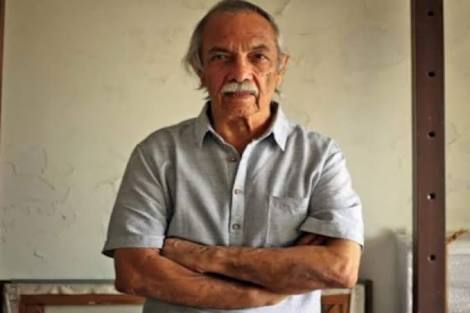
"bio": "Gieve Patel (born 18 August 1940) is an Indian Parsi poet, playwright, painter,[2][3] as well as a practising physician. He belongs to a group of writers who have subscribed themselves to the 'Green Movement' which is involved in an effort to protect the environment. His poems speak of deep concerns for nature and expose man's cruelty to it. His works include poems, How Do You Withstand (1966), Body (1976) and Mirrored Mirroring (1991). He has also written three plays, Titled Princess, Savaska and Mr. Behram.",
"raw_bio": "Gieve Patel (born 18 August 1940) is an Indian Parsi poet, playwright, painter,[2][3] as well as a practising physician. He belongs to a group of writers who have subscribed themselves to the 'Green Movement' which is involved in an effort to protect the environment. His poems speak of deep concerns for nature and expose man's cruelty to it. His works include poems, How Do You Withstand (1966), Body (1976) and Mirrored Mirroring (1991). He has also written three plays, Titled Princess, Savaska and Mr. Behram.",
"slug": "gieve-patel",
"DOB": "1940-08-03",
"DateOfDemise": null,
"location": "Mumbai, India",
"url": "/sootradhar/gieve-patel",
"tags": "",
"created": "2023-09-22T12:45:18.496770",
"is_has_special_post": true,
"is_special_author": false,
"language": 2
}
],
"description": "<p style=\"text-align: center; font-size: 24px;\"> The Great Poets and Writers in Indian and World History! </p>",
"image": "https://kavishalalab.s3.ap-south-1.amazonaws.com/sootradhar_description/black.jpg"
}